

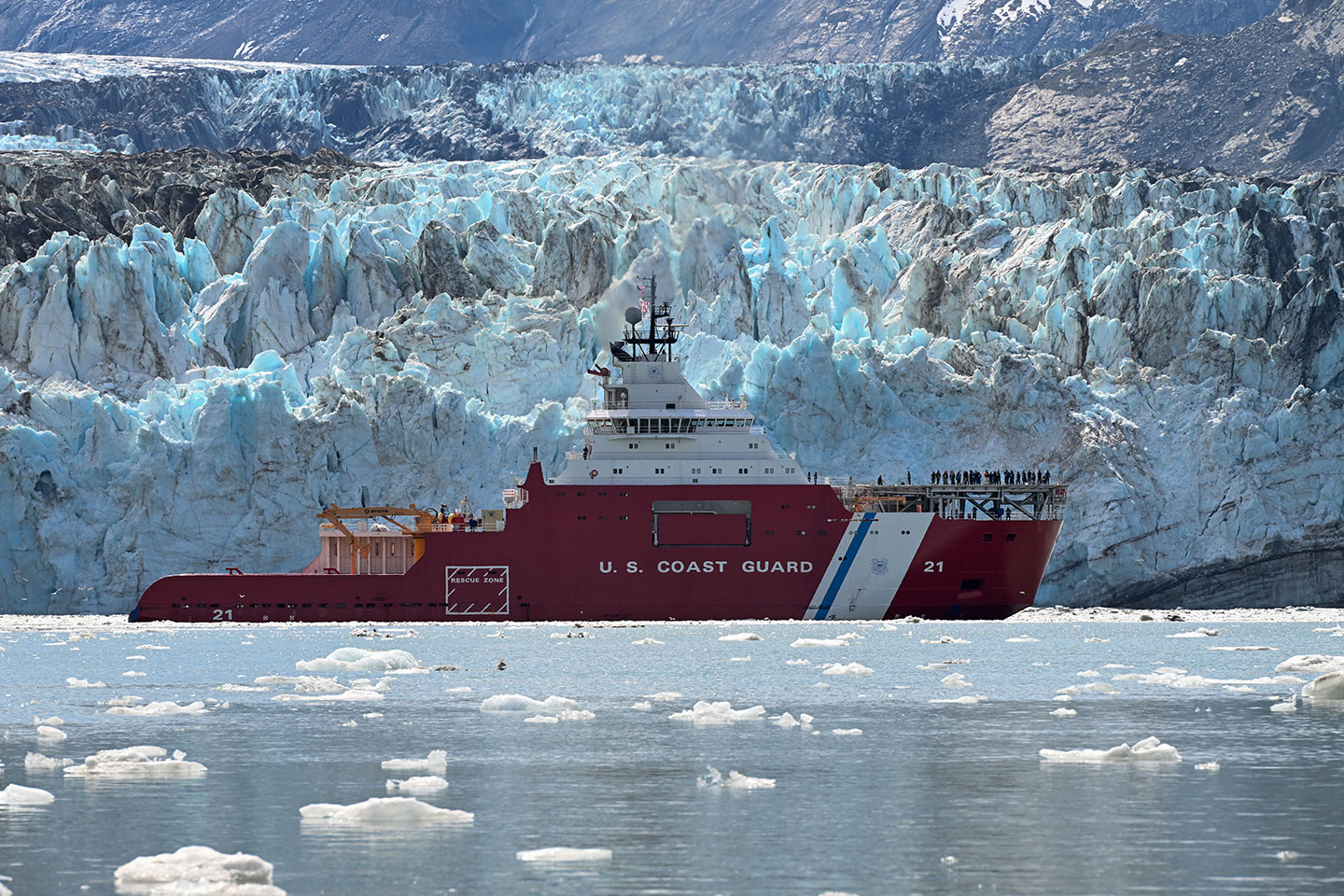
The United States Coast Guard’s newest icebreaker, the cutter Storis, arrived in Seattle on October 3, 2025, after completing its 112-day inaugural patrol. Under the direction of the Coast Guard Arctic District, the Storis supported Operation Frontier Sentinel in countering foreign influences in or near Alaskan and U.S. Arctic waters.
The Storis left Pascagoula, Mississippi, on June 1, transited the Panama Canal and headed north in the Pacific Ocean en route to its first Arctic patrol, north of the Bering Strait. The mission took on added importance as five Chinese research vessels operated in the Arctic in mid-2025. Analysts say the dual-use vessels gather data not only for scientific purposes but also for Chinese military use.
In early September, the Storis entered the ice for the first time as a Coast Guard cutter, relieving the Coast Guard cutter Healy, a medium icebreaker, and monitoring the Chinese-flagged research vessels Jidi and Xue Long 2. The Coast Guard is the only U.S. surface presence in the Arctic and works with U.S. Northern Command (USNORTHCOM) and Alaskan Command to continuously monitor foreign vessels operating in and near U.S. waters.
Before the start of its inaugural patrol, the Storis was commissioned in Juneau, Alaska, on August 10. It is the first polar icebreaker acquired by the Coast Guard in 25 years and the third in active U.S. service, alongside the Polar Star and the Healy.
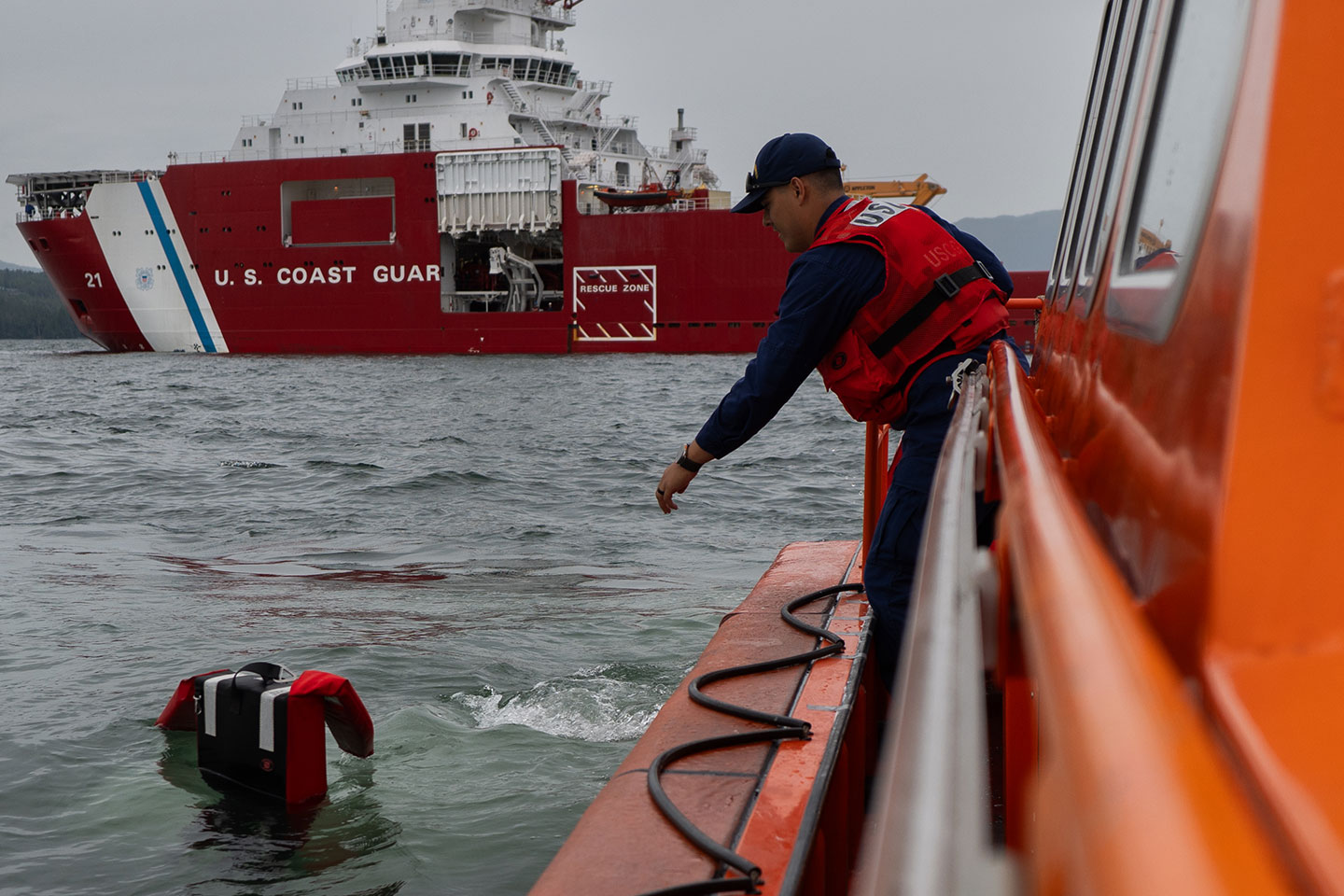
On the inaugural deployment, the Storis’ crew performed helicopter operations and gunnery exercises, implemented operational and administrative programs, and organized community outreach events, including tours to over 1,500 people, at six port calls.
“In the span of a few months, this crew has gained proficiency in the basics of operating the ship and we were ready to challenge ourselves,” said Capt. Corey Kerns, the Storis’ commanding officer. “Storis is different than most Coast Guard cutters, and this crew is proud and excited to demonstrate its value to the service and the nation.”
In Seattle, the Storis crew faces six weeks of additional training and a two-week underway period with events scheduled in Victoria, Canada. “We’re excited to return to family and friends,” Kerns said. “But we still have a lot of training to do … and will continue to work closely with our civilian shipmates to get us ready.” The Storis has a hybrid crew of Guardsmen and civilian mariners.
The Storis will be berthed temporarily in Seattle, alongside the Coast Guard’s other polar icebreakers. After infrastructure improvements are completed in Juneau, the Storis will be permanently homeported there.
The Storis initially was built for Shell’s Arctic drilling operations in 2012 as an icebreaking tug supply vessel, the Aiviq, which means “walrus” in the Inupiaq language. It was purchased in December 2024 and has been modified and upgraded to strengthen its defense and communications capabilities.
The Polar Class 3-equivalent vessel is 110 meters long, about two-thirds the size of the Healy. The Storis, a Scandinavian word that means “great ice,” can break through 1 meter of ice continuously at 5 knots.
In testimony before the U.S. Senate Armed Services Committee on February 13, 2025, Gen. Gregory M. Guillot, commander of USNORTHCOM and the North American Aerospace Defense Command, said: “As competition in the region increases, safeguarding Arctic access and freedom of maneuver will depend on Joint Force Arctic operational capabilities and build on the already strong ties between Arctic partners. USNORTHCOM places enormous value on the ability to conduct operations and exercises in the High North and to execute assigned missions in coordination with fellow combatant commands. … Effective operations in the Arctic require specialized training and equipment under the best of conditions, and there is no substitute for real-world experience in the region.”