


Twenty members of the Haitian National Police-Coast Guard have completed two weeks of intensive capacity-building programs facilitated by the Royal Bahamas Defence Force (RBDF). It was the kickoff of a new regional initiative supported by international partners, including the United Nations Office on Drugs and Crime (UNODC), the Organization of American States (OAS) and Canada.
The programs included UNODC small-boat law enforcement training and an OAS cargo and container rummage course, with financial support provided by the government of Canada. The programs reflect The Bahamas’ commitment to advancing sustainable, Haitian-led solutions to security issues and underscore the urgency of strengthening Haiti’s law-enforcement capabilities, especially in the maritime and border-security domains.
The small-boat law enforcement training, delivered jointly by RBDF and UNODC’s Global Maritime Crime Programme, focused on enhancing the maritime policing skills of Haitian National Police-Coast Guard members through scenario-based exercises, tactical vessel handling, interdiction procedures and coordinated operations with partner agencies. The training directly supported Haiti’s ability to counter illicit trafficking networks, secure its coastline and contribute to the Haiti Gang Suppression Force.
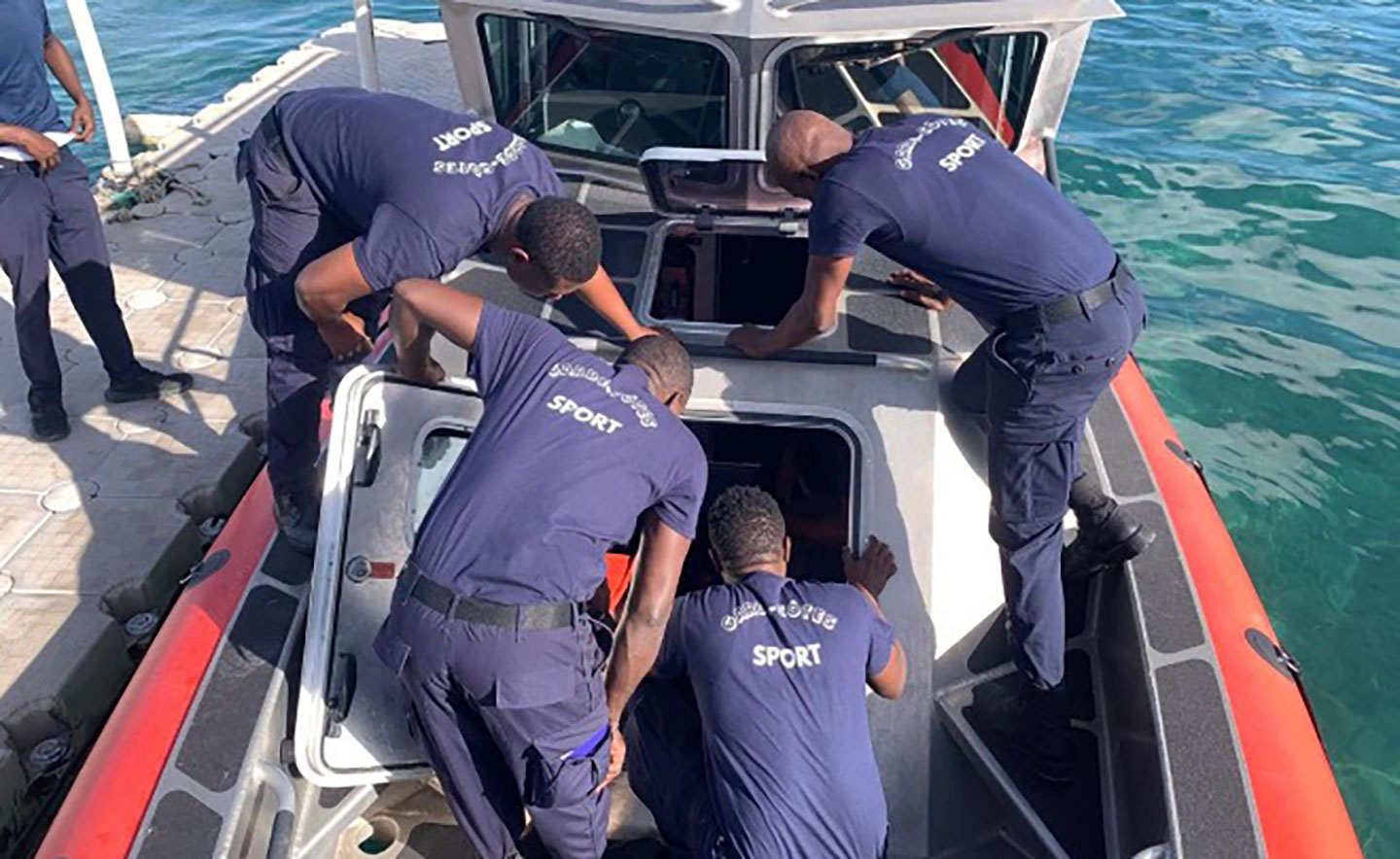
The OAS “train-the-trainer” cargo and container rummage program equipped the Haitian National Police and Haitian Customs officials with advanced inspection and detection skills needed for combating contraband, weapons trafficking and transnational organized crime at Haiti’s ports of entry. Delivered in French, the program was designed so that participating officers can replicate the training in Haiti.
The Ministry of Foreign Affairs emphasized that the initiative is not just short-term intervention but also an investment in rebuilding Haiti’s security institutions. The training, held November 17 to December 1, 2025, included courses on seamanship, navigation, engineering competencies, bends and hitches, and boat-handling. Training also included navigation aids, the use of survival flares, search and rescue techniques, and onboard emergency procedures.
Engineering courses focused on mechanical diagnostics, troubleshooting fuel systems, outboard ignition and electrical circuit analysis, gear case inspection, optimizing propulsion systems and the use of digital diagnostic tools. Participants trained in remote-support procedures that let mechanics from Haiti and The Bahamas communicate in real time. RBDF engineers also offered suggestions on technical issues affecting Haitian National Police-Coast Guard vessels.
RBDF Senior Commander William Sturrup, commanding officer of the Sea Training Department, coordinated the training in partnership with the Harbour Patrol Unit’s Engineering Section. The Haitian delegation was housed at Coral Harbour Base to support team-building and cultural exchange. They attended a concert; worshipped at Victory Chapel Church of the Nazarene, a Haitian congregation in New Providence; and went to a fellowship event hosted by the Sea Training Department staff.
Dern Jovas Bonhomme, the Haitian ambassador to The Bahamas, thanked the RBDF and the people of The Bahamas for their commitment to strengthening Haiti’s maritime security. He applauded the participating officers for demonstrating courage and a willingness to expand cooperation between the two nations as Haiti confronts gang violence and rebuilds national stability.
Bahamas Minister of National Security Wayne Munroe reaffirmed The Bahamas’ dedication to supporting Haiti in its fight against drug trafficking and transnational crime. “A safer Haiti creates a safer Bahamas and a safer region for all,” he said.