

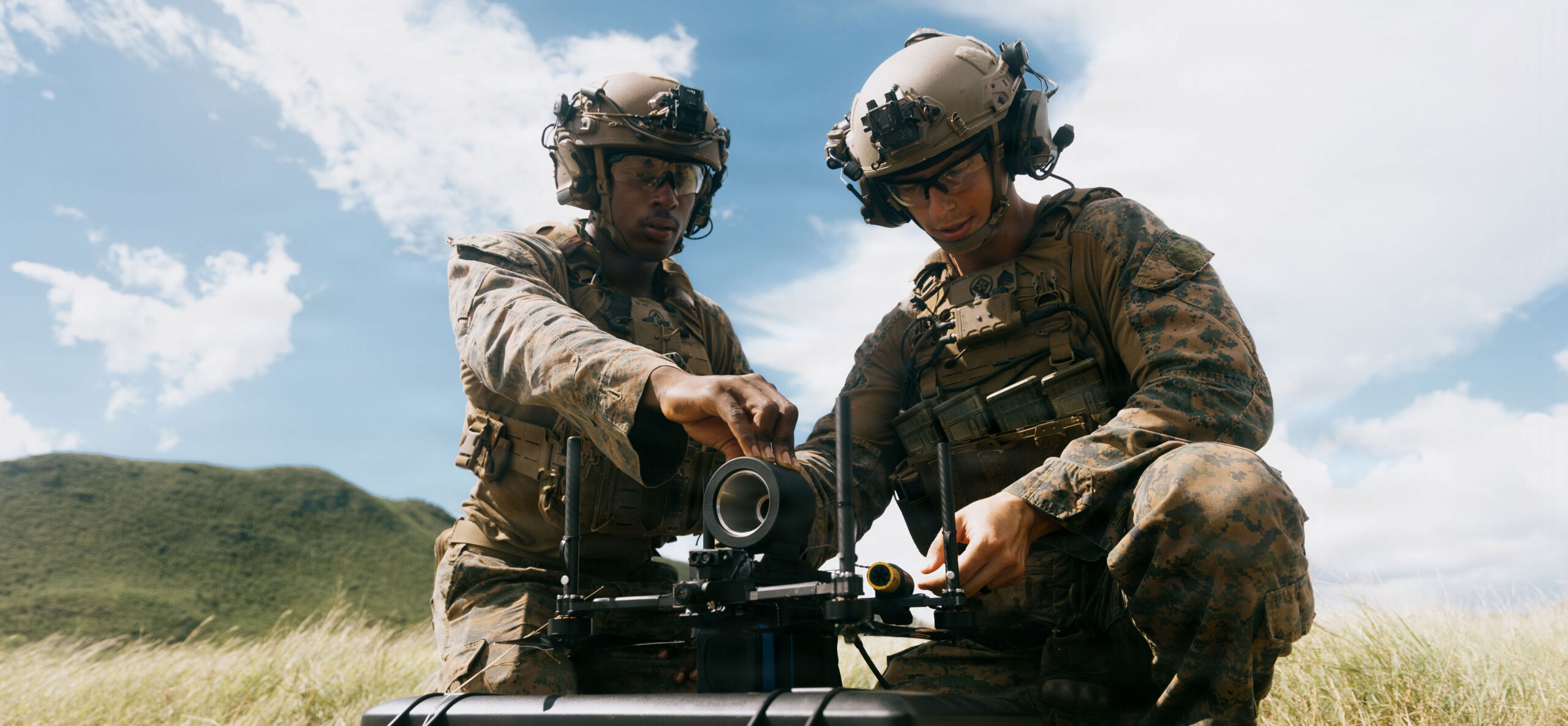
The United States Marine Corps plans to deploy hundreds of thousands of first-person-view (FPV) unmanned aerial systems (UAS) across its fighting force in 2026. In January, the Marine Corps announced it would rapidly increase training to place certified drone operators and payload specialists in its infantry, reconnaissance battalions and littoral combat teams by May. The push comes as the U.S. military ramps up its UAS capabilities to modernize its warfighting capabilities, reflecting the changing nature of armed conflict following the Russian invasion of Ukraine in 2022.
A Marine Corps administrative message identified a critical need for standardized training as new UAS systems are integrated into the force, including the Neros Archer FPV attack drone, according to the Department of War (DOW). The plan, created by the Marine Corps Training and Education Command, establishes six pilot courses and eight certifications to codify a new standard for drone operators. The aim is to provide basic skills for a variety of small UAS systems. First-person-view drones offer a more immersive, controllable experience for pilots using an on-board camera to stream directly to an operator’s screen or googles, an improvement over traditional drones that present operators with more distant, static visuals.
“We are fielding these courses as pilot programs to move quickly while maintaining our commitment to quality training and safety,” said Marine Corps Lt. Gen. Benjamin T. Watson, commanding general of the Training and Education Command. “This allows us to validate all aspects of the training, from prerequisites and instructional methods to resourcing needs and certification standards, ensuring that we refine and perfect the curriculum before it becomes part of our long-term training framework.”
The courses will establish a standardized training course for pilots, payload specialists and instructors, ensuring that operators gain experience on DOW-certified UAS systems. “The courses aim to ensure proper integration and supervision of new drone capabilities,” according to the DOD. The Training and Education Command also has developed a procedure for Marines who have previous experience with UAS systems to gain certification outside the regular training process.
The Weapons Training Battalion at Marine Corps Base Quantico, Virginia, will be the central hub of this effort, adapting lessons learned during the training process. The battalion will continue to modify the training as new systems are integrated and will serve as the focal point for innovation and best practices. Seven Marine training centers have been authorized to immediately begin pilot courses: schools with the Training and Education Command, 1st Marine Division, 2nd Marine Division, III Marine Expeditionary Force and Marine Forces Special Command, according to the department.
The Marines already have benefited from early training efforts. Two Marine Corps attack drone competitions — in the National Capitol Region and Okinawa, Japan — certified 19 attack drone operators, five instructors, seven payload specialists and two payload specialist instructors in 2025. The 22nd Marine Expeditionary Unit also certified 14 attack drone operators and 11 payload specialists in November 2025. These Marines are fully trained and equipped for contingency operations, the department stated. Hundreds more Marines will be certified by May.