

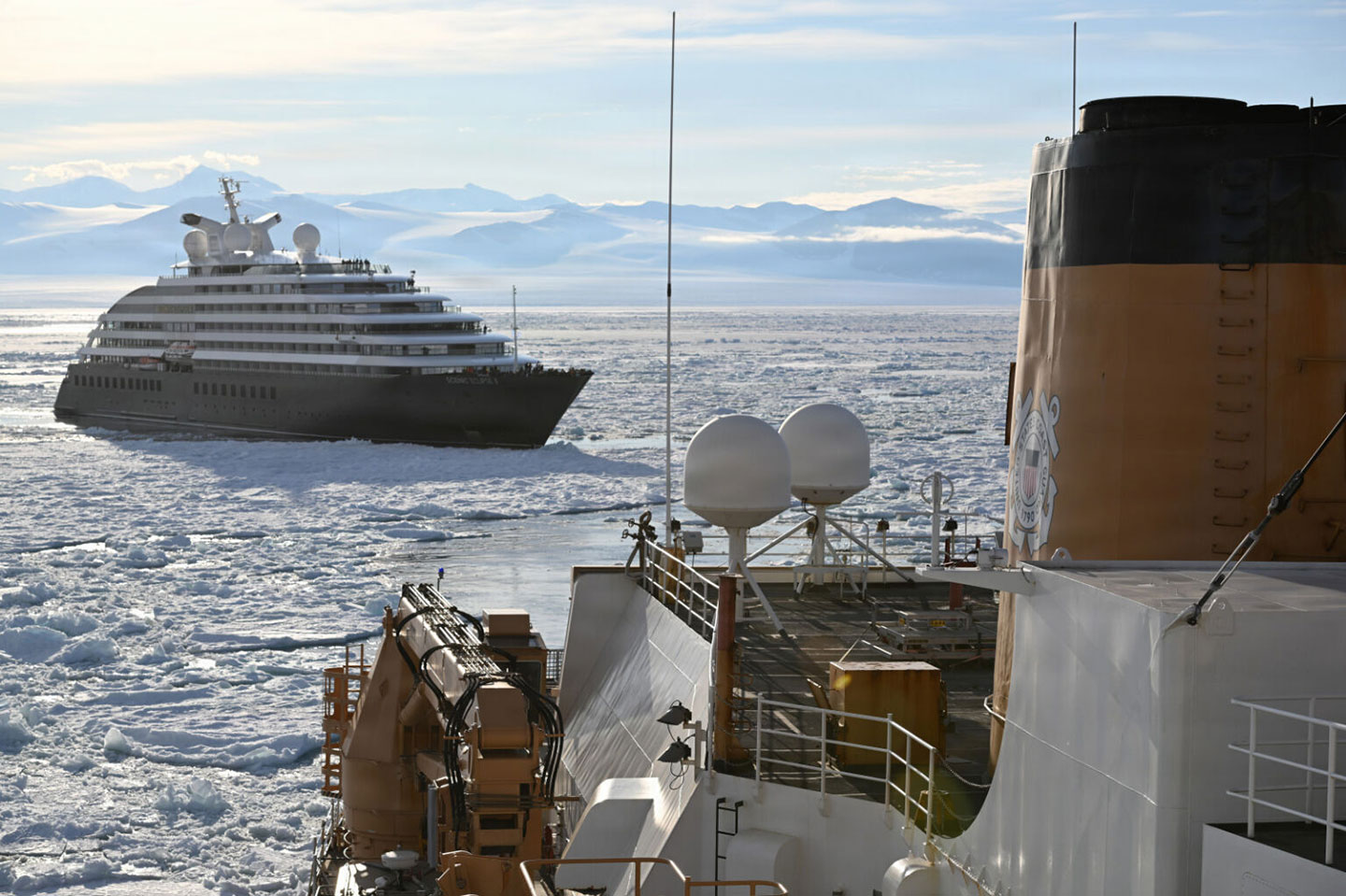
The United States Coast Guard’s Polar Star, a heavy icebreaker, celebrated its 50th anniversary in January 2026 in dramatic fashion by freeing an Australian cruise ship trapped in thick Antarctic ice. As the U.S. ramps up its production and acquisition of heavy icebreakers to solidify its defense of the approaches to North America, the Polar Star’s Antarctic deployment also highlighted the vital importance icebreakers have in protecting sea lanes, deterring adversaries and furthering scientific research in some of the world’s most remote and dangerous waters.
The Polar Star deployed from its home port in Seattle, Washington, in late November 2025 to take part in Operation Deep Freeze, an annual exercise in logistical support for the U.S. Antarctic Program, managed by the National Science Foundation. The Polar Star’s duties include a wide range of critical tasks, including strategic and tactical airlift, airdrops, aeromedical evacuation, search and rescue, sealift, seaport access, bulk fuel supply and cargo handling, according to a Coast Guard news release. Perhaps the most important operational role played by the ship is breaking a navigable channel through long stretches of ice to allow for the delivery of fuel and supplies to the Antarctic Program’s research stations and operations.
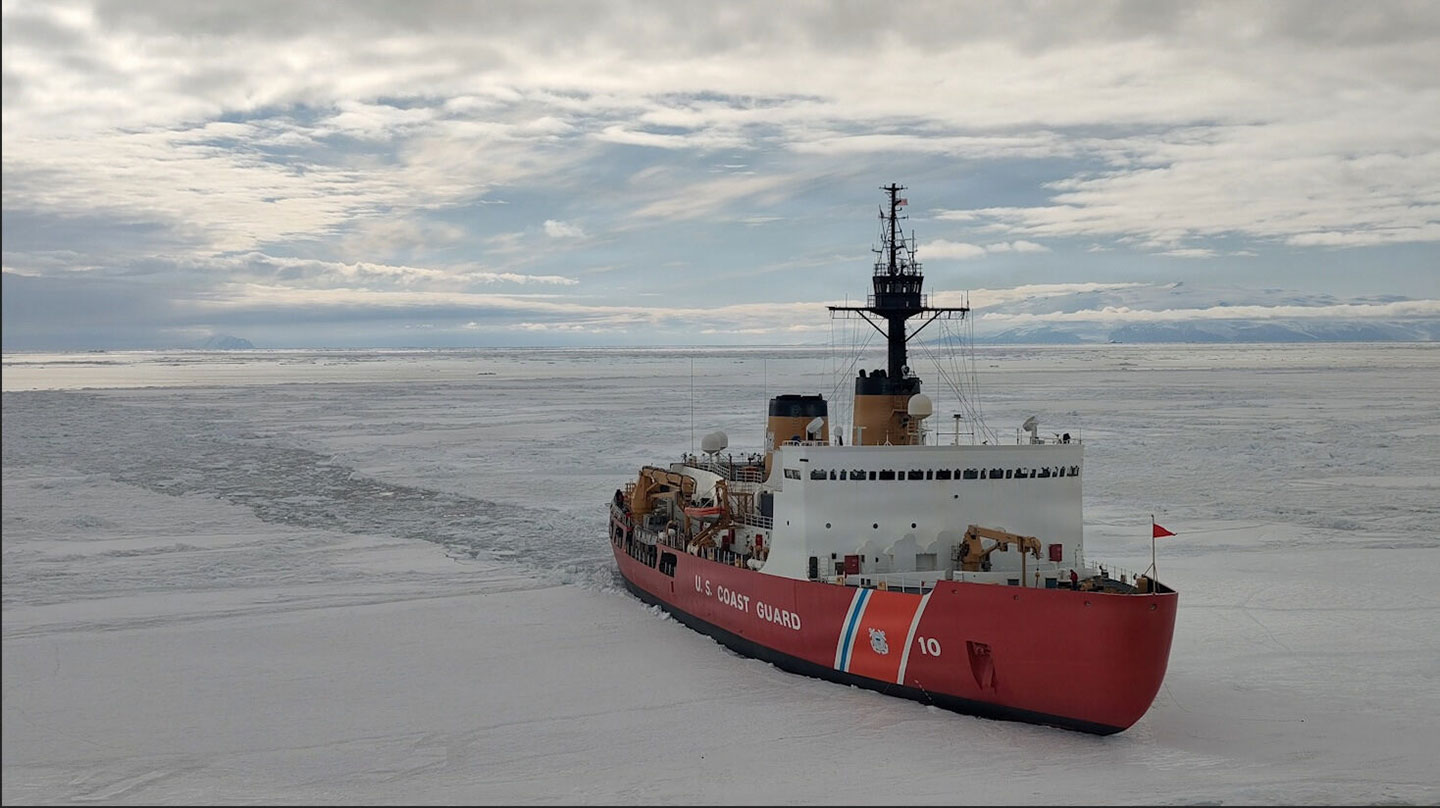
This time, the mission included coming to the aid of the cruise ship Scenic Eclipse II, which had requested assistance on January 16 after it became trapped in thick ice about eight nautical miles south of McMurdo Sound. The Polar Star made two passes by the ship to break up the ice before escorting it an additional four nautical miles until the commercial vessel reached open waters, the release stated. “I am constantly amazed at this crew’s tremendous energy and enthusiasm,” said Capt. Jeff Rasnake, Polar Star’s commanding officer, according to The Military Times, a U.S. military affairs newspaper. “Despite the many challenges associated with getting and keeping this ship on mission, they remain eternally positive and committed to meeting the high standards we’ve set for ourselves.”
The Polar Star’s rescue effort came as the ship celebrated its 50th anniversary. Commissioned on January 17, 1976, the Polar Star regularly patrols the Arctic Ocean in addition to its regular duties in the southern polar region. The current mission is the 29th deployment of the ship to support Antarctic research, the release stated.
The resilient vessel soon will have company. The Icebreaker Collaboration Effort, known as the ICE Pact, formed in 2024 between Canada, Finland and the U.S., will deliver four heavy icebreakers by the 2030s. Two are currently under construction — one in the U.S. and another in Finland. In addition, nearly $8 billion has been allocated to construct those ships along with 10 light and medium icebreaking vessels, a massive enlargement of the U.S. icebreaking fleet. “By strategically pooling our expertise in Arctic and polar vessel production, together we will take advantage of opportunities to help strengthen demand for shipbuilding, and seek to attract high-quality jobs, support maritime infrastructure supply chains critical to national security, and help support sales to other countries,” stated a joint Canadian-U.S. diplomatic memo issued in 2024.