

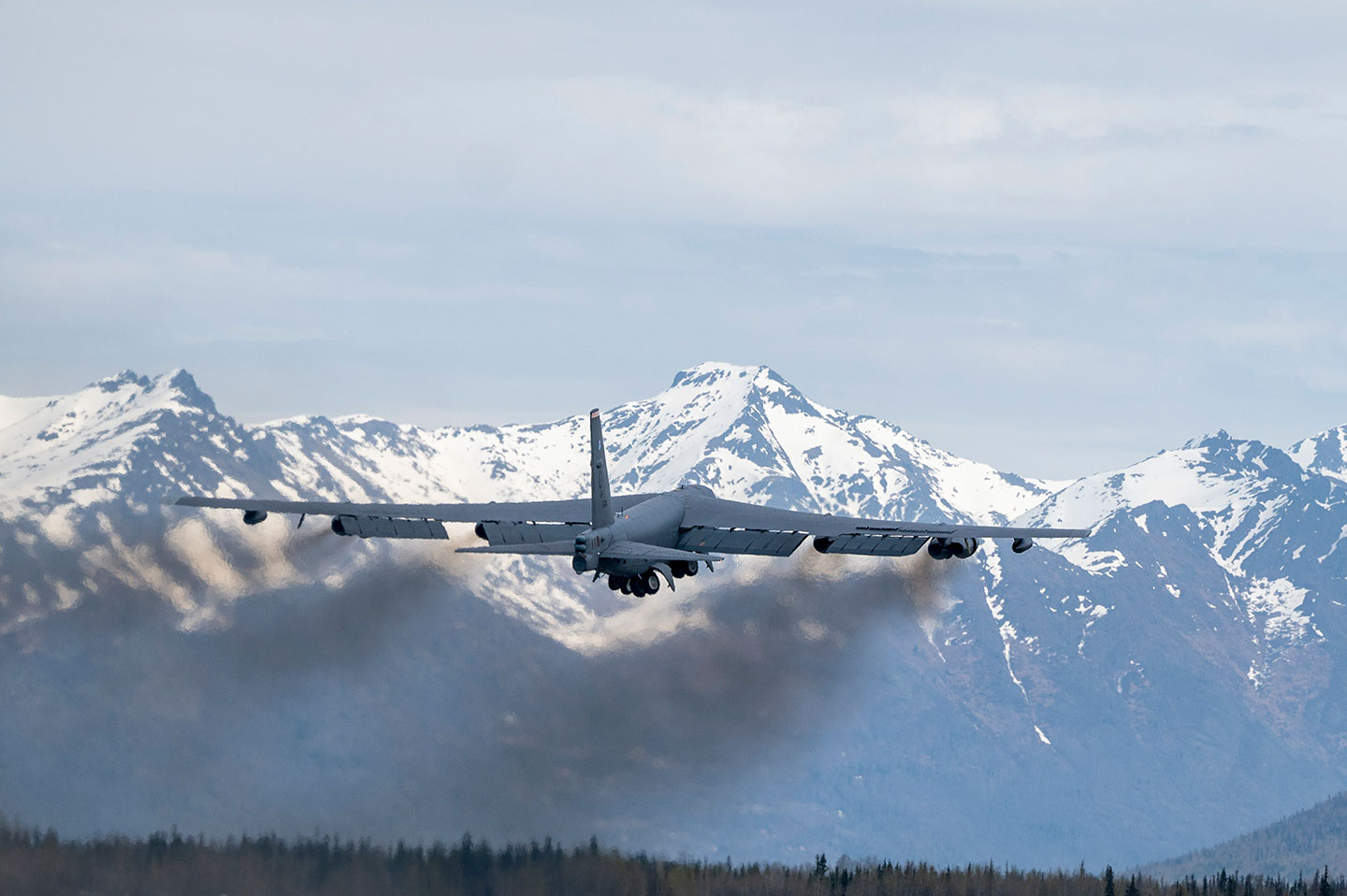
The sight of B-52 Stratofortress strategic bombers over the Gulf of Alaska demonstrated U.S. military resolve during Operation Tundra Merlin in December 2025. The long-range bombers, a cornerstone of U.S. strategic power for decades, proved integral for a complex exercise designed to showcase the nation’s capability for homeland defense, extended deterrence and commitment to allies in an increasingly contested Arctic.
The exercise, set against heightened geopolitical competition with the Chinese Communist Party and Russia, underscored the U.S. intent to safeguard its northern approaches. Beijing and Moscow have increased their joint military operations near Alaska. “Operations in the Alaskan theater of operations are critically important to North American homeland defense,” said U.S. Air Force Lt. Gen. Robert Davis, commander of Alaskan Command. “Operation Tundra Merlin demonstrates the joint force’s ability to seamlessly integrate capabilities from multiple combatant commands and mission partners to deter and defeat potential threats in the region.”
A key event in Operation Tundra Merlin involved two B-52s simulating a long-range maritime strike. In a display of joint force precision, the bombers received targeting data from the U.S. Coast Guard Cutter Kimball and U.S. Navy assets, allowing their crews to acquire targets from a significant distance and simulate a weapons engagement. This standoff strike capability provides a critical element of modern warfare, and the B-52, capable of carrying a massive 31,500-kilogram payload of both conventional and nuclear weapons, including antiship missiles, is a formidable platform for such missions.
Four F-35A Lightning II fighters escorted the bombers, showcasing the integration of fifth-generation fighter aircraft with the legacy bomber fleet in the harsh Arctic environment. KC-135 Stratotankers and an HC-130J personnel recovery aircraft also supported the mission, demonstrating the comprehensive operational capabilities of the joint force. The bombers’ journey also included a transfer of command and control to the 613th Air Operations Center, supporting U.S. Indo-Pacific Command, as they left the region. The participation of the B-52s in Tundra Merlin is part of a broader strategy of conducting Bomber Task Force missions across the globe. The missions serve to familiarize air crews with different operational theaters and enhance interoperability with allies and partners. By deploying these strategic assets, the U.S. sends a clear signal of its readiness to defend its interests and support its Allies, ensuring a stable and open international system.
Sentry is a publication of the U.S. Strategic Command