

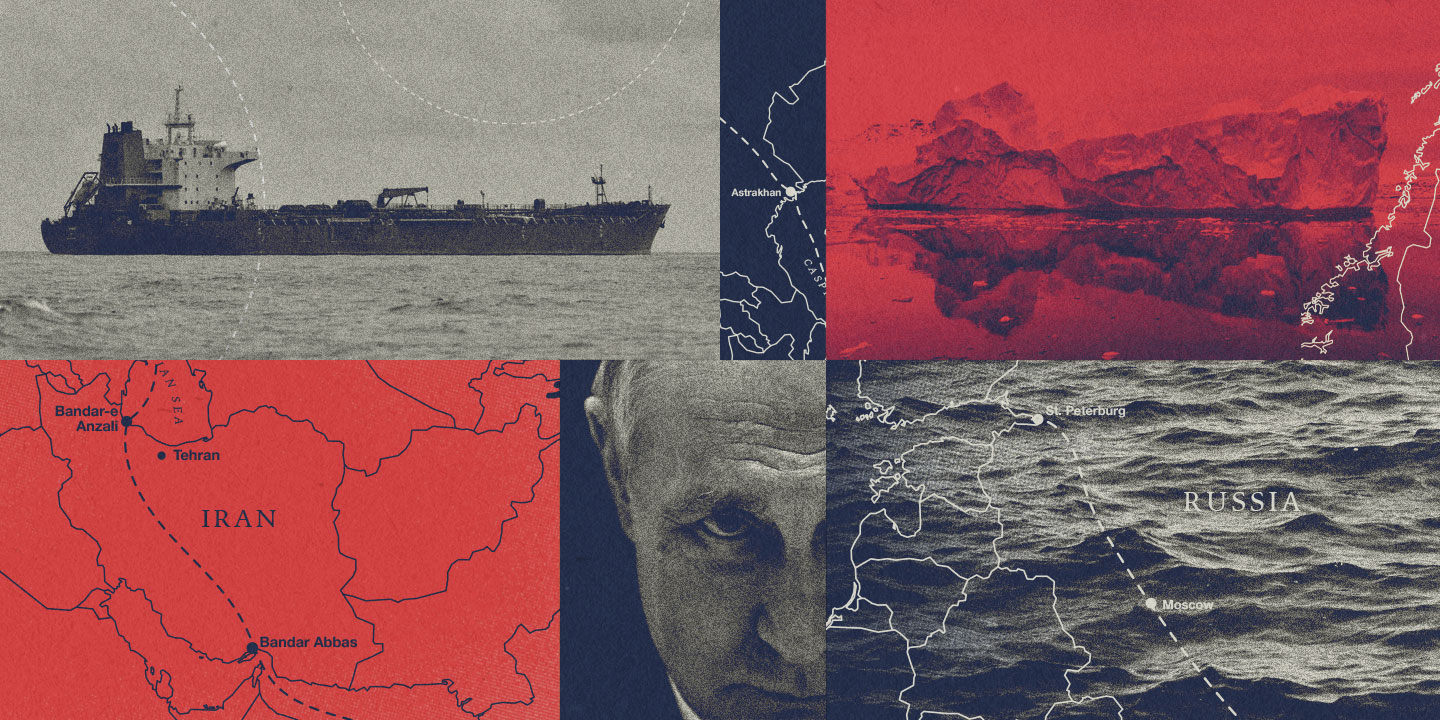
The number of unregistered, illegally operated, aging ships traveling through the Arctic increased dramatically in 2025, helping Russia evade sanctions imposed after its 2022 invasion of Ukraine and posing environmental and potential national security threats. A new report by a Lithuania-based non-governmental organization (NGO) concludes that 100 such “shadow fleet” ships sailed through the Russian-controlled Northern Sea Route (NSR) last year, up from 13 in 2024.
The Bellona Environmental Transparency Center warned that illegal activity greatly increased the risk of an environmental catastrophe in the fragile Arctic environment. “Lack of progress in ending of Russia’s unlawful war in Ukraine means that the situation on the NSR could deteriorate further. More ships could be added to sanctions lists, less information will be available to monitor shipping activities along the route, and the risk of accidents will increase. The international community should direct efforts toward limiting this risk by taking measures to reduce shipping activity along the Northern Sea Route,” the report, released in December 2025, warned.
The NSR, also known as the Northeast Passage, stretches 5,600 kilometers eastward from the ice-free Norwegian and Barents seas near Scandinavia, past vast territories in Russian Siberia before crossing the Bering Strait near Alaska. The route first was established in the 1920s, but heavy ice prevented year-round use until the 2000s. Melting ice in the region has created opportunities for Russia to transport more of its sanctioned oil and gas along a route that requires icebreakers for much of the year to create open water. In recent years, Russia, which claims control over the maritime passage, has partnered with the Chinese Communist Party (CCP), which has asserted its own claims on the Arctic.
The report notes that the Russia authority in charge of authorizing voyages has stopped publicly listing vessels traversing the route, many of which turn off their navigational transponders to avoid being tracked. Few of the ships carry insurance and many of the vessels aren’t equipped to handle the rough seas and ice, the report states, estimating that the shadow fleet comprises one-third of the overall NSR traffic. Bellona identified 51 of the ships as oil or liquified natural gas tankers. Another 39 were cargo ships. The cargo ships have been sanctioned for carrying military equipment or supplies to construct Arctic installations under sanctions, the report stated.
“Rosatom, Russia’s powerful nuclear corporation and official operator of the Northern Sea Route, has a tendency to hide information from public eyes. As such, the NSR administrators this year ceased publishing information about the current location of ships on the NSR, as well as a yearly summary of accidents and incidents along the route,” the report stated.
Gen. Gregory M. Guillot, commander of the United States Northern Command and North American Aerospace Defense Command, testified before Congress in April 2025 that Russia and the CCP have increased their military activity in the region, threatening freedom of navigation and presenting a threat to the northern approaches to the U.S. “USNORTHCOM places enormous value on the ability to conduct operations and exercises in the high north and to execute assigned missions in coordination with fellow combatant commands,” he said.