
Artificial intelligence (AI) is transforming the contest for undersea dominance from a platform-centered mission into a data-dominant competition, with the Indo-Pacific emerging as its most consequential theater. As regional navies race to deploy AI-enabled sonar, autonomous underwater vehicles and predictive acoustic analysis, the sensor-heavy realm of anti-submarine warfare (ASW) is becoming a data-processing contest in which speed of analysis may prove as decisive as hardware.
AI has made its greatest contributions to ASW in detection and classification. Algorithms can filter ambient noise, analyze propeller signatures and map water temperature gradients. Meanwhile, quantum magnetometers can detect faint magnetic disturbances produced by submerged vessels. Sensor fusion systems are increasingly adept at determining whether contacts are friendly, neutral or hostile.
This competition focuses on strategic choke points. Indo-Pacific maritime passages such as the Luzon and Malacca straits have become “the undersea equivalent of contested airspace — every major power knows submarines have to pass through them, which makes them prime real estate for AI-powered surveillance infrastructure,” Genevieve Donnellon-May, a nonresident fellow at the Hawaii-based Pacific Forum and an associated fellow at the Institute for Security and Development Policy in Sweden, told Indo-Pacific Defense Forum.
The United States is deploying AI-powered, sonar-equipped ocean buoys to detect mines and submarines, while the U.S. Navy’s Multi-Static Active Coherent Enhancement system underwent operational testing aboard P-8A Poseidon aircraft in mid-2025, improving submarine search rates through AI-assisted signal processing.
At the same time, Chinese researchers have revealed an AI-driven ASW system that reportedly combines sonar buoys, underwater sensors and oceanographic data to create a real-time subsurface picture.
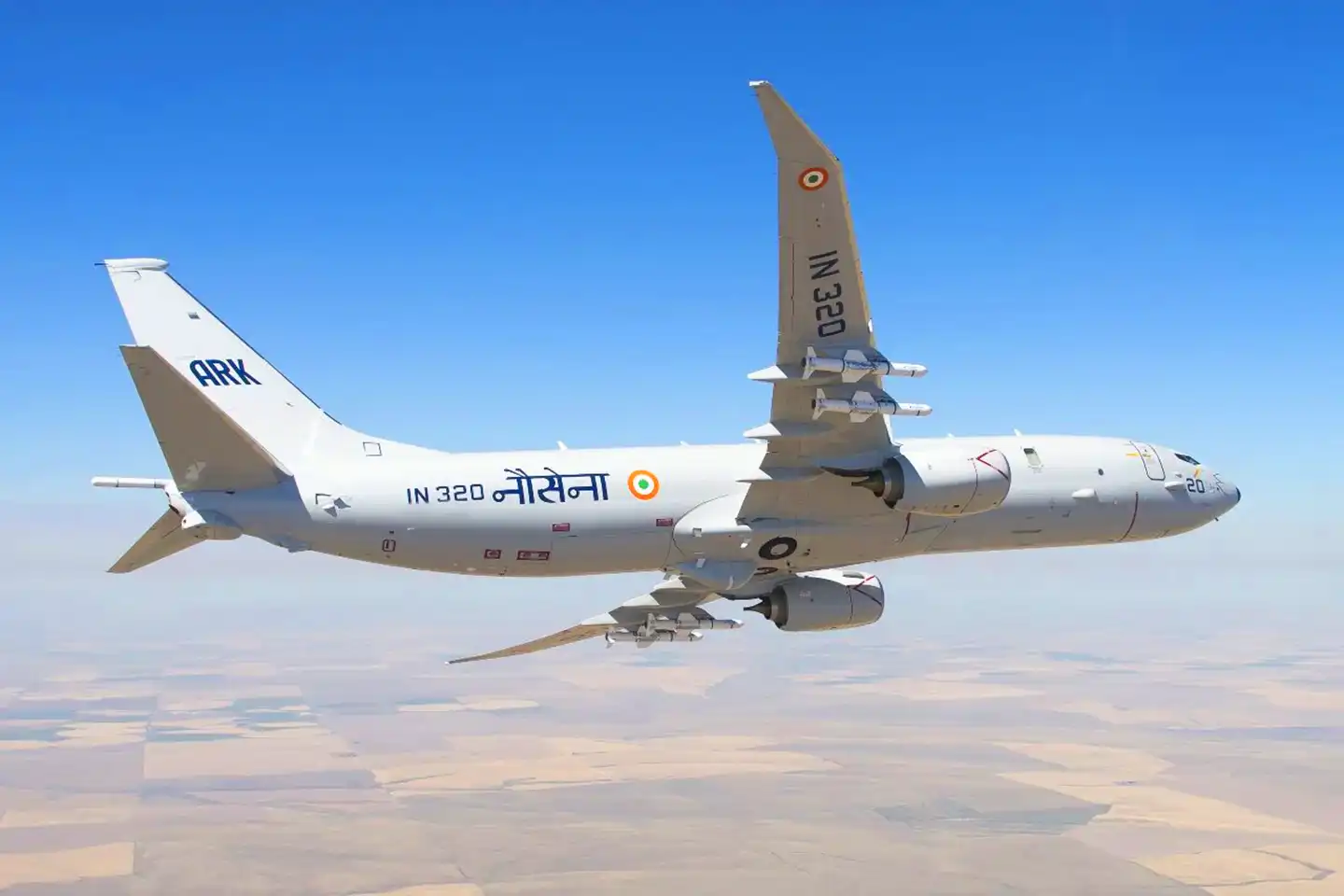
Among other significant developments is a deepening ASW program between New Delhi and Washington. In early 2025, the nations announced they would coproduce sonobuoys in India for use on maritime patrol platforms including P-8I Neptune aircraft. Soon after, they announced the Autonomous Systems Industry Alliance to boost codevelopment and coproduction of maritime drones and autonomous systems across the Indo-Pacific. Key systems include Wave Glider uncrewed surface vehicles that can gather submarine data for over a year without refueling, and the SeaPicket autonomous sonar system, designed for continuous underwater monitoring for up to six years.
Autonomous maritime systems “have emerged as transformative platforms, enabling navies to undertake the most demanding and resource-intensive maritime operations,” Dr. R. Vignesh, an associate fellow at the Manohar Parrikar Institute for Defence Studies and Analyses’ Centre for Military Affairs, wrote for the New Delhi-based think tank in January 2026. That includes protecting critical underwater infrastructure from attack.
Adm. Dinesh Tripathi, who retired in May 2026 as chief of the Indian Navy, has identified the next frontier as integration of “AI-enabled combat systems, autonomous platforms and quantum-secure networks.”
The priority for the U.S. and its allies and partners is to construct a layered AI-driven undersea surveillance architecture across the region’s choke points, analysts say. The challenge ultimately is less about the platform than about who quickly makes sense of the ocean’s data. Whoever can master “that data pipeline first holds a decisive advantage, and right now that competition is intensifying,” Donnellon-May said.
Prateek Joshi is an Indo-Pacific Defense Forum (IPDF) contributor based in New Delhi. IPDF is a publication of U.S. Pacific Command.