

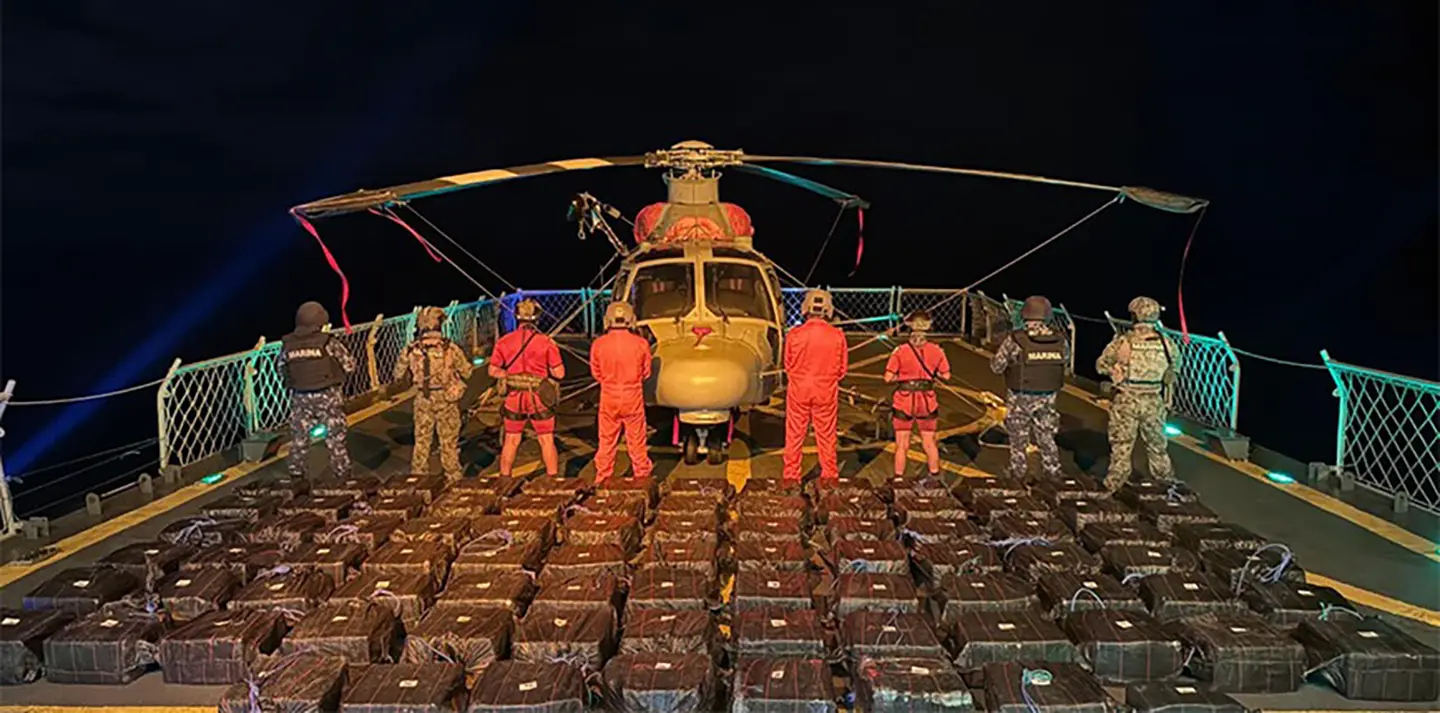
In two separate operations led by the Mexican Navy, authorities confiscated about 4 metric tons of suspected cocaine and two vessels, and four arrests were made, the Secretariat of the Navy (MARINA) announced in news releases in early July. Combined, the seizures cost criminal organizations about $52 million, MARINA said.
In the first operation, the Mexican Navy seized about 3 metric tons of suspected cocaine and two small boats in the Pacific Ocean off the coast of Oaxaca, Mexico, a MARINA news release said July 4. Four suspects were arrested.
The interdiction occurred after Navy personnel carrying out a maritime patrol flight spotted the two vessels. A MARINA ocean patrol vessel was sent to the area, and an embarked helicopter intercepted the boats.
MARINA personnel found 86 packages containing 3 metric tons of suspected cocaine and 20 drums holding 1,000 liters of gasoline aboard the boats. The suspected drugs represented a loss of about $37.4 million to criminal organizations. This “contributes to weakening their financial and operational structures,” the news release said.
In the second operation led by MARINA, at the Port of Lázaro Cárdenas, Michoacán, authorities seized 1.187 metric tons of suspected cocaine in 20 packages aboard a merchant ship, a MARINA news release said July 7. MARINA valued the contraband at about $14.3 million.
Including the latest operations, Mexican Navy drug seizures total about 78 metric tons since Claudia Sheinbaum took the oath of office as president in October 2024, according to the news releases. The figure “reaffirms our ongoing commitment to strengthening the Rule of Law, protecting Mexican seas, and safeguarding the nation’s security,” MARINA said in a post on the social platform X.
Gen. Gregory M. Guillot, commander of U.S. Northern Command (USNORTHCOM) and the North American Aerospace Defense Command, testified on March 19 before the Senate Armed Services Committee that transnational criminal organizations based in Mexico “retain their intent to flood the United States with illegal drugs and facilitate illegal migration across our border. While the increased U.S. military and law enforcement presence along our southern approaches has severely curtailed these illicit flows over the last year, these criminals continue to seek alternate routes to move their products into the United States.”
Guillot also praised the U.S.-Mexico alliance as a cornerstone of regional security and homeland defense. “The USNORTHCOM relationship with Mexican military partners stands strong and pays lasting dividends for the security of both the United States and Mexico,” he testified.