

Mexico deployed 1,500 troops to counter cartel violence in Michoácan in August 2026, demonstrating its close cooperation with the United States on security issues. President Claudia Sheinbaum ordered nearly 1,000 Mexican Army Soldiers and nearly 600 National Guardsmen to the central Mexican state one day after the U.S. suspended agricultural inspections of the avocado industry, an important export market for Mexico. Mexico’s rapid response encouraged the U.S. to resume inspections on August 13.
U.S. Ambassador to Mexico Ronald Johnson hailed Mexico’s response as beneficial to both countries and the latest example of a coordinated approach to countering transnational criminal organization (TCO) activities. “This is another concrete result of the cooperation advanced by President [Donald] Trump and President Sheinbaum. Working together, we are protecting our people, our food production, our supply chains, and the legitimate trade that benefit producers and consumers in our countries,” Johnson said in an August 13 embassy news release. “This outcome sends a clear message: when the United States and Mexico work together, we deliver results that strengthen the security and prosperity of our nations.”
Sheinbaum took quick action after the U.S. suspended inspections on August 5, ordering 967 Soldiers and 567 Guardsmen to the state the next day. Parts of Michoácan saw bouts of violence and roadblocks after the arrest of the leader of the Cartel de Los Reyes, Alfonso Fernández Magallón, also known as “Poncho” or “Poncho La Quiringua.” Sheinbaum told reporters that she had ordered the troops to Michoácan to restore security. “We’re putting together an important work plan to further guarantee security in some areas where there wasn’t as much National Guard presence,” she told reporters on August 6, Reuters reported.
The U.S. had a $5 million reward for information leading to Fernández Magallón’s arrest or conviction. The Cartel de Los Reyes operates as a faction of Carteles Unidos, or United Cartels, which the U.S. State Department designated as a foreign terrorist organization in February 2025. Mexico’s Secretariat of National Defense said Fernández Magallón was responsible for drone attacks on Mexican military personnel in January 2025 and in June-July 2026.
Cartel de los Reyes had mounted roadblocks across six major highways and torched vehicles in the towns of Los Reyes and Periban. The TCO is suspected of extorting avocado and lime growers in addition to smuggling fentanyl, cocaine and methamphetamine into the U.S., Reuters reported. Antonio Cruz, the state security secretary of Michoacán, confirmed the influx of troops to safeguard avocado inspectors was directly tied to Fernández Magallón’s detention, Reuters reported.
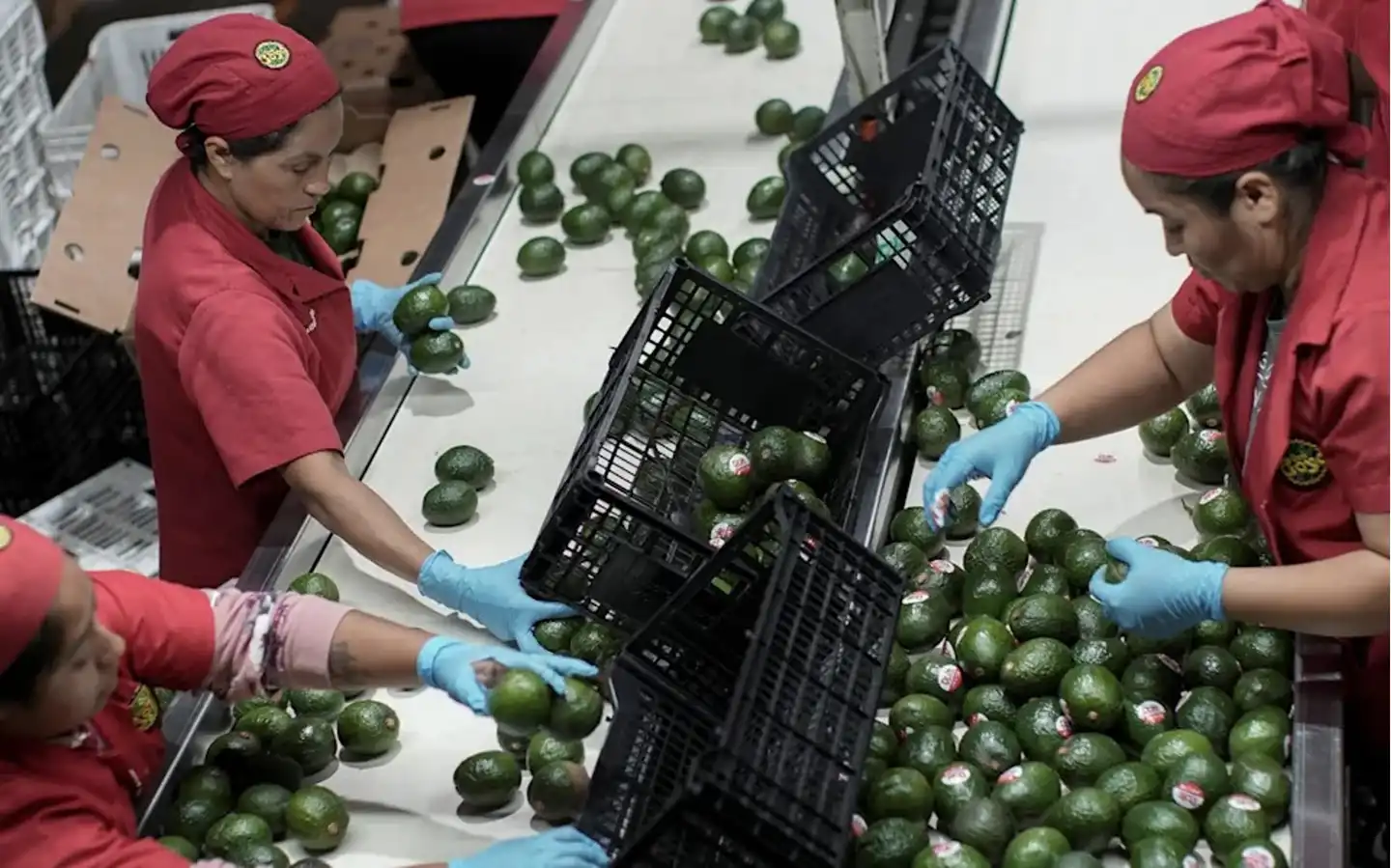
The U.S. suspension of avocado inspections was the third in Michoácan because of TCO violence in recent years. Department of Agriculture inspectors evaluate avocados to screen out low-quality fruit and to prevent unwanted pests from entering the U.S. The threat to inspectors was deemed too high to continue inspections of the popular fruit, which accounted for $3.7 billion in sales for Mexico in 2025 and comprises 80% of avocados consumed in the U.S., according to The Associated Press.
The U.S. lifted its inspection ban on August 13, citing the quick response from Mexico. “I recognize the Government of Mexico, particularly its Security Cabinet, for the actions and close coordination that made this full resumption possible efficiently. We will continue to monitor security conditions and adjust our operations as appropriate. Our priority remains the safety of U.S. personnel and the people of Michoacán,” Johnson said in the embassy release.