

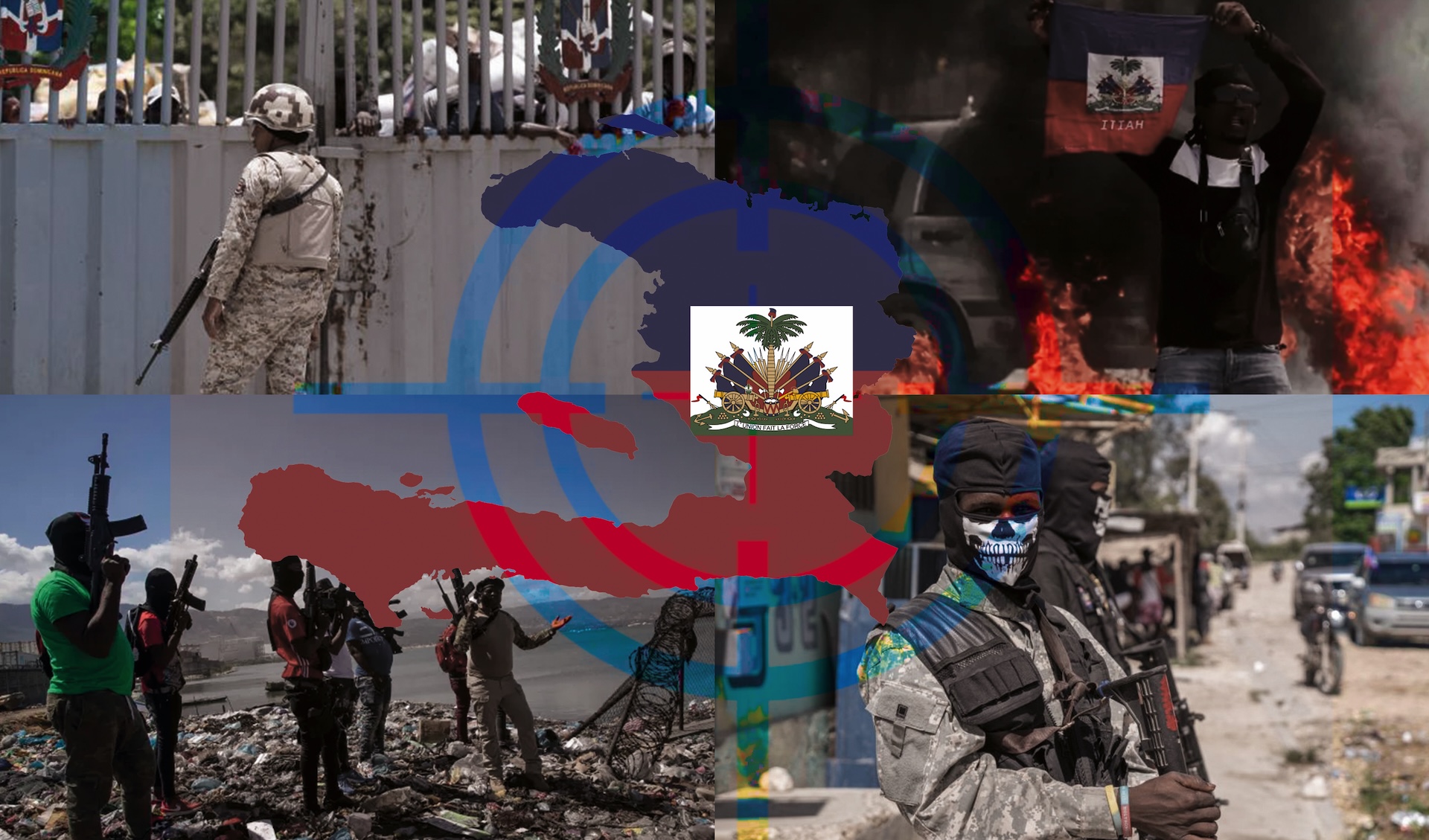
The profound institutional decay in Haiti, coupled with the relentless expansion of gang territorial control, has transformed the nation into a pivotal hub for drug trafficking routes within the Caribbean. This crisis interconnects South American supply chains with North American markets through the Caribbean maritime corridor, presenting an escalating threat to regional security. In December 2025, the United Nations Office on Drugs and Crime (UNODC) and the Security Council issued stern warnings regarding this alarming shift in criminal dynamics, noting that gangs now command about 90% of Haiti’s capital and strategic maritime outlets.
The systemic erosion of state authority has turned Haiti into an operational nerve center for large-scale illicit trafficking. In early July 2025, authorities recorded the largest drug seizure in more than three decades, when 1,045 kilograms of cocaine were intercepted off the coast of Tortuga Island. Barely two weeks later, 426 kilograms of cannabis was seized in the northern region of the country. That same month, two Haitian nationals were apprehended in Jamaica with more than 1,350 kilograms of the drug, the UNODC indicated.
According to UNODC, the seized cocaine originated in South America and was destined for both the Caribbean and the United States. The agency also documented logistic chains reaching as far as Europe. In August 2025, this global reach was confirmed when Belgian authorities discovered 1,156 kilograms of cocaine at the port of Antwerp, concealed within a shipping container arriving from Haiti via transshipment in Kingston.
Vulnerable routes and criminal hegemony
Haiti’s porous land and sea borders, combined with its geographic proximity to the U.S., have solidified its role as a corridor for drug trafficking. Drugs enter the territory via air and sea from Colombia and Venezuela or are moved across the land border with the Dominican Republic. Illicit flows are facilitated by the erosion of institutional presence in Haiti and the inherent geographic challenges of the 391-kilometer border, where many illegal routes circumvent even the most robust checkpoints maintained by neighboring authorities.
Armado Rodríguez Luna, a member of the Mexican consulting firm Nzaya — which specializes in security, law and governance — observed that “Haiti offers a low-cost environment for illicit economies. The gangs operating in the country, historically linked to the illegal trafficking of goods, are easily recruited, in part because they lack a large internal illegal market.” This structural reality forces these groups to rely on revenue generated by facilitating the transit of illicit goods for external transnational criminal networks.
Rodríguez Luna also emphasized that gangs now command specific coastal territories, such as the Cayos region and Tortuga Island, which serve as logistical “storage platforms” for illicit shipments. The fragmented geography and limited access points hinder sustained patrolling, complicating even the high-level interdiction operations conducted by the U.S. in coordination with Caribbean partners.
In this environment, criminal groups have asserted greater influence over maritime routes, demanding tolls from passing vessels and orchestrating armed robberies at sea. The UNODC has further documented a “weapons for drugs” exchange, illustrating a sophisticated level of cooperation between Haitian gangs and regional organized crime networks in Jamaica and the Bahamas.
Gang expansion and the rise of Viv Ansanm
Haiti is currently home to hundreds of gangs, but the landscape has shifted from fragmented factions to a consolidated power block known as Viv Ansanm (Living Together). This coalition, which united former rivals G9 and G-Pep, now exerts de facto control over most of Port-au-Prince and the highways connecting the capital to the northern ports and the Dominican border.
The influence of these criminal structures surged after the 2021 assassination of President Jovenel Moïse, a crime that remains unsolved. This persistent political vacuum and the disintegration of internal security have evolved the Haitian crisis into a catalyst for wider regional instability. Viv Ansanm now occupies strategic corridors used for the trafficking of drugs, firearms and other contraband. This territorial dominance allows them to extort local populations, systematizing “illegal taxes” on all commerce, while streamlining the flow of narcotics to North American and European markets.
The resulting violence has displaced nearly 1.3 million people and exacerbated a dire food insecurity crisis. In addition, reports indicated that minors account for about 50% of gang members — an alarming indicator of the social collapse fueling criminal expansion.
International response
The consolidation of gang power has prompted a more robust and specialized international response. In September 2025, the United Nations Security Council authorized the transition of the previous support mission into the Gang Suppression Force (GSF). This new mandate is specifically designed for “intelligence-led targeted counter-gang operations” to neutralize and deter criminal organizations.
The U.S. has anchored this initiative with diplomatic and logistical resources. In December 2025, U.S. Secretary of State Marco Rubio announced that the international community had secured pledges of up to 7,500 personnel for the GSF. To enhance the effectiveness of the Haitian National Police (PNH), the U.S. donated a shipment of 25 new armored personnel carriers that same month to increase mobility in high-risk theaters of operation.
The UNODC also has been instrumental in reinforcing Haitian sovereignty at the borders. Throughout 2025, the agency delivered armored vehicles and over 350 sets of specialized ballistic gear to POLIFRONT (the specialized border police) and provided high-tech equipment to the Haitian Coast Guard. These efforts are complemented by intensive training modules in advanced scanning technologies and tactical intervention, ensuring that partner nations are not just providing “boots on the ground” but also the professional capacity to sustain security.
Risks to the Caribbean Basin
Rodríguez Luna warns that the expansion of the criminal model in Haiti poses growing risks for the Caribbean, especially for islands with limited maritime surveillance capabilities. Despite the reinforcement of maritime controls and the creation of a Standing Group of Partners (including The Bahamas, Canada, El Salvador, Guatemala, Kenya, Jamaica and the U.S.) he suggests that Haiti could consolidate as a functional hub for organized crime if institutional recovery is not sustained.
According to the analyst, curbing the trajectory of crime in Haiti requires a long-term strategy centered on institutional reconstruction and the systematic recovery of territorial sovereignty. The U.S. and the Dominican Republic are positioned to lead this endeavor, supported by regional partners through sustained investment and technical assistance.
“The cost of inaction is already visible. The humanitarian crisis is deepening, and Haiti is reinforcing its role in transnational illicit economies,” Rodríguez Luna concluded. “In a Caribbean with uneven surveillance capabilities, this can have lasting effects on regional stability and hemispheric security.”
Diálogo Américas is a publication of the U.S. Southern Command