

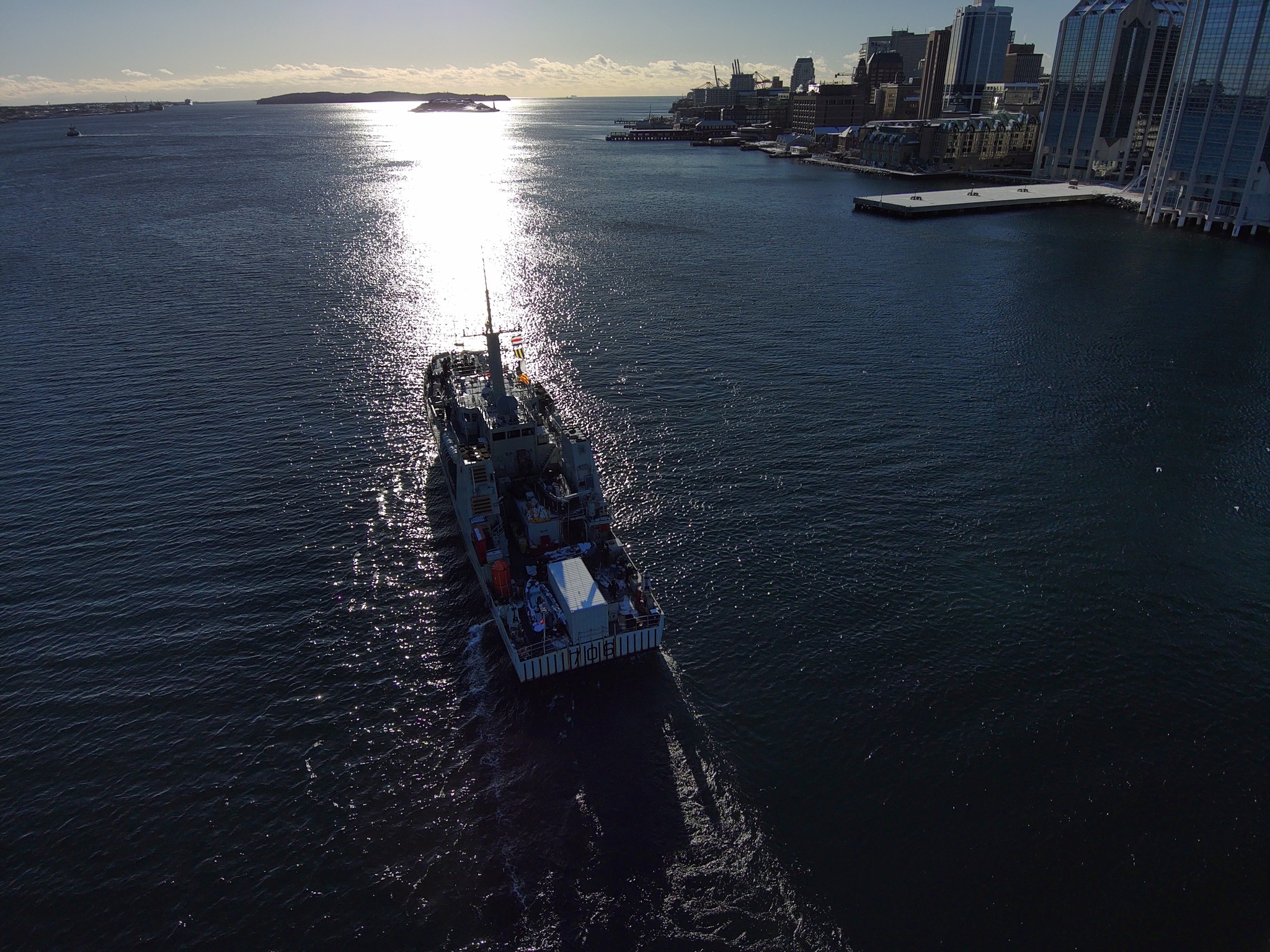
The Canadian coastal defense vessel HMCS Yellowknife returned to its home port in Halifax, Nova Scotia, in March 2026 after a seven-week patrol in the Caribbean Sea and eastern Pacific Ocean as part of Operation Caribbe, a multinational operation to disrupt and dismantle drug trafficking. The Yellowknife’s voyage represented Canada’s continuing commitment to stemming narcotic flows to North America funneled by transnational criminal organizations. The ship’s mission “demonstrates Canada’s sustained commitment to upholding international law and contributing to regional security in the Caribbean Sea. Maintaining a lawful and persistent presence at sea plays a critical role in deterring illicit trafficking and supporting our partners’ efforts to counter transnational criminal networks,” said Commodore Jacob French, acting commander Maritime Forces Atlantic in a Department of National Defence news release.
Operation Caribbe has been Canada’s primary maritime mission in the Western Hemisphere since 2006, supporting the United States’ Operation Martillo, a counternarcotics effort. A 2010 agreement between the countries gives the U.S. Coast Guard law enforcement authority in both operations, enhancing interoperability and bolstering regional maritime security. To that end, the Yellowknife carried a Coast Guard law enforcement detachment during its mission. The mission has achieved considerable success in recent years. In 2025, two Canadian ships — the HMCS Harry DeWolf and the HMCS William Hall — seized more than 2,200 kilograms of narcotics during that year’s deployment. Since the beginning of Operation Caribbe, Canadian Armed Forces have seized 123 metric tons of cocaine, according to the release.
The Yellowknife didn’t seize any narcotics during its patrol, but the Yellowknife’s crew stayed busy, including conducting rigid hull inflatable boat drills, according to a February 17 Royal Canadian Navy Facebook post. The ship’s commanding officer said the Yellowknife’s vigilant presence in the region accomplished its goal. “Our presence forms part of a broader, long‑standing multinational effort that deters traffickers and strengthens the maritime security framework of the region.” Lt. Cmdr. Jeff Smith said.
Canada’s partner in the effort, the Coast Guard, praised the Yellowknife’s performance. “The professionalism and interoperability of His Majesty’s Canadian Ship Yellowknife crew and our embarked United States Coast Guard Law Enforcement Detachment is a testament to our enduring partnership with the Royal Canadian Navy. It takes a network to defeat a network, and that is why our collaboration is vital for disrupting the flow of illicit narcotics from reaching either of our nations,” said Vice Adm. Nathan Moore, commander of the Coast Guard’s Atlantic Area.
Commissioned in 1998, the Yellowknife recently transferred to the RCN’s Atlantic Fleet in Halifax with three other Kington-class vessels as part of a force consolidation. Eight other Kingston-class ships, most of which have three decades of active service, will be decommissioned. The RCN has announced plans to replace the vessels with Continental Defence Vessels, a heavily armed blue water corvette, potentially with vertical launch missile cells, advanced sensors and modular mission systems, the Canadian Naval Review reported. “This transformation isn’t just a branding change; it’s a reflection of the changing threat landscape and growing recognition that Canada needs Tier 2 combatants to cover the operational gap between the Arctic Offshore Patrol Ship and the future River-class destroyers,” the Review reported.