

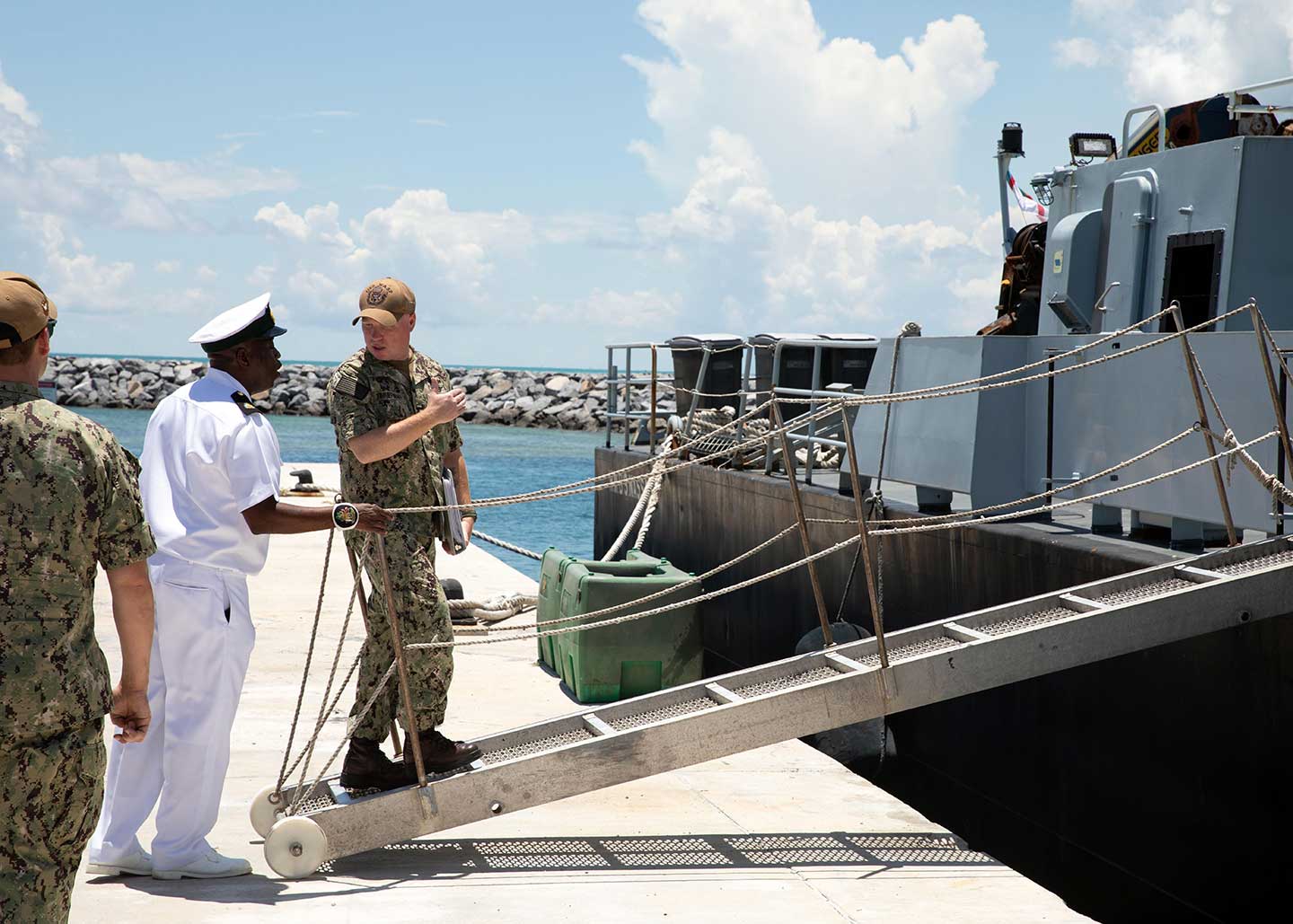
As The Bahamas approaches the solemn anniversary of its defense force’s only military engagement, the government’s top official said in April 2026 that increased investment to create a larger, more capable force has paid off. Prime Minister Philip Davis, in a recent speech at the Coral Harbour headquarters of the Royal Bahamas Defence Force (RBDF), said the RBDF’s larger military footprint can more effectively secure its vast territorial waters and curb narcotics smuggling and human trafficking.
Since 2021, the government has invested more than $100 million in the RBDF, including new coastal fast boat patrol vessels. Enlisted ranks have grown by 570 during the same period, bringing total troop strength to about 1,600. Coastal radar sensors also have been deployed to increase domain awareness. The funding has made The Bahamas more secure than ever, Davis said in his April 16 remarks.
In a related Facebook post, Davis also praised the RBDF Rangers program in Bahamian high schools that expose young people to options in the military and basic defense skills, according to the Bahama Press, a Bahamian newspaper. The Ranger program will steer qualified men and women into the armed forces, he said, while teaching important citizenship skills.
In May 1980, an RBDF patrol vessel, HMBS Flamingo, was sunk by Cuban MiG fighter planes while it was enforcing regulations against illegal fishing. Four RBDF Marines died in the attack. Cuba eventually accepted responsibility for the attack and paid $10 million in compensation. That incident created the modern RBDF, Davis noted in his speech.
In recent years, as the Caribbean region has seen an uptick in the smuggling of drugs and migrants, the RBDF has stepped up interdiction efforts, often in close collaboration with the United States and the Turks and Caicos Islands, a British overseas territory. Commodore Floyd Moxey, the RBDF’s commander, said in December 2025 that 11,791 migrants in 341 vessels had been detained by the RBDF since 2021, according to the Nassau Guardian, a Bahamian newspaper.
Gen. Gregory M. Guillot, commander of the U.S. Northern Command and the North American Aerospace Defense Command, told a Senate committee in March 2026 that The Bahamas has played a crucial role in disrupting smuggling networks in the southeastern approaches to the U.S. “The RBDF’s contributions to maritime security and counternarcotics efforts in the approaches to the homeland have been critical to shared success,” Guillot told Armed Services Committee members.