

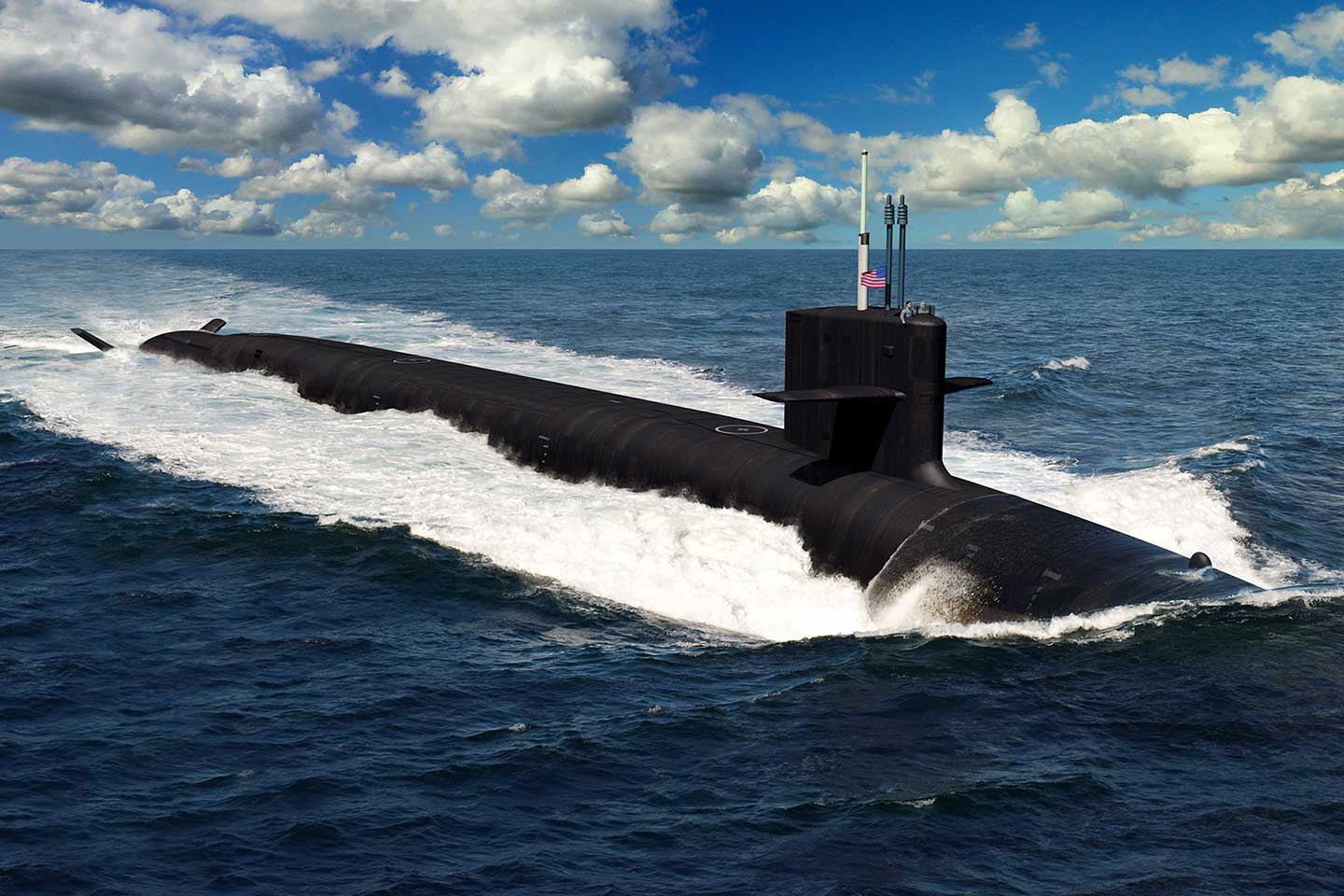
The United States announced in April 2026 that it would invest $71 billion in the nuclear triad — air, land and sea launching capability — to maintain a strategic advantage over its adversaries. The money would fund new Columbia-class submarines, the B-21 Raider stealth bomber and stand-alone next-generation intercontinental ballistic missiles to replace the Minuteman III. The upgrade of the nuclear stockpile is meant to signal to global adversaries, including Iran, that reckless threats of nuclear violence will be met with overwhelming force.
Secretary of War Pete Hegseth, testifying before Congress on April 30, said it would be money well spent. “[This budget] invests in it — $71 billion in our nuclear triad and [nuclear command, control and communications], understanding that if you get that wrong, you get everything else wrong,” Hegseth told the Senate Armed Services Committee, according to an April 30 War Department news release.
Hegseth said Iran’s pursuit of nuclear weapons is one example of why the U.S. has a nuclear deterrent and why it must maintain that strategic capability. “Imagine what the situation in the region would look like if Iran also wielded a nuclear weapon — and the limits it would put on our capabilities in those situations,” Hegseth said in the release. “Our adversaries have to deal with that dilemma because of the strength of our nuclear triad — so that $71 billion investment … it’s just been a priority since we came into the building, and we’re funding it accordingly.”
Here is how the funding request breaks down:
- $6.1 billion for the B-21 Raider, a dual-capable penetrating strike stealth bomber, that can deliver conventional and nuclear munitions. The Raider was unveiled in 2023 and is planned as a central component of the nuclear triad’s air leg. A top priority for the department, the Air Force plans to procure a minimum of 100 B-21 aircraft.
- $4.6 billion for the LGM-35 Sentinel, intended to modernize and replace the Minuteman III intercontinental ballistic missile weapons system with 400 operationally deployed missiles and 450 silos across the U.S. The Sentinel program includes infrastructure projects, such as hardened silos and other facilities, across five states.
- About $1.5 billion is included for the long-range standoff cruise missile, a replacement for the bomber-delivered AGM-86B air-launched cruise missile.
- $16.2 billion for the Columbia-class ballistic missile submarine. The Columbia-class is currently in production and will replace the existing Ohio-class vessels. The president’s budget includes the procurement of the fourth submarine in this class and additional funding for the continued development of the third submarine in the class, the USS Groton. There also is funding for research, development, test and evaluation, as well as for investment in the industrial base that builds the Columbia-class submarine.
During the Cold War, the U.S. developed the nuclear triad to maintain strategic advantage and operational flexibility. The policy has been reaffirmed by successive administrations, according to a May 2025 report by the Congressional Research Service. “A nation’s ability to build, to innovate and to support critical needs of its warfighters at speed and at scale is the foundation upon which its deterrence and survival rests,” Hegseth told lawmakers.