

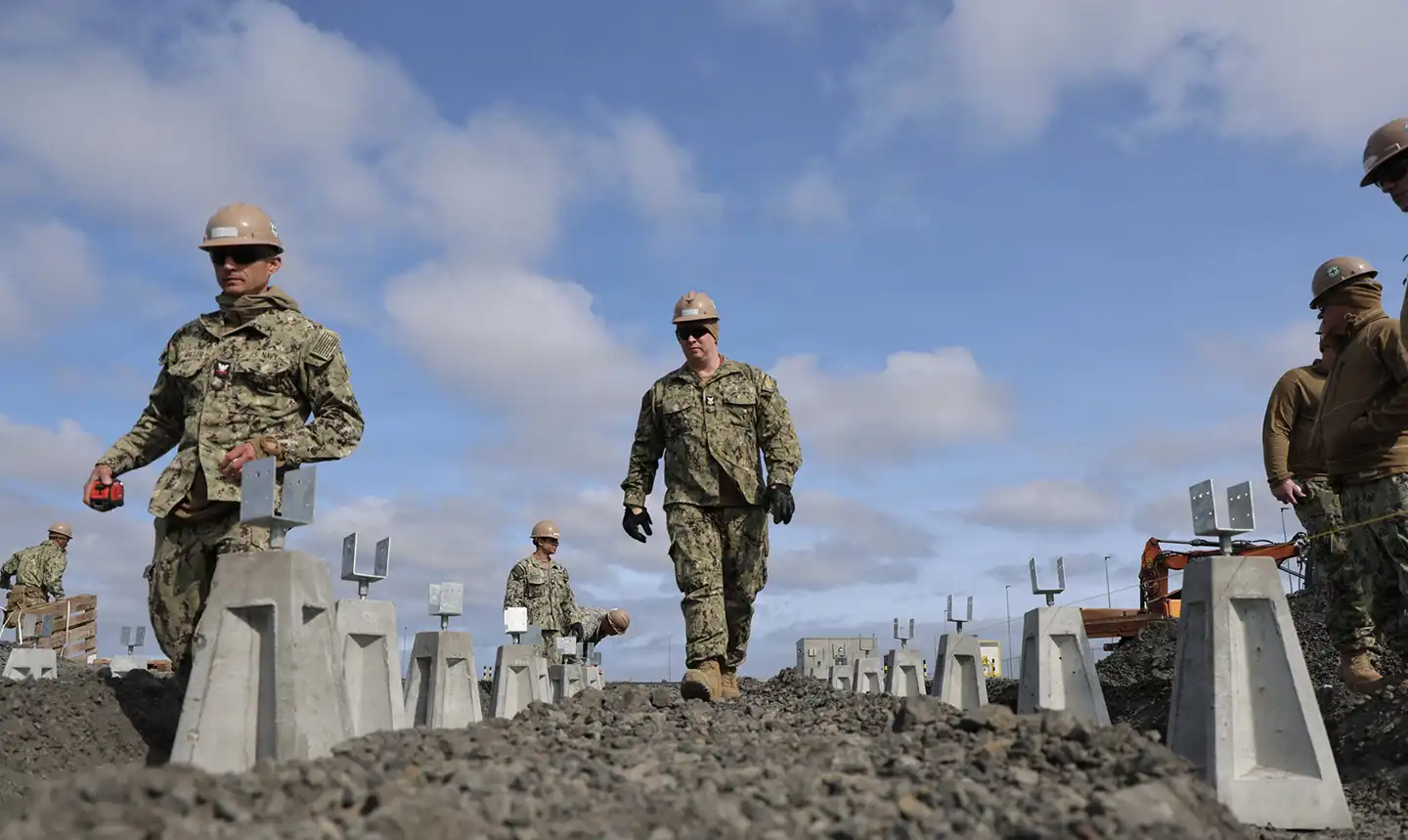
A biennial exercise designed to protect a critical maritime passage between the Arctic and North Atlantic oceans began in Iceland in August 2026 as the United States joined with NATO allies in the multidomain drill. Exercise Northern Viking involved the coordination of sea, air and command and control forces collaborating to defend the Greenland-Iceland-United Kingdom (GIUK) gap. Submarines in Russia’s Northern Fleet often use the passage to access the North Atlantic from their base in the Kola Peninsula. This year’s Northern Viking marked the 75th anniversary of a pact between the U.S. and Iceland in which Washington guarantees Iceland’s defense. Iceland is the only NATO member without a military other than its lightly armed Coast Guard.
“Our defense cooperation with the United States has thrived for 75 years because it has never stood still; it has developed to meet evolving challenges of our time,” said Þorgerður Katrín Gunnarsdóttir, Iceland’s minister for foreign affairs. “The best way to celebrate this anniversary is not merely by commemorating our partnership, but by actually practicing it — together and alongside our allies. Northern Viking is precisely that, a demonstration that the commitments we have made to one another are dynamic, practical and built on trust —underpinned by shared interests.”
Iceland’s Coast Guard spearheaded the exercise along with the U.S. 6th Fleet, which is headquartered in Naples, Italy, and is responsible for U.S. naval presence in Europe and Africa. Belgium, Canada, Denmark, France, Germany, Lithuania, Norway and Poland also participated alongside specialized assets and personnel from Allied Maritime Command and NATO Joint Force Command Norfolk. Some of the specialized units included an embarked Portuguese Navy diving team and Royal Danish Navy mine hunting and disposal team, USNI, a Naval affairs news site, reported.
Northern Viking, which was held August 22 through September 3, ran realistic training scenarios focusing on anti-submarine warfare, mine countermeasure, expeditionary construction, search and rescue, humanitarian medical response and disaster response, a Navy news release stated. Along with the 6th Fleet, NATO naval forces from the alliance’s NATO Mine Countermeasures Group 1 and Standing Maritime NATO Group 1 took part, USNI reported.
“Seventy-five years of bilateral defense cooperation is a testament to the unbreakable bond between the United States and Iceland,” said Vice Adm. J. T. Anderson, Commander, U.S. 6th Fleet, in the Navy release. “Northern Viking 2026 is a demonstration of our commitment to the collective defense of the North Atlantic. Together with our allies, we continue to create an environment that allows interoperability among NATO maritime forces so that European allies can take over primary responsibility for deterrence and defense in the European Theater.”
An exercise that began in 1982 now occurs under the umbrella of Arctic Sentry, a NATO multidomain initiative launched in February to strengthen the alliance’s presence in the High North. Northern Viking also coincided with the arrival of Belgian F-16 Fighting Falcons to assume NATO’s Air Defense of the GIUK gap. Since 2008, NATO has patrolled Iceland’s skies as part of an air policing effort that has evolved into NATO’s Air Defense program, launched in September 2025. Air Defense takes a more holistic approach to combat an array of threats in all domains instead of focusing solely on aircraft.
“While Air Policing primarily was more oriented to protect against manned and unmanned aircraft in the air, the Air Defence framework, entailing a multi-layered, 360-degree approach, protects NATO territory against the whole range of threats across all domains, providing NATO greater flexibility to respond to changes in the security environment,” a NATO news release stated. The enhanced vigilance activity has also been incorporated under Arctic Sentry.
On land, as Navy SeaBees prepared infrastructure for the exercise at Keflavik Air Base at Reykjavik International Airport in Iceland’s capital, NATO’s Supreme Allied Commander Europe Gen. Alexus G. Grynkewich, who also leads the U.S. European Command, arrived the day before the exercise began to meet with Icelandic leaders, including Prime Minister Kristrún Frostadóttir and Gunnarsdóttir. They discussed bilateral defense cooperation and Arctic security.
“We had a good conversation about the situation following the Ankara summit and the increased defense preparedness of the alliance now that all states are strengthening their own capabilities to meet the changing security situation. We also reviewed the close and good defense cooperation between Iceland and the United States,” Frostadóttir said in a government news release.
Integrating the exercise with the latest AI technology and counter unmanned aerial systems tactics helps ensure the continued defense of the GIUK gap, Grynkewich said.
“We will deliver precision effects and will practice defense against rapidly proliferating unmanned systems. Throughout this exercise, and others, we will leverage the power of data in AI enabled decision support tools, will integrate data streams in real time, and ensure our command and control structures can make decisions at the speed of future conflict,” he said, according to USNI.