

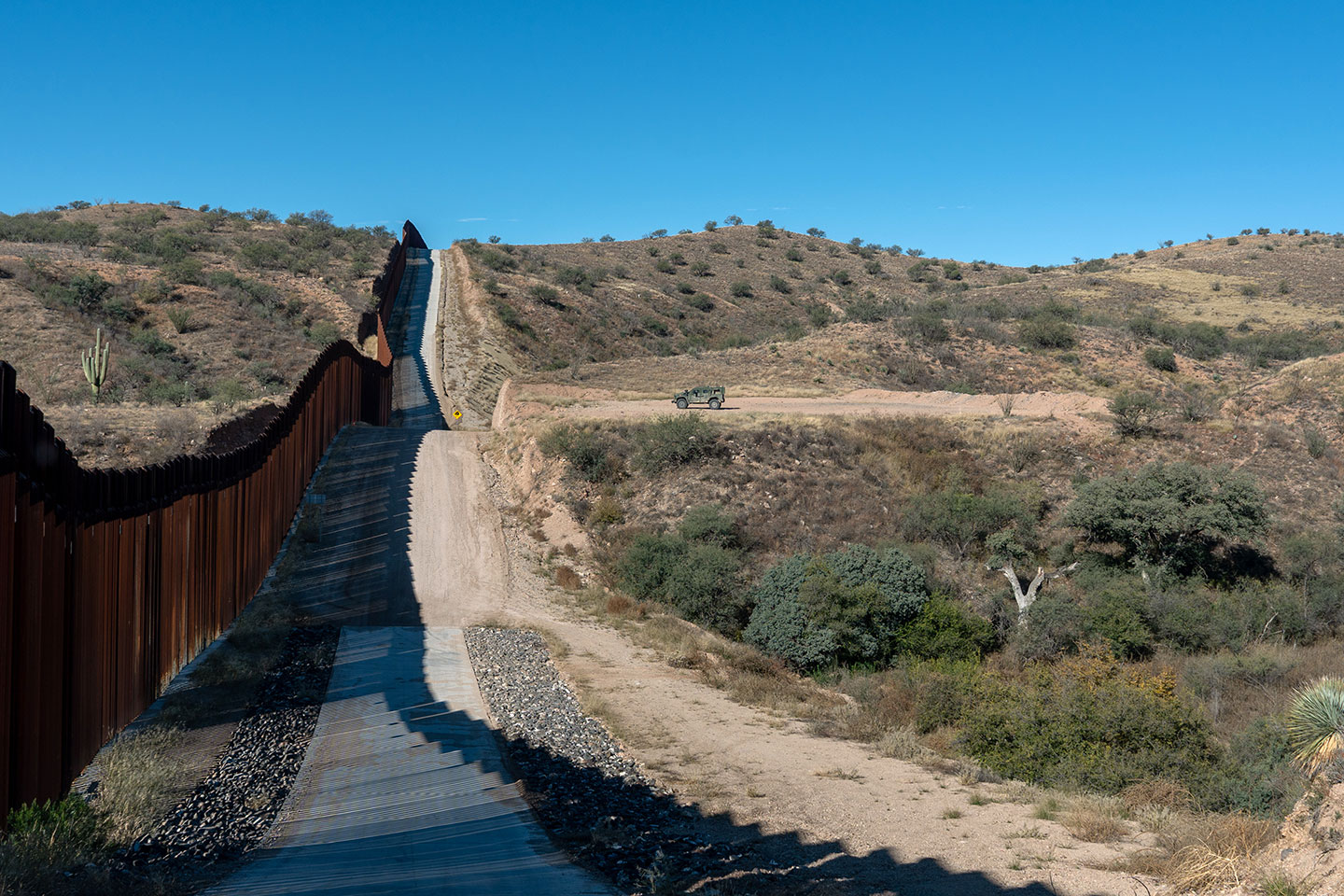
The United States awarded $3.3 billion in construction contracts to build 156 kilometers of border wall and even more waterborne barriers in Texas and Arizona in November and December 2025, part of a larger effort to the secure the 3,145-kilometer border with Mexico. The new construction will include 90 kilometers of wall and 106 kilometers of waterborne barriers along the border of Laredo, Texas, and Nuevo Laredo, Mexico, a part of the frontier that has never been secured with barriers.
The new contracts, awarded by the U.S. Customs and Border Protection (CBP), will add 156 kilometers of primary border wall, 31 kilometers of secondary border wall and 106 kilometers of waterborne barriers. The funding also will pay for 240 kilometers of detection technology where barriers exist without Smart Wall features. CBP defines a Smart Wall as a steel bollard wall — often with a waterborne barrier or secondary wall — along with detection technology, cameras, lighting and roads, intended to create a double-layer barrier, according to a December 18 news release.
“Securing our border is key to protecting our country, keeping our communities safe, and making sure our immigration system works the way it should. A border wall with the right technology — a Smart Wall — is an important tool to stop illegal activity and to help agents do their job, which is critical in keeping America safe,” CBP Commissioner Rodney Scott said in the release.
The CBP projects, awarded in November and December, cover the following sections of the border wall, according to the release:
- Del Rio 3 Project — 35 kilometers of primary border wall and 21 kilometers of detection technology in areas where there is an existing barrier in the Del Rio Sector in Texas.
- Laredo 1 Project — 24 kilometers of primary border wall and 26 kilometers of waterborne barriers in the Laredo Sector in Texas.
- Laredo 2 Project — 66 kilometers of primary border wall and 80 kilometers of waterborne barriers in the Laredo Sector in Texas.
- Tucson 2 Wall Project — 30 kilometers of primary border wall, 30 kilometers of secondary border wall and 219 kilometers of detection technology in areas where there is an existing barrier in the Tucson Sector in Arizona.
The most recent awards follow $4.5 billion in contracts awarded to build 370 kilometers of border barrier, including 129 kilometers of waterborne barrier, to be installed in the Rio Grande in South Texas in October.
A January 2025 executive order by President Donald J. Trump ordered the Secretary of Homeland Defense and the Secretary of War to “take all appropriate action to deploy and construct temporary and permanent physical barriers to ensure complete operational control of the southern border of the United States.” The U.S. Northern Command has deployed about 10,000 troops to the border along with monitoring equipment to help execute the order.