

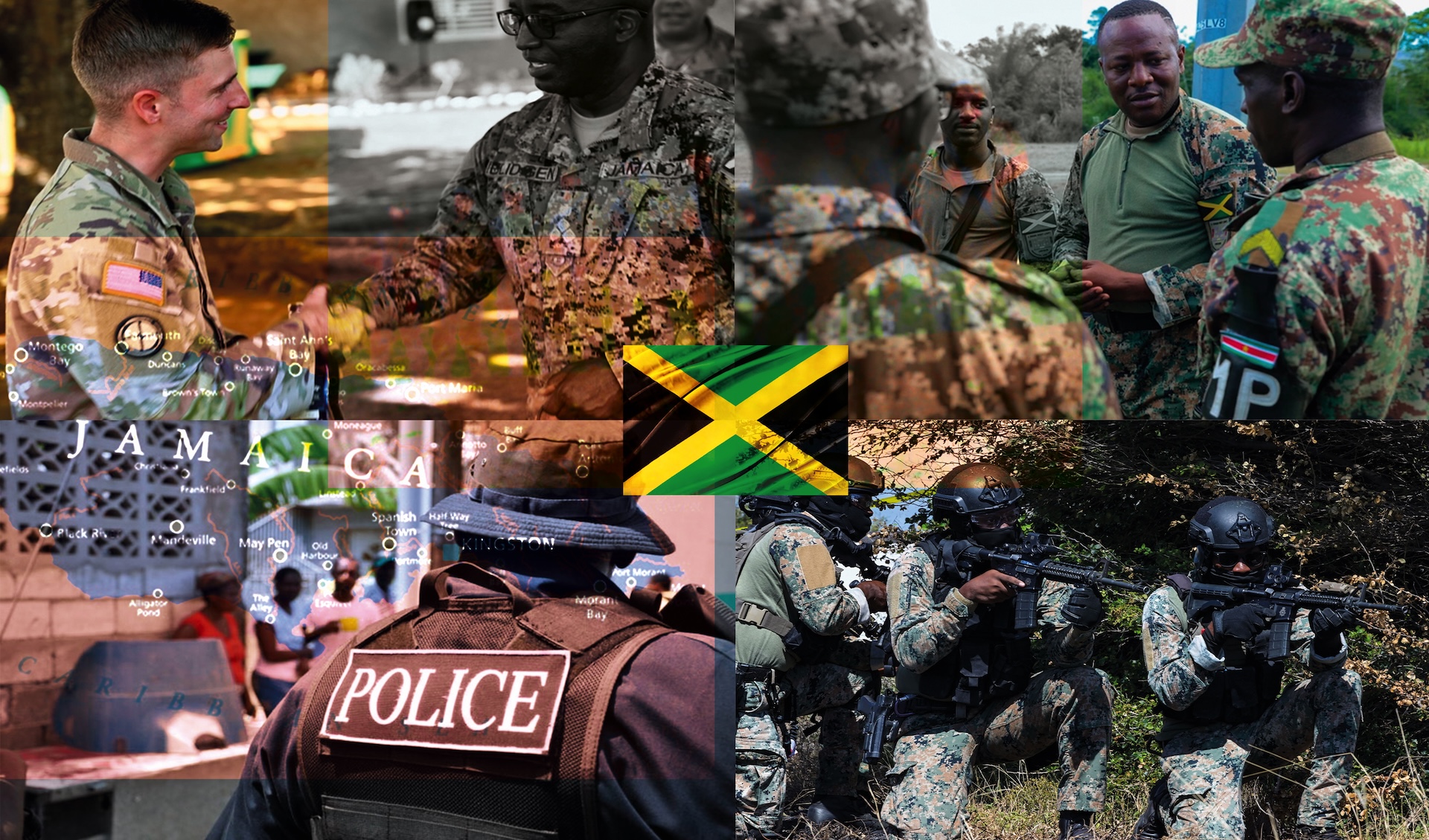
Jamaica has entered 2026 at the vanguard of Caribbean security, having achieved a profound reduction in violent crime that marks the island’s most stable period in decades. This victory was the result of a rigorous, domestic-led transformation of the nation’s security architecture. By prioritizing the dismantling of transnational criminal organizations (TCOs) and modernizing the legislative and tactical tools available, Jamaica has successfully tipped the scales against organized violence.
In a landmark year-end review, Commissioner of Police Dr. Kevin Blake confirmed that 2025 saw 649 homicides — a historic 43% decline. This trend was mirrored across all major crime categories, with a 32% drop in shootings and 13% reduction in overall violent crime. Prime Minister Andrew Holness, speaking on the sustainability of these gains, noted that the island has moved into a phase of institutional maturity. “The reduction in murders in Jamaica was not an accident,” Holness stressed. “This happened because the government invested in and gave confidence and support to the policy and direction of our security forces; now we are reaping the benefits.”
Dismantling the TCO business model
Central to Jamaica’s 2025 success was the evolution of the Counter-Terrorism and Organised Crime Investigation Branch (C-TOC). Throughout the year, C-TOC shifted its focus toward parallel financial investigations, targeting the financial lifelines of leaders of TCOs by seizing assets, including luxury vehicles and real estate.
This financial asphyxiation of gangs has been complemented by record-breaking interdictions. In mid-2025, Jamaican authorities executed one of the largest firearm seizures in the nation’s history, removing 233 illegal weapons and over 40,000 rounds of ammunition from the streets in a single operation. This intelligence-led, multiagency approach has weakened the operational capacity of groups like the Klansman and One Order gangs.
Jamaica as a regional security hub
The current execution of Tropical Dagger 2026 serves as a showcase of Jamaica’s leadership. A Jamaica Defence Force (JDF)-led exercise, Tropical Dagger is a special operations training exercise involving U.S. Special Operations Command South (SOCSOUTH), Canadian Special Operations Forces Command and Caribbean partner nations. The exercise also validates the Caribbean Special Tactics Centre, a Jamaican initiative that trains regional partners in urban, jungle and maritime special operations.
By hosting and leading Tropical Dagger, Jamaica underscores its role as the region’s primary exporter of security stability. These exercises are not merely drills; they also are the testing ground for the interoperability required to dismantle TCOs that operate across borders. Jamaican officers lead their counterparts through complex scenarios, ranging from high-stakes narcotics interdictions to specialized humanitarian missions.
This leadership was tested after Hurricane Melissa in October 2025. While U.S. assets from Joint Task Force Bravo provided critical airlift support, the JDF directed the mission, managing a humanitarian recovery and rigorous national security operations.
Plan Secure Jamaica
The technological overhaul of the Jamaica Constabulary Force (JCF) has been a primary driver of these results. Under the Plan Secure Jamaica, the force has grown to 14,000 officers, with 6,000 new recruits trained in modern policing standards. The traditional “big books” of police stations have been replaced by digital case management systems, while 18 newly reconstructed, professional police stations have been opened across the island to foster better community relations.
Deputy Prime Minister and Minister of National Security Horace Chang emphasized that this $319 million investment has professionalized the force. “You won’t see a big book anymore; you’ll see a young officer behind a computer screen, pleasant and professional,” Chang noted. This modernization has been critical in maintaining stability even after the devastation of Hurricane Melissa, where the JDF and JCF managed both disaster relief and public order simultaneously.
Strategic alliance
The island’s strategic position makes it an indispensable partner for international security. “Jamaica occupies a central position within the Caribbean, so its location has geopolitical value in itself,” Chilean international analyst Jorge Sanz said. He noted that Jamaica’s efforts to control its maritime borders are fundamental in the global fight against drug trafficking.
U.S. State Department Special Envoy Mauricio Claver-Carone underscored this, calling Jamaica “probably our most likeminded partner in the Caribbean,” during a late March 2025 briefing. The bilateral relationship has evolved into a strategic alliance focused on maritime safety and the protection of navigation routes. This collaboration is further strengthened by the U.S. National Guard Bureau’s State Partnership Program, which has paired the D.C. National Guard with Jamaica for over 25 years. This long-standing peer relationship focuses on specialized noncommissioned officer development and aviation maintenance, ensuring that both nations remain at the cutting edge of technical cooperation.
A unified defense agenda
The professional synergy between Jamaica and its partners was highlighted in late November 2025, when U.S. Chargé d’Affaires Scott Renner met with JDF Vice Adm. Antonette Wemyss-Gorman, chief of defense staff. This engagement allowed both nations to further synchronize their intelligence-sharing frameworks and evaluate the success of the JDF-led response to Hurricane Melissa. The meeting served to aligned goals, ensuring that Jamaica continues to set the standard for regional defense.
Jamaica stands as an example of institutional commitment; the nation has proven that with consistent policy and strategic investment, the tide of organized crime can be turned. No longer just a partner in security for the region; Jamaica is a leader in its future.
Diálogo Americas is a publication of United States Southern Command.