

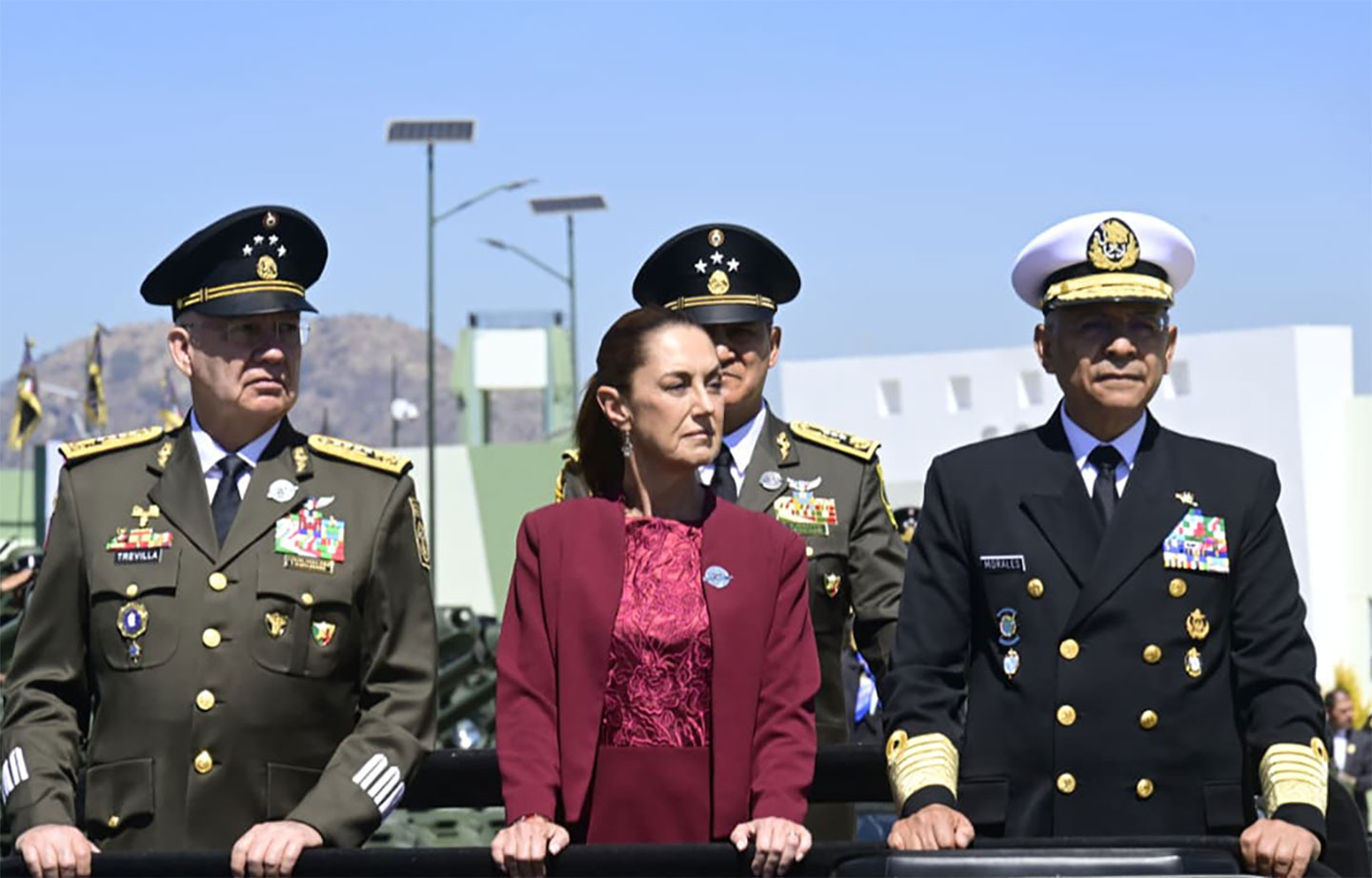
Mexican Secretary of National Defense Gen. Ricardo Trevilla Trejo and President Claudia Sheinbaum led a celebration of the Mexican Army’s 113th anniversary on February 19, 2026, in Oriental, Puebla, emphasizing that the Army not only defends borders but protects public security and well-being. In times of disaster, the military “has saved the lives of thousands of Mexicans,” Trevilla said.
Sheinbaum reiterated that point, saying, “The Mexican Army … supports public safety and builds the future. Its military engineers have participated in the construction of hospitals that expand access to health care, and the construction and modernization of airports that connect strategic regions, and in railway projects that integrate historically marginalized territories.”
Army Day is an annual celebration of the nation’s military that has historic roots in February 1913, when President Francisco I. Madero was overthrown in a coup and later assassinated. The Congress of Coahuila issued decree 1421 on February 19, 1913, formally disavowing the government of Victoriano Huerta, who had taken the presidency after Madero’s ouster, and paving the way for the Constitutionalist Army, the predecessor of today’s Army. “The Mexican Army … emerged in 1913, from the bowels of the people themselves,” Trevilla said.
“Since then, this armed force has evolved to the present day, according to the needs of the country, in various stages,” Trevilla said. One of the most important stages was when the Army took up the mantle of protector in times of disaster, he said.
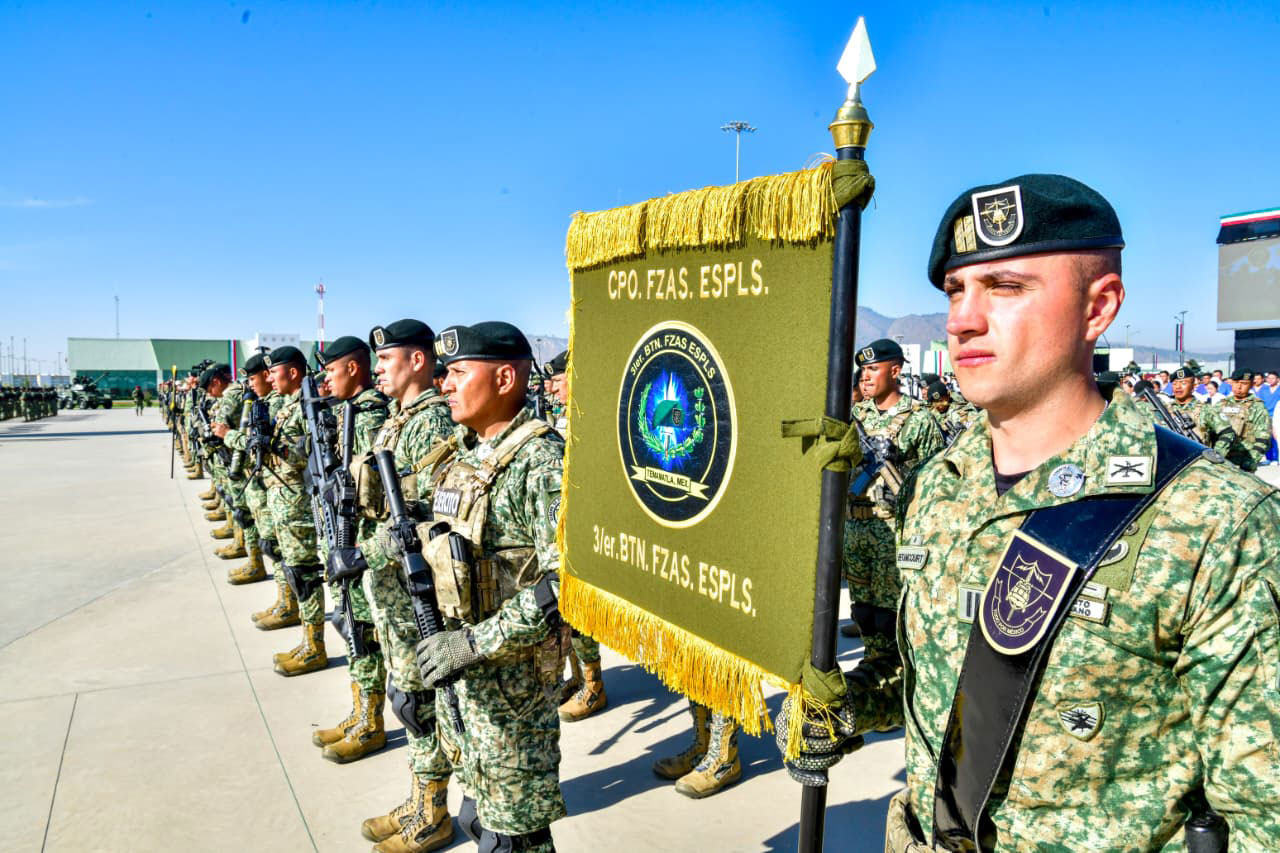
“During the second half of the 20th century, the Mexican Army, ahead of its time, projected its social essence by implementing in 1966 … the renowned Plan DN-III-E, to assist the civilian population in cases of disaster,” Trevilla said. “Since then, this innovative instrument has saved the lives of thousands of Mexicans.”
“In the present administration,” Trevilla said, “the Army reinforced its social sense generated in its genesis … through various actions, among which the following stand out: the adjustment of the training programs of the National Military Service, with matters related to civil protection and Plan DN-III-E, military ethics and civics; the adaptation of curricula and programs of military establishments at all levels, with the inclusion of subjects related to humanism, human rights, history and culture; a new impulse to the construction of social works for national progress, highlighting strategic infrastructure such as: the Mayan Freight Train, the railroads to the north of the country, hospital facilities, rehabilitation of roads and water works.”
On the public security front, the Mexican Army and National Guard have detained more than 32,000 people, he said. They also have seized more than 18,000 weapons, 160 tons of drugs, and about 2,000 methamphetamine laboratories and sites with illicit chemical precursors.
Addressing President Sheinbaum, Trevilla said: “Our Army is unique, because it was born of the people. Its roots give it identity and a sense of belonging. Every action we undertake is aimed at the well-being of society, and this is reflected in the trust that the people themselves give us.”
Speaking directly to the Soldiers of Mexico, Trevilla said: “Be proud to be part of a century-old institution whose members come from families from all latitudes of the country. … We are amalgamated by a single ideal: to serve the country.” He said that “brave comrades have lost their lives” and he asked that their memories be honored.
“Let us remember our past with pride. Let us firmly face our present in order to face our future with determination,” Trevilla said. “Let us do it for Mexican families, for society, but above all, for everything that our dear and beloved Mexico represents.”