

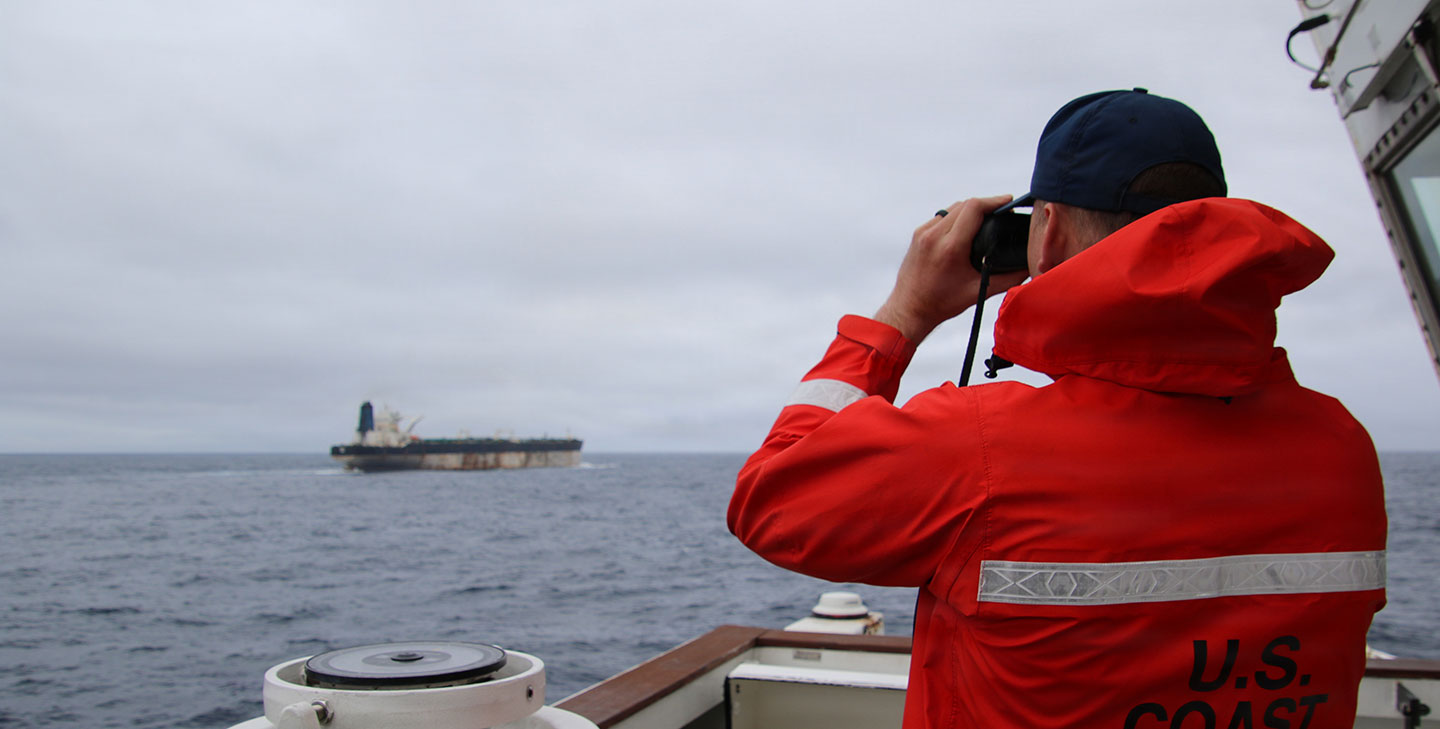
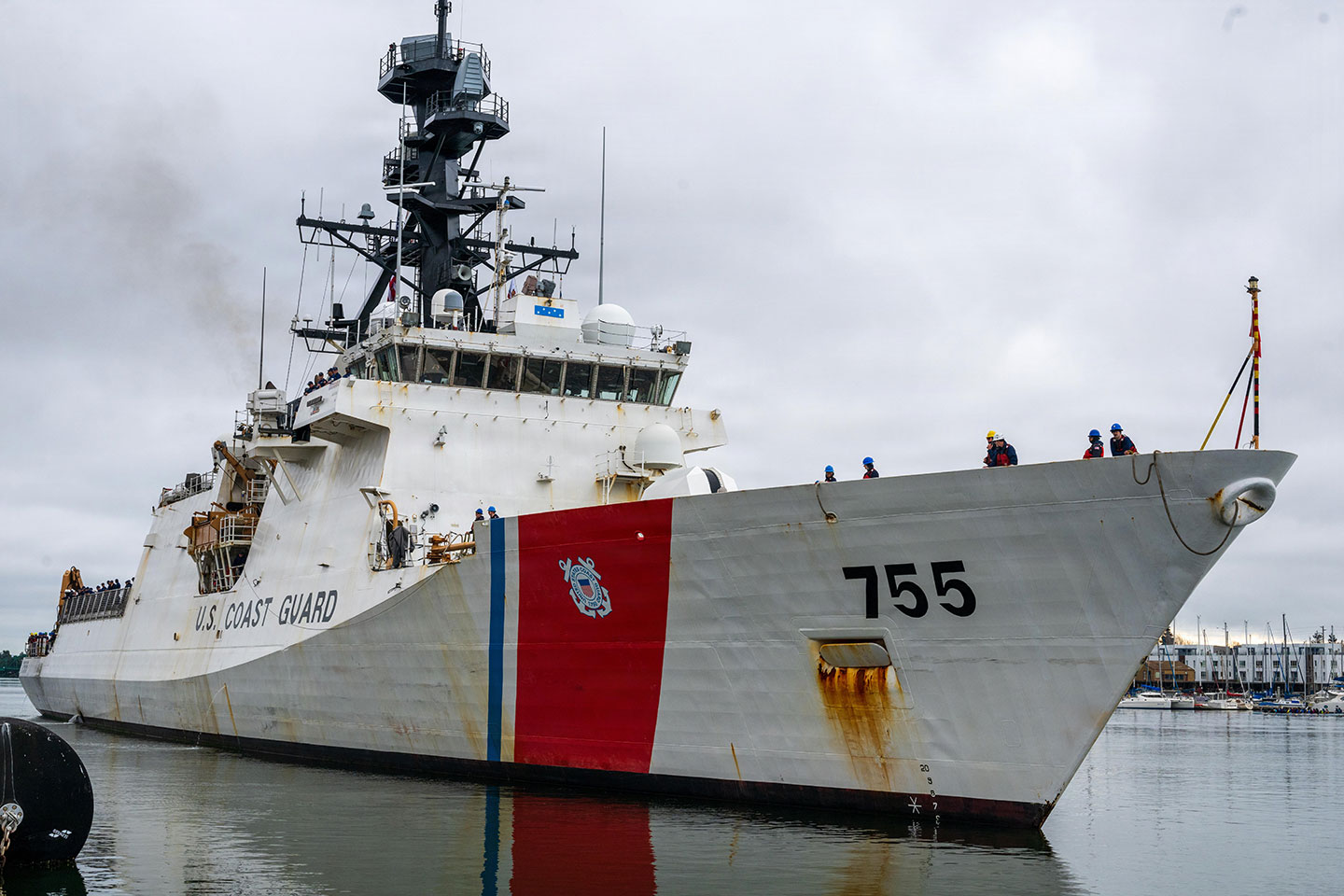
The United States Coast Guard cutter Munro and its crew returned to their home port in Alameda, California, on March 1, 2026, after a 119-day mission in which they seized about 10 metric tons of cocaine, the largest maritime drug seizure in 18 years, and chased down an oil tanker wanted for violating U.S. sanctions. The deployment spanned about 42,000 kilometers from the eastern Pacific Ocean to the north Atlantic, a Department of War (DOW) news release said.
“This crew rose to every new challenge thrown at them with professionalism and persistence, and they achieved historic results,” Capt. Jim O’Mara, commanding officer of the Munro, said in the news release. “This was a one-of-a-kind deployment for us, but it is also just one part of a much broader campaign and U.S. national strategy.”
The Munro left Alameda on November 3, 2025, to conduct training and participate in the DOW’s Resolute Hunter exercise off the coast of San Diego before sailing into the Eastern Pacific for a counternarcotics patrol in support of the Coast Guard’s Operation Pacific Viper. The ship was diverted later to the Atlantic Ocean in support of Operation Southern Spear, which combats drug trafficking networks in the Western Hemisphere, particularly near Venezuela.
While assisting U.S. Southern Command’s Joint Interagency Task Force South and the Coast Guard’s Southwest District, the Munro detected and identified a heavily laden vessel traveling along a known smuggling route in the Eastern Pacific. With support from its two cutter pursuit boats, the ScanEagle short-range unmanned aerial system and an embarked MH-65 Dolphin helicopter from the Helicopter Interdiction Tactical Squadron, the Munro found, tracked and seized the vessel after firing warning shots and disabling fire from the aircraft.
The cutter detained six suspected narcoterrorists and seized about 10 metric tons of cocaine worth over $250 million. It was the largest maritime drug seizure in 18 years and the largest ever in the tactical squadron’s history. The interdiction continued the Coast Guard’s historic counterdrug operations as part of Operation Pacific Viper, including the seizure of about 90 metric tons of cocaine along maritime smuggling routes from South and Central America since August 2025.
After traversing the Panama Canal, the Munro traveled to the Caribbean Sea in support of Southern Spear. The ship identified the “ghost fleet” oil tanker Bella 1, a U.S.-sanctioned vessel that was determined to be without nationality and subject to U.S. jurisdiction. Ghost fleet or “shadow fleet” tankers are older, often uninsured ships that use deception — like disabling tracking systems or changing flags of origin — to secretly transport sanctioned oil from countries like Iran, Russia and Venezuela.
The Munro’s crew pursued the Bella 1 across the north Atlantic for 18 days and about 7,900 kilometers. The pursuit ended with the boarding of the tanker. The Munro worked with DOW assets to seize control of the 333-meter crude oil carrier for transfer to the Justice Department and Department of Homeland Security.
The Bella 1’s captain, Avtandil Kalandadze, and first officer were arrested and taken aboard the Munro, the Stars and Stripes newspaper reported. A federal indictment filed on February 12 said Kalandadze faces charges of violating two sections of U.S. federal law: taking an action to prevent seizure and failure to heave to.
Commissioned in 2017, the Munro is one of four Coast Guard Legend-class national security cutters based in Alameda. The cutter is named after Signalman 1st Class Douglas A. Munro, the only Coast Guardsman awarded the Medal of Honor. On September 27, 1942, Munro sacrificed himself in the defense, rescue and evacuation of 500 stranded Marines from Point Cruz, Guadalcanal, in the Solomon Islands.