

Although it doesn’t have an army and is relatively small, Iceland is a pivotal player in Arctic defense policy. NATO base and port privileges ensure that alliance members have access to the Greenland-Iceland-United Kingdom Gap (GIUK Gap), a probable route for Russian nuclear submarines in a conflict. The growing importance of Arctic defense has been noted in Reykjavík, where the government reaffirmed this year that NATO membership and the country’s bilateral relationship with the United States are foundational pillars of Iceland’s foreign policy.
A panel of Parliament members convened in March 2025 to discuss the country’s defense posture as tensions continue to rise in the Arctic. The policy change explicitly places Iceland as an active participant in NATO’s defense plans for Arctic and North Atlantic defense.
“We are living in a time of great uncertainty in international affairs, and Iceland’s security environment has deteriorated rapidly in recent years. Like other European countries, Iceland must face this reality and take action to safeguard the nation’s security and contribute to the collective defense of NATO member states,” said Þorgerður Katrín Gunnarsdóttir, Icleand’s minister for foreign affairs at the time. “This involves reinforcing the security, defense, and resilience of Icelandic society. The policy has been shaped through broad political consensus, which is crucial when the nation’s security and defense are at stake.”
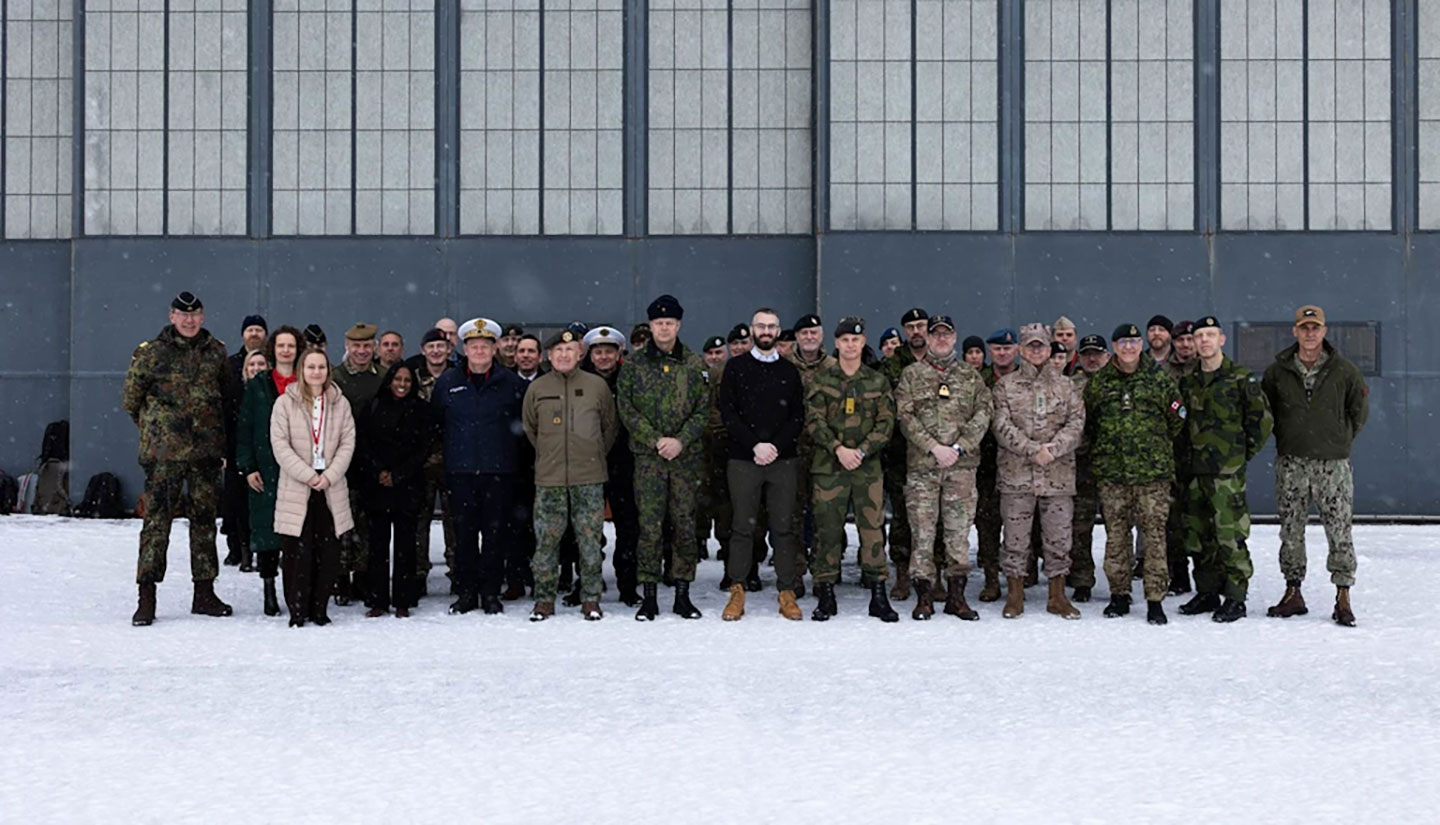
Hosting the Arctic Security Forces Roundtable (ASFR) was another step to forge closer military ties with its Atlantic and Arctic partners, the government said of the March 24-25 conference in Keflavík, a town in southwest Iceland near a U.S. military base. “The meeting focused on strengthening shared situational awareness and enhancing coordination among Allies in the Arctic,” the government release stated. “Participants exchanged views on evolving security challenges and explored ways to further develop collective deterrence and defence. The visitors also had the opportunity to familiarize themselves with Keflavík Air Base and Iceland’s defence related tasks.” The release noted that Iceland’s new Defence and Security Policy — approved by Parliament in February — places “special emphasis on regional defence cooperation in the Arctic.”
The ASFR, established in 2010, serves as an important forum for promoting mutual understanding, coordination and information‑sharing among the seven allied Arctic states. Four observer nations (France, Germany, the Netherlands and the United Kingdom) also participate as key partners. ASFR is cochaired by Norway and the United States European Command. This year’s meeting in Keflavík included representatives from U.S. Northern Command and NATO’s Joint Force Command Norfolk, the release stated.