

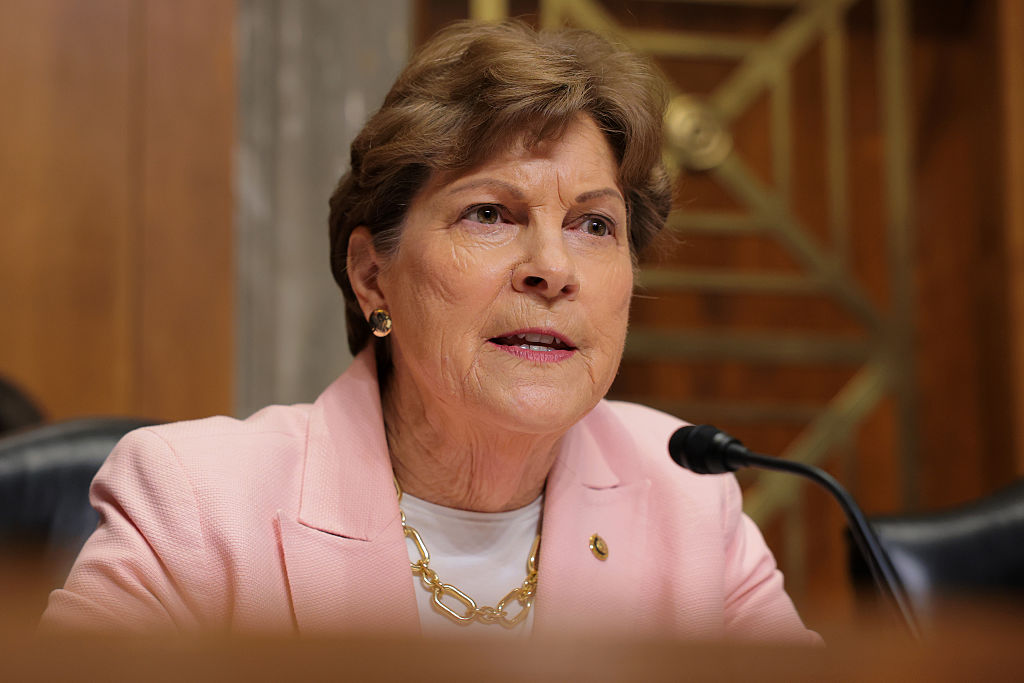
A group of United States senators traveled to four Arctic nations in May 2026 to highlight the growing strategic importance of the region and demonstrate U.S. resolve to keep adversarial forces at bay. The eight senators, divided equally along partisan lines and led by Sens. Lisa Murkowski and Jeanne Shaheen, said their trip was to gain a deeper understanding of the region. The U.S. has 1.17 million square kilometers of Arctic territory, fourth in size — behind Canada, Denmark and Russia — of the eight nations with High North real estate.
The delegation — which also included Sens. Katie Britt of Alabama, Cindy Hyde-Smith of Mississippi, Catherine Cortez-Masto of Nevada, Maggie Hassan of New Hampshire, Kristen Gillibrand of New York and Cynthia Lummis of Wyoming — visited Arctic and sub-Arctic areas in Canada; Greenland, an autonomous territory of Denmark; Iceland; and the Svalbard archipelago in Norway, according to The Associated Press. “I want them to experience, first of all, the awesomeness of the Arctic,” Murkowski said before the group departed on May 22. Murkowski’s state, Alaska, comprises the entirety of U.S. Arctic territory. Shaheen, New Hampshire’s senior senator, is the ranking Democrat on the Senate Foreign Relations Committee. “We will reassure our allies that we recognize and appreciate the importance of our allies and partners in the Arctic as in so many other areas,” Shaheen told the AP, adding that she expected the group to discuss “what more we can do as members of Congress to support those relationships.”
The senators’ trip coincided with a joint statement released by NATO on May 22. The statement reaffirmed the alliance’s steadfast commitment to a secure and prosperous region that has quickly changed in the last two decades as melting ice has created new navigable routes and opened potential commercial opportunities like deep-sea mining. The Chinese Communist Party and Russia aggressively have asserted rights and bolstered military infrastructure in the region, the statement read, prompting NATO to enhance its military presence, surveillance capabilities and joint training. The statement noted NATO’s increased presence through ongoing operations like Arctic Sentry, Air Policing in Iceland, and Forward Land Forces Finland, as well as the ongoing strengthening of the Joint Forces Command in Norfolk, Virginia, a new Combined Air Operations Center in Norway and the ongoing modernization of the North American Aerospace Defense Command.
“Today, we have agreed to deepen our dialogue on security challenges in the Arctic and the High North. With new opportunities opening up, and new challenges emerging, close cooperation on Arctic security and economic development among our nations is more important than ever – as Europe and Canada are assuming a greater responsibility for deterrence and defense across the region,” the statement read.
“We also recognize the importance of economic and resource development in the Arctic and have tasked our experts to coordinate more closely on these issues, including research security, investment screening, and critical infrastructure modernization and protection,” read the security document signed by Canada, Denmark, including Greenland and the Faroe Islands, Finland, Iceland, Norway, Sweden and the U.S.
The delegation’s visit to Svalbard, a lightning rod of tension between Norway and Russia, was at the invitation of the Arctic University of Norway. “We are here with a bipartisan message about the importance of our allies, and Norway is obviously one of them. The challenges in the Arctic are enormous, the Arctic is an enormous region, and the United States cannot solve everything alone. It is important that we can work together with our allies to solve the challenges we have in the Arctic,” Shaheen told Svalbardposten, a Norwegian newspaper. The delegation also listened to a presentation of Arctic climate research and visited Isfjord Radio and UNIS, the University Centre in Svalbard, according to High North News, a Norwegian newspaper.
“When we see the Arctic warming and new dangers emerging in the Arctic, it is very important for us to get a better understanding of what those challenges are and to ensure that we have a bipartisan understanding of what the United States can do,” Shaheen said when the delegation visited the archipelago on May 23 and 24, according to High North News.