

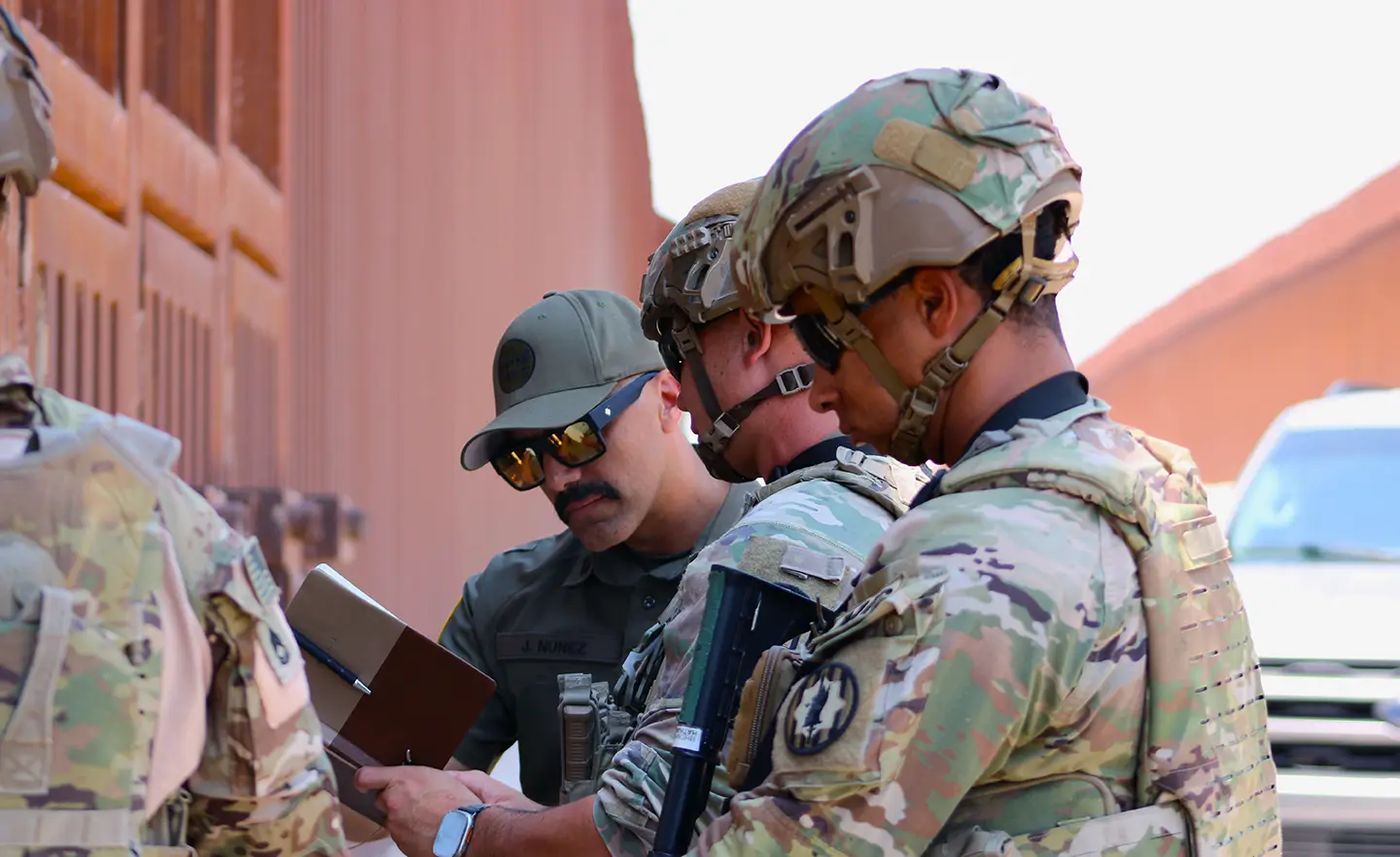
Mexican National Guard units arrived in Ciudad Juarez in June 2026 to collaborate with the United States on surveillance and crime-prevention efforts along the Mexico-U.S. border. The specialized units conducted concurrent patrols, also known as “mirrored patrols,” with U.S. Border Patrol and Customs and Border Protection (CBP) units. The Mexican forces patrolled on their side of the border while CBP agents did the same on the U.S. side, reported KTSM, an El Paso television broadcaster. The June 18 patrols took place along the border between the Anapra-Sunland Park area to the Zaragoza International Bridge, the station reported. Since the beginning of 2025, more than 1,100 coordinated patrols have been completed by the two North American neighbors, according to the U.S. Northern Command (USNORTHCOM).
The CBP’s El Paso Sector, where the June patrols occurred, covers 431 kilometers of the southern border in Texas and New Mexico. It is one of nine sectors that have seen major improvements in safety and security through an integrated approach with Joint Task Force-Southern Border (JTF-SB). JTF-SB was created in March 2025 to coordinate the deployment of U.S. Army and National Guard units to secure the 3,145-kilometer border. In May, the 1st Armored Division assumed command of the JTF-SB. The division’s commanding officer, U.S. Army Maj. Gen. Curtis Taylor, voted to continue “the task force’s mission of conducting full-scale, agile, and all-domain operations in support of the Department of Homeland Security’s efforts to secure the U.S. southern border,” according to a USNORTHCOM news release.
Since March 2025, more than 20,000 service members have deployed under the operational command of JTF-SB. Soldiers have conducted over 33,000 enhanced detection and monitoring missions, including 4,500 joint patrols alongside U.S. Custom and Border Protection agents. Soldiers also have installed about 59,000 rolls of concertina wire, nearly 8,000 signs and more than 3,100 buoys across 1,054 kilometers to demarcate five established National Defense Areas, the release stated.
The mirrored patrols are another fundamental part of JTF-SB’s mission. Close interaction and coordination, including communication, surveillance and intelligence gathering, has fostered familiarity and interoperability between the two armed forces. The Mexican participation, overseen by the Secretariat of National Defense, extends the security southward and offers both nations an opportunity to gain greater awareness over the often-rough terrain along the border, dotted with thick vegetation in some places, desert and mountains in others. The patrols are aided by the deployment of advanced detection systems like the AN/MPQ-64 Sentinel radar to track and counter hostile drones, increasingly used by transnational criminal organizations (TCOs) to facilitate illegal smuggling of narcotics, human beings and other contraband. “The Border Patrol in El Paso focuses on collaboration with various agencies and the Department of War’s JTF-SB to enhance border security to target hostile drones and the challenges they pose,” Walter N. Slosar, chief patrol agent with the El Paso Sector, said in the War Department release. “Enhanced detection capabilities between JTF-SB and U.S. Border Patrol give us full spectrum capabilities to track, identify and mitigate aerial threats.”
Mexican President Claudia Sheinbaum ordered 10,000 National Guard troops to the border in February 2025 to support the bilateral decision to stem what had been historic levels of illegal migration and heightened TCO activity. The deployment reinforced “the troops already deployed at the border, with the goal of stopping the flow of fentanyl, other drugs and illegal immigration to the United States,” according to a statement from the Mexican government at the time.
Since January 2025, illegal migration has fallen to historic lows, according to the U.S. government. The deployments on both sides of the border also have strengthened national security for both nations as sustained counter-TCO operations have disrupted illegal activities and weakened once-powerful cartels.