
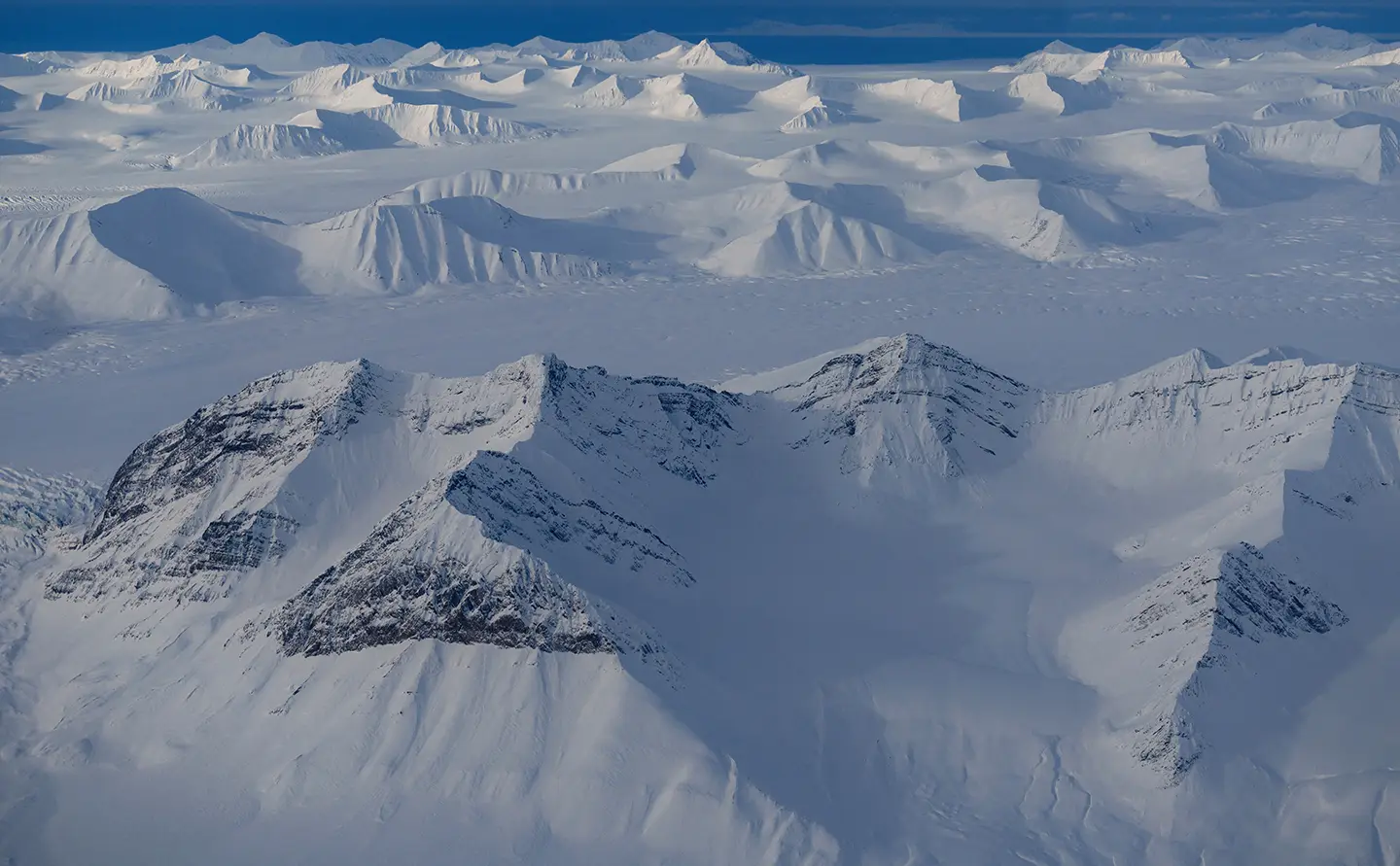
The European Union presented a new Arctic strategy reflecting the region’s importance to security on October 20, with pledges to boost satellite surveillance, increase monitoring of undersea cables and help EU members buy icebreakers. The Arctic is of growing interest to major powers, including the United States, Russia, China and Europe, as melting ice opens new shipping routes.
“The Arctic is one place where the tectonic plates of geopolitics are colliding,” said Ursula von der Leyen, president of the European Commission, the EU’s executive body. “When we see that sovereignty, territorial integrity and the rules that have underpinned stability in the region can no longer be taken for granted, we have to act,” she told reporters at the European Parliament in Strasbourg, France.
EU officials say Moscow has reopened and modernized Soviet-era military bases in the Arctic region in recent years and pointed out that Russia has a large concentration of nuclear weapons on the Kola Peninsula, inside the Arctic Circle. They say the Arctic also has become a testing ground for Russian missiles.
EU to boost protection of cables
Reflecting increased concerns about the safety of vital undersea cables and pipelines, the EU strategy says it will set up a “maritime security hub” to share information between EU members and partners from various sources “from seabed to space.” As a first step, the EU plans to set up an Arctic cable hub to monitor, protect and help repair cables, according to the strategy, produced by the European Commission and EU foreign policy chief Kaja Kallas.
The EU also aims to keep a closer eye on the Arctic as part of plans to expand its Copernicus satellite observation network. The 27-country bloc — which includes Arctic nations Denmark, Finland and Sweden — also needs more icebreakers, the strategy says.
The new document — which did not include a price tag — is the first update to the EU’s Arctic strategy since 2021 and the latest in a series of EU steps focusing on the region. In September, von der Leyen unveiled EU plans to invest 200 million euros in Greenland.