

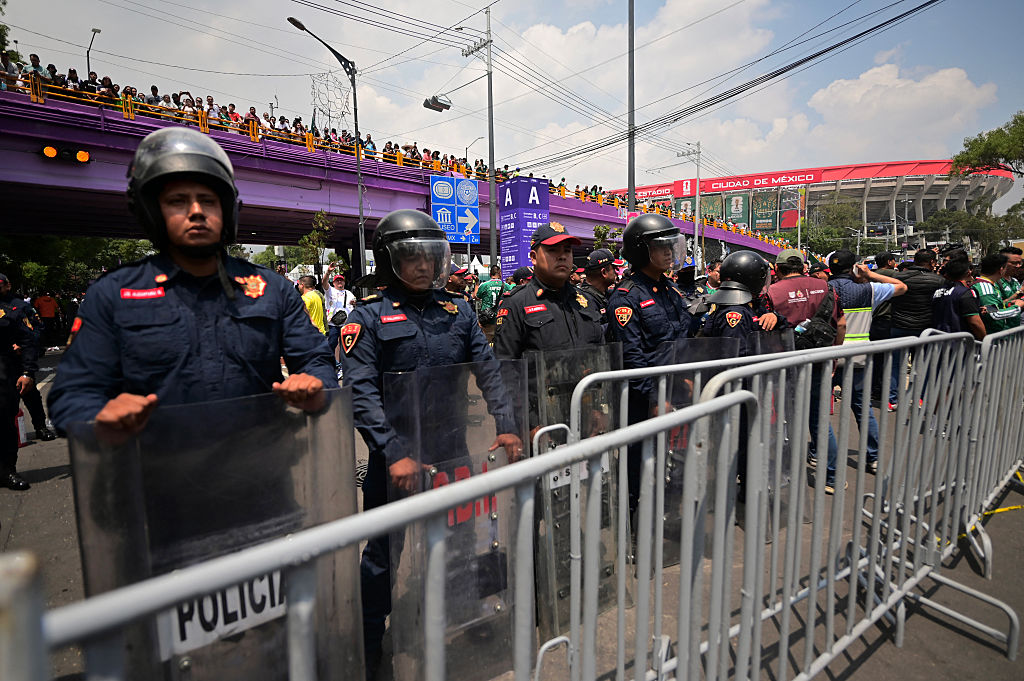
Mexico’s beefed-up security for the FIFA 2026 World Cup were on full display June 11 as throngs of fans weaved through layers of law enforcement checkpoints and the home team delivered an exhilarating 2-0 win over South Africa. As promised by Mexico’s government, security was tight with police closing a 1-mile radius around the stadium, known as Estadia Azteca.
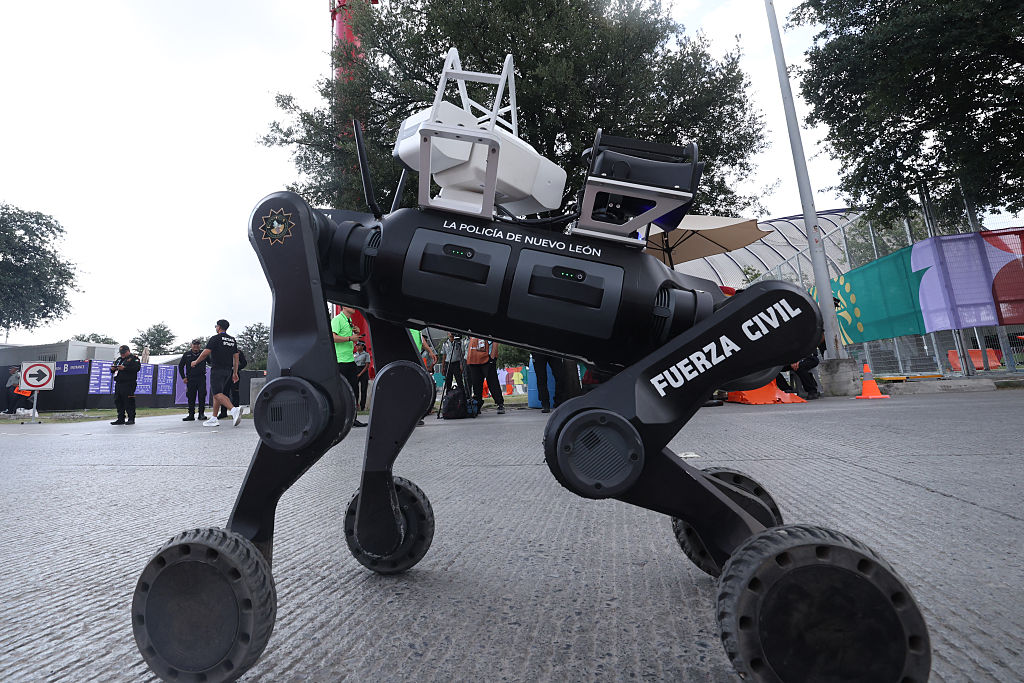
The government’s multilayered security apparatus at the opening match, which included everything from roving patrols to robot dogs, was largely successful, according to government reports. Dubbed Plan Kukulkán after the serpent deity of Maya culture, authorities deployed almost 100,000 people from the military, police and private security firms to provide security, according to an Agence France-Presse report. “The city has a lot of experience organizing these types of events and doing crowd management. There’s trust,” Mexico City Police Chief Pablo Vazquez told the news agency. It is the third time Mexico has hosted the World Cup.
Mexico expects more than 5 million visitors as it co-hosts the event with Canada and the United States. So, when it came to security, no expense was spared. Before the opening matches, Secretary of Security and Citizen Protection Omar Garcia Harfuch ticked off some of the many layers of security that Mexico is employing:
- More than 20 federal institutions, as well as state and municipal governments, are collaborating on security.
- Mexico is coordinating with international organizations such as FIFA and Interpol as well as agencies from Canada and the United States.
- 33 surveillance drones and advanced military systems are being deployed.
- 24 tactical aircraft are in use.
- 2,000 vehicles of the Army, Air Force and National Guard are patrolling.
- 188 pairs of dogs that specialize in explosives and narcotics detection are checking for threats.
- Robotic dogs programmed to seek out security risks are part of the law enforcement coverage.
Commandos for the National Guard Special Forces, or FERI, trained specifically for the event. “The main goal is that this World Cup is one of the most successful in history,” Lt. Col. Manuel Cabrera, FERI’s second-in-command, told Agence France-Presse. “You can rest assured that peace is guaranteed here.”