
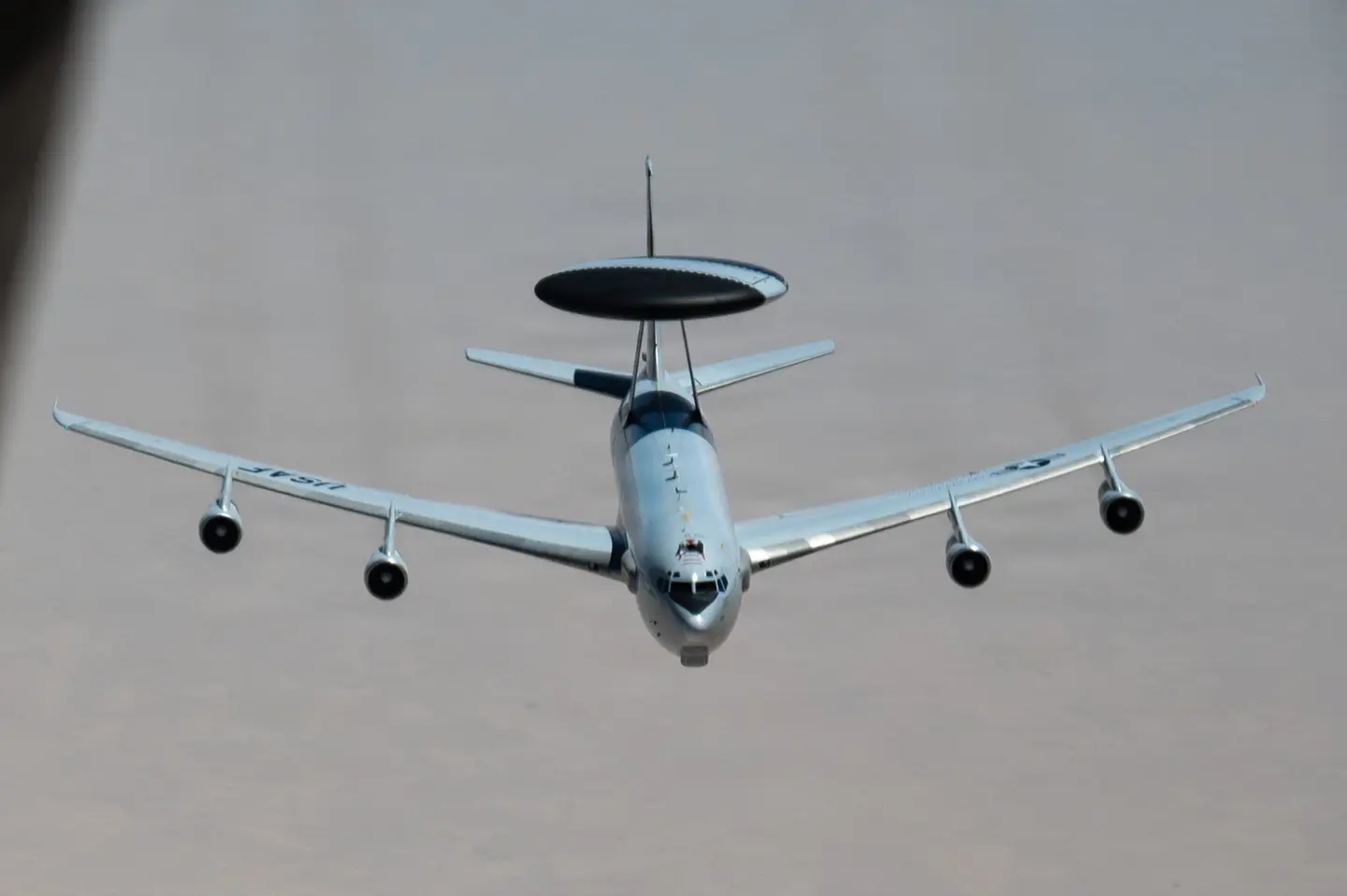
A NATO Airborne Warning and Control System (AWACS) aircraft landed in Sweden for the first time in June 2026, marking a milestone for alliance air operations in the High North and demonstrating NATO’s ability to deploy and sustain AWACS operations from multiple bases. The aircraft arrived at Kallax Air Base in Sweden after completing a surveillance mission over Poland, showcasing NATO’S commitment to “safeguarding every inch of Allied territory,” a NATO news release stated.
Maj. Gen. Jonas Wikman, commander of the Swedish Air Force, was on hand to welcome the arrival of the AWACS aircraft. In a panel discussion hosted by the Mitchell Institute for Aerospace Studies in May 2026, Wikman discussed the importance of modernizing the alliance’s air capabilities and how capitalizing on technology such as the U.S.-built AWACS aircraft and a Swedish version called GlobalEye can bolster defenses.
“If you want to use airpower, you want to do it together and you want to do it from a position outside your own borders, Wikman said at the Mitchell Institute event. “Of course, going into multidomain operations across domains, or even if you talk about combined operations, we are now investing in space, we’re investing in the GlobalEye aircraft, airborne early warning control aircraft, which is purely built for multidomain.”
The AWACS landing in Sweden was part of NATO’S Agile Combat Employment concept, which enhances operational flexibility, resilience and survivability by enabling forces to operate from dispersed locations. AWACS aircraft are modified Boeing 707s, which can be identified by the distinctive radar dome on the fuselage. They are equipped with long-range radar and sensors that can detect air and surface contacts over large distances. NATO’s AWACS fleet of 14 aircraft is managed by the NATO Airborne Early Warning and Control Force, based in Geilenkirchen, Germany.
The aircraft conduct a variety of missions, including air policing and support to counterterrorism operations, crisis response and a full spectrum of wartime missions. It can detect, track and identify hostile aircraft operating at low altitudes and provide command and control of allied fighter aircraft. It also can track vessels at sea.
The NATO E-3A AWACS aircraft is one of the few military assets that is owned and operated by NATO. “As such, it represents a prime example of Allied cooperation and solidarity,” NATO’s website states. In recent years, the aircraft has played an important role in the alliance’s strengthened deterrence and defense posture after Russia’s invasion of Ukraine in 2022. NATO AWACS aircraft have conducted hundreds of flights patrolling the alliance’s eastern flank, including over the Baltic and Black seas. They also have monitored the skies over Ukraine.
During these flights, NATO AWACS aircraft tracked Russian warplanes, detected missiles and observed the movements of everything from navy ships to large drones and tanks. Since September 2025, the fleet has participated in Eastern Sentry, a multidomain military activity designed to strengthen NATO’s eastern flank. “These activities ensure that the Alliance’s military and political leaders have a clear picture of what’s happening in Ukraine and can see the threats approaching NATO territory,” NATO’s website states.