

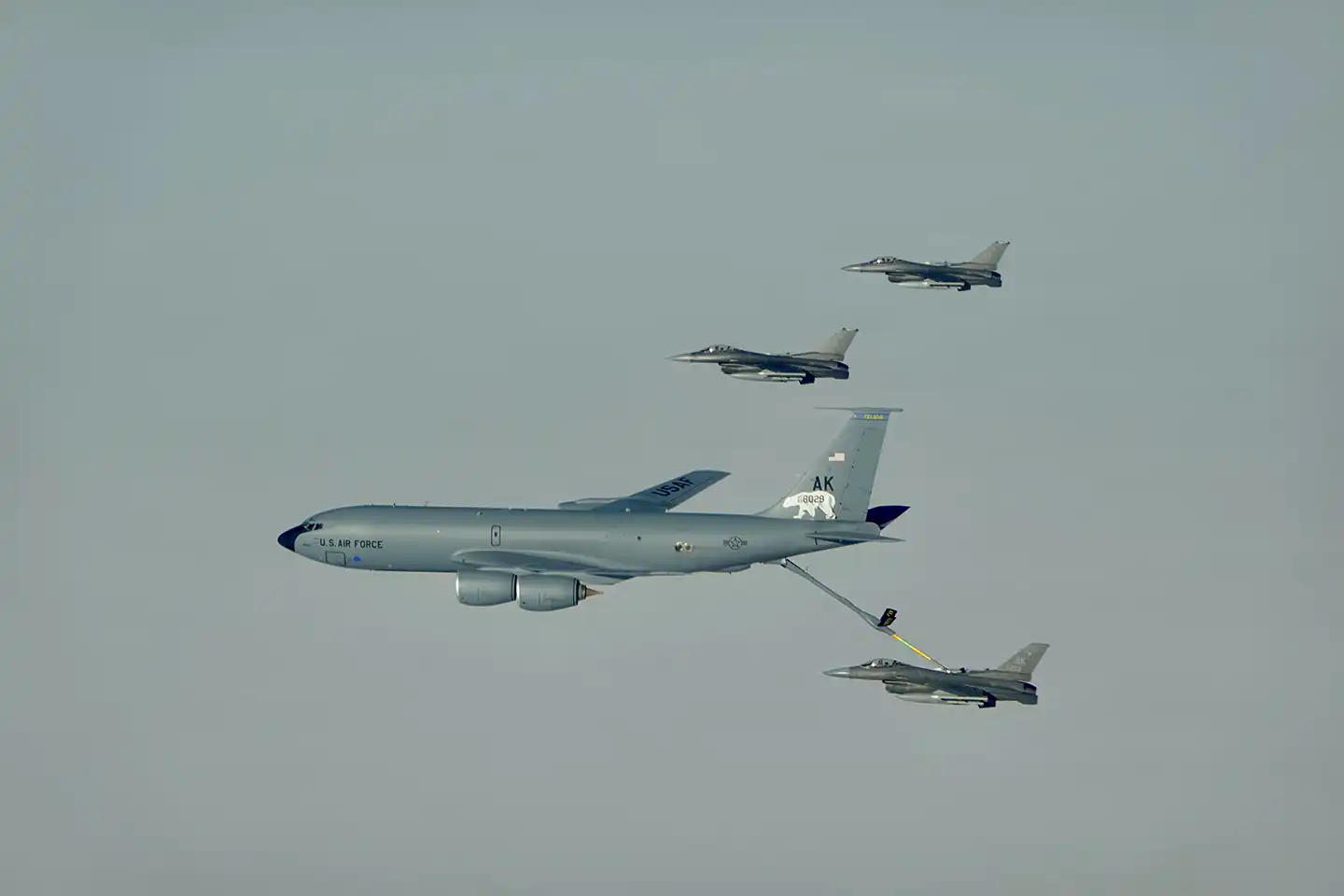
The United States Air Force sent F-16 Fighting Falcons to Eareckson Air Station in Alaska’s remote Aleutian Islands in October, returning to an air defense alert posture and validating the base’s ability to safeguard North America’s northern and Pacific approaches. The F-16s launched Operation Noble Defender before kicking off a homeland defense mission, Operation Noble Eagle, that integrated aircraft from two other Alaskan bases and one Canadian base thousands of kilometers away.
“Defending North America demands speed, flexibility and the ability to bring combat power together across vast distances,” U.S. Air Force Lt. Gen. Robert D. Davis — commander of the Alaskan Region of the North American Aerospace Defense Command (NORAD), the Alaskan Command, and the 11th Air Force at Joint Base Elmendorf-Richardson — said in a NORAD news release October 30. “Operating from Eareckson Air Station proved we can deploy to an austere location, maintain alert, launch on short notice, and seamlessly integrate U.S. and Canadian forces to defend the northern approaches.”
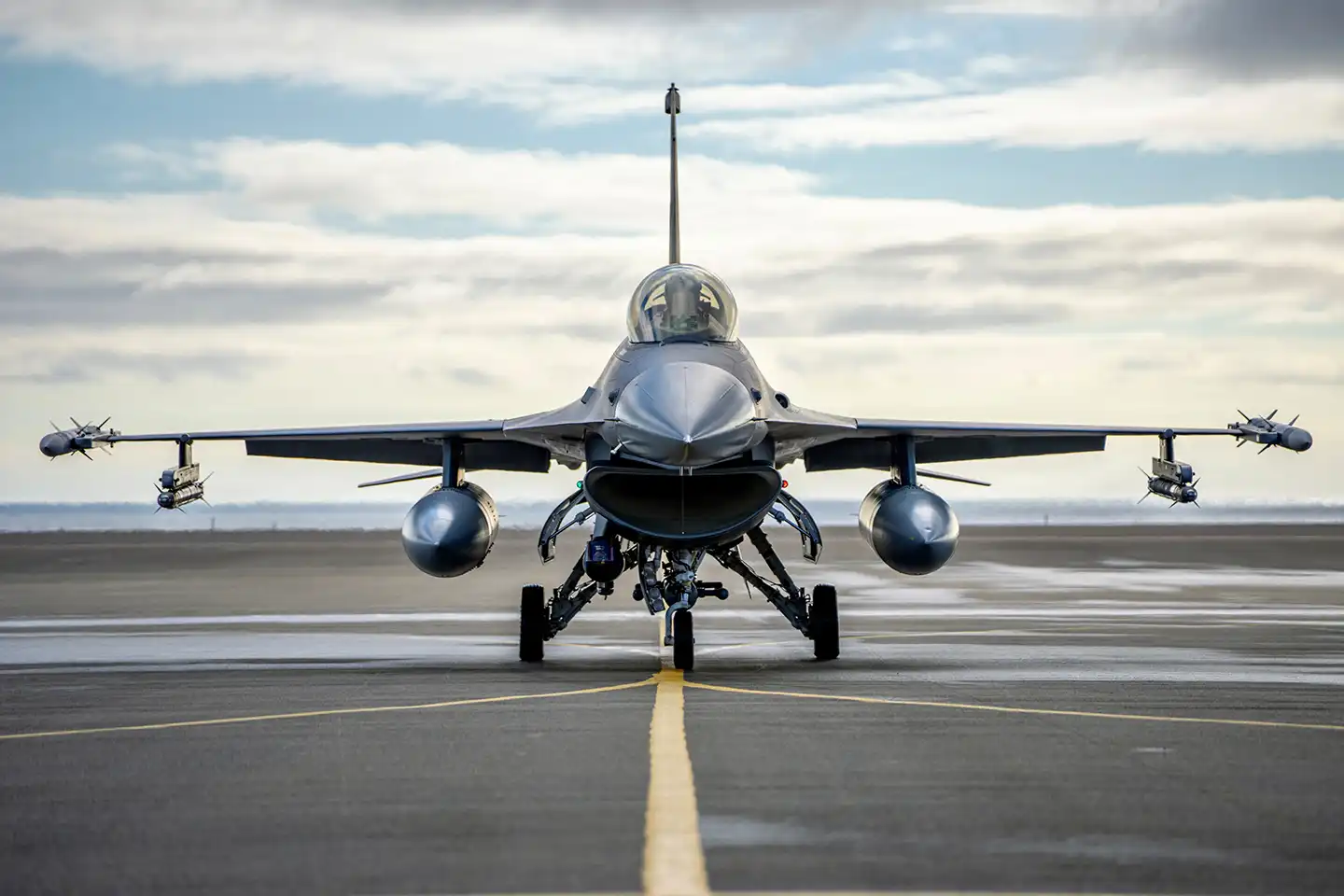
Operation Noble Defender marked the first time in decades that U.S. Air Force fighter jets returned to an air defense alert posture at Eareckson Air Station on Shemya Island, the TWZ military news website reported, highlighting a more competitive security environment in the Arctic and the U.S. military’s robust response to address it. During the Cold War, U.S. Air Force F-4s and F-15s were deployed to the tiny island, which is only about 450 kilometers away from Russia, to support air defense missions against Soviet aircraft. After the base’s routine fighter mission ended, it was closed as an active Air Force station in 1994.
Operation Noble Defender began October 18, when the F-16s were deployed to Eareckson Air Station. The mission transitioned to the one-day Operation Noble Eagle on October 25 in support of northern sovereignty operations and expanded into a coordinated, binational response that included U.S. and Canadian aircraft.
The aircraft included two F-16s; F-35 Lightning IIs from Eielson Air Force Base in Alaska; Royal Canadian Air Force CF-18 Hornets from Cold Lake, Alberta; an E-3 Sentry surveillance aircraft — also known as an AWACS for Airborne Warning and Control System — from Joint Base Elmendorf-Richardson; several KC-135 Stratotankers; a CC-150 Polaris for aerial refueling; and an HC-130 Combat King II, in case search and rescue and personnel recovery capabilities were needed. Eareckson is about 2,575 kilometers from Eielson Air Force Base and 4,185 kilometers from Cold Lake, highlighting the vast distances across which NORAD can synchronize forces.
During Operation Noble Eagle, NORAD deployed a layered fighter package across the Alaska theater of operations. The Eareckson-based F-16s provided coverage in the southern portion of the theater, while F-35s and additional F-16s from Eielson operated in the northwest. Canadian CF-18s covered the northern approaches.
The combined operation validated NORAD’s ability to rapidly generate, position and synchronize a credible force package across thousands of kilometers in defense of North America. During the deployment, the air station’s arresting system also was successfully certified, NORAD said, further demonstrating Eareckson as a viable location for future fighter operations from an austere and remote airfield.
Eareckson’s primary mission since 1994 has been to serve as a remote missile defense and surveillance outpost. It is the home of an important phased-array radar system called Cobra Dane, which has been operating since 1977 and can track ballistic missile launches from more than 3,200 kilometers away.
Operation Noble Defender, which wrapped up October 26, is a recurring NORAD air defense operation that began in 2018. It demonstrates the command’s ability to defend the U.S. and Canada against threats from any approach while reinforcing the strength and stability of NORAD’s binational command and partnerships. NORAD, established in 1957, is the world’s only binational military command.