

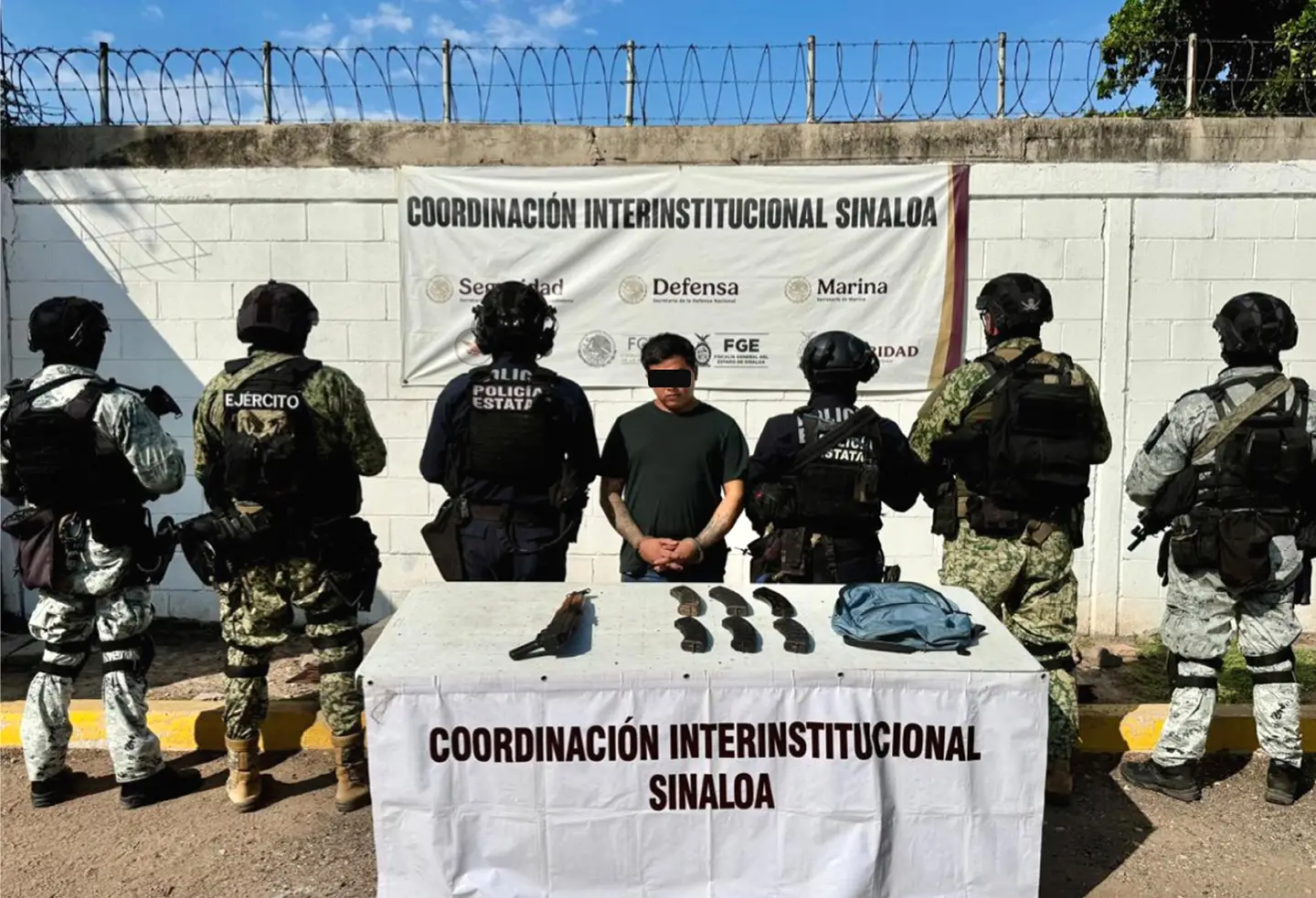
Mexican authorities have arrested three alleged drug cartel members in separate operations, including one suspected operative linked to the kidnapping and killing of 10 mine workers, as security forces intensify efforts to dismantle criminal networks involved in drug trafficking and cross-border smuggling.
The arrests of Jesús Abraham, known as “Talibán,” José Luis, alias “Wicho,” and Luis Manuel, also called “El Ingeniero,” targeted members of the Sinaloa Cartel and the Jalisco New Generation Cartel (CJNG). The cases highlight the different capabilities supporting Mexico’s criminal networks, from financial operations to underground tunnels used to move narcotics into the United States.
Abraham was arrested October 17 in Mazatlán, following an operation a day earlier in the nearby town of El Rosario that resulted in the detention of four other cartel members, according to a news release from Mexico’s Ministry of National Defense (DEFENSA). The operations involved National Guard and Army special forces, three Mexican Air Force helicopters and Sinaloa state security personnel.
Authorities identified Abraham as an associate of Juan Benito, or “Beny 17,” a regional leader of the Sinaloa Cartel’s Los Chapitos faction. The four others arrested in El Rosario allegedly belonged to the security circle of another regional commander, Oscar Luciano, known as “Casco” or “81.” One detainee is a Colombian national.
DEFENSA said Abraham and the four detainees were linked to the kidnapping and murder of 10 workers on January 23 from the Canam/Vizsla Silver mining operation in La Concordia, Sinaloa, in western Mexico. They also were linked to the kidnapping of four tourists from Mazatlán on February 3, who remain missing, the Mexican newspaper Excélsior reported.
The 10 miners were abducted at gunpoint from a housing complex associated with the company’s Pánuco silver-gold project in southern Sinaloa. The workers included two engineers and a geologist. Their bodies were recovered from clandestine graves, according to CBS News, which reported on October 19 that all 10 men were Mexican nationals.
Authorities said the workers apparently were mistaken for members of a rival cartel faction amid an internal conflict that has fractured the Sinaloa Cartel since September 2024. The killings underscored the dangers facing mining operations in areas where criminal groups compete for territory and revenue, including through extortion and, in some cases, the theft and sale of valuable ore.
The arrests add to an investigation that has resulted in other detentions. In June, authorities announced the arrest of Gabriel Nicolás Martínez Larios, known as “Gabito” or “El 80,” whom they identified as a regional leader of a Los Chapitos-linked cell. Earlier arrests also helped investigators locate burial sites, according to a Latin Times report.
José Luis was arrested October 13 in Villa Unión, Mazatlán, DEFENSA said. Authorities described him as the financial and logistical operator of Los Rugrats, a criminal organization affiliated with the faction associated with Sinaloa Cartel co-founder Ismael “El Mayo” Zambada.
José Luis allegedly operated under the orders of Carlos Alberto Páez Pereda, known as “Carlitos Rugrats.” The group has a presence in Sinaloa and Durango in north-central Mexico, the ministry said. Authorities also reported seizing weapons, drugs, cash and a vehicle during the arrest.
The ministry said José Luis was wanted by U.S. authorities in California on a charge of possession of cocaine with intent to distribute. He was transferred to the federal prosecutor’s office in Mazatlán for further investigation.
The third arrest targeted an alleged specialist in infrastructure used to smuggle drugs across the U.S.-Mexico border. Luis Manuel was arrested October 15 in Zapopan, Jalisco, in an operation involving the National Guard, Mexican Army and Attorney General’s Office, according to the Defense Ministry.
Authorities described Manuel as a key CJNG member allegedly responsible for designing and constructing cross-border tunnels to transport narcotics into the United States, particularly along routes connecting Tijuana and Baja California with the San Diego, California, area.
The ministry said Manuel operated under the direct orders of Juan Carlos Valencia González, known as “El 03,” and faced charges in San Diego involving conspiracy to traffic drugs. Weapons, drugs and a vehicle were seized during the operation.
Manuel’s arrest in Zapopan, more than 2,000 kilometers south of the main border area where authorities located tunnel activity, is part of the investigation’s significance, demonstrating the reach of CJNG’s intelligence operation. Investigators are continuing to examine Manuel’s alleged involvement and the locations of tunnels and drug shipments connected to the case, the International Business Times reported.
Together, the arrests target different parts of Mexico’s criminal infrastructure: personnel allegedly connected to cartel leadership, a financial and logistical operator and a suspected specialist in underground smuggling routes.
For the families of the 10 mine workers, the arrests came after months of anguish. Vizsla Silver President and CEO Michael Konnert expressed the company’s sorrow after the discovery of some of the workers’ bodies.
“Our deepest condolences are with our colleagues’ families, friends and co-workers, and the entire community of Concordia,” Konnert said in a statement posted by CBS News.
“We are devastated by this outcome and the tragic loss of life,” he said.