

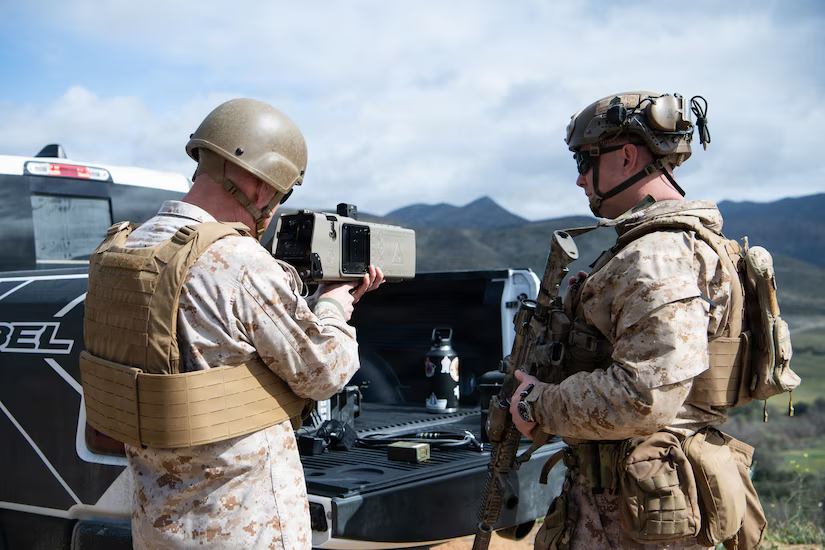
A United States interagency task force has funneled more than $500 million this year into efforts to counter unmanned aerial systems, according to the Department of War (DOW). Joint Interagency Task Force (JIATF 401), formed less than a year ago, took the lead in coordinating efforts to better track, identify and disable drones as North America prepares for the FIFA World Cup tournament in summer. The task force aims to reduce illegal activities along the southern border between Mexico and the U.S. and advance the nation’s Arctic defense capabilities to defend against enemy drones. “This decisive action demonstrates JIATF 401’s ability to rapidly translate operational needs into fielded capability, while also remaining firmly focused on homeland defense,” said Army Brig. Gen. Matt Ross, director of the task force, in the DOW’s April 2026 news release. “From day one, our mission has been to move with speed and purpose to keep pace with this evolving threat.”
JIATF 401 has provided logistical support, training and resources to address homeland defense needs, agency officials said. JIATF 401 will spend $100 million in counter-unmanned aerial systems (C-UAS) technology for the World Cup, focusing on mobile counterdrone technologies to protect stadiums and fan zones in 11 cities across nine states, the release stated. Army National Guard units will operate the C-UAS technology at World Cup events. The World Cup deployment will function as a blueprint for future defense planning, giving military base leaders “flexible, mobile assets” to counter drones, the release said.
JIATF 401 dedicated $158 million to harden defenses in and around the nation’s most critical infrastructure. The task force has streamlined construction and engineering permits to quickly disperse funds, the release stated. “The speed and scale of these commitments reflect extraordinary coordination across the Department of War and interagency partners. Efforts that traditionally take years have been executed in months, demonstrating JIATF 401’s commitment to delivering operationally relevant capability at speed,” said Michelle Self, deputy of the rapid acquisition division for the task force. “This coordinated, whole-of-government approach remains essential to defending the homeland and sustaining global operations.”
C-UAS operations along the Mexican border also intensified, according to a DOW release in April 2026, with more than $20 million in technology deployed, including “a network of 13 advanced sensors that expand surveillance coverage and provide early warning of drone activity, paired with seven mobile and fixed-site mitigation systems that enable forces to disrupt or neutralize threats before they reach critical areas.” The network adds another layer of defense to the highly patrolled border and its data alerts federal partners such as the U.S. Customs and Border Protection agency to potential threats. JIATF 401 was established in August 2025 to rapidly integrate, test and deliver C-UAS capabilities.