

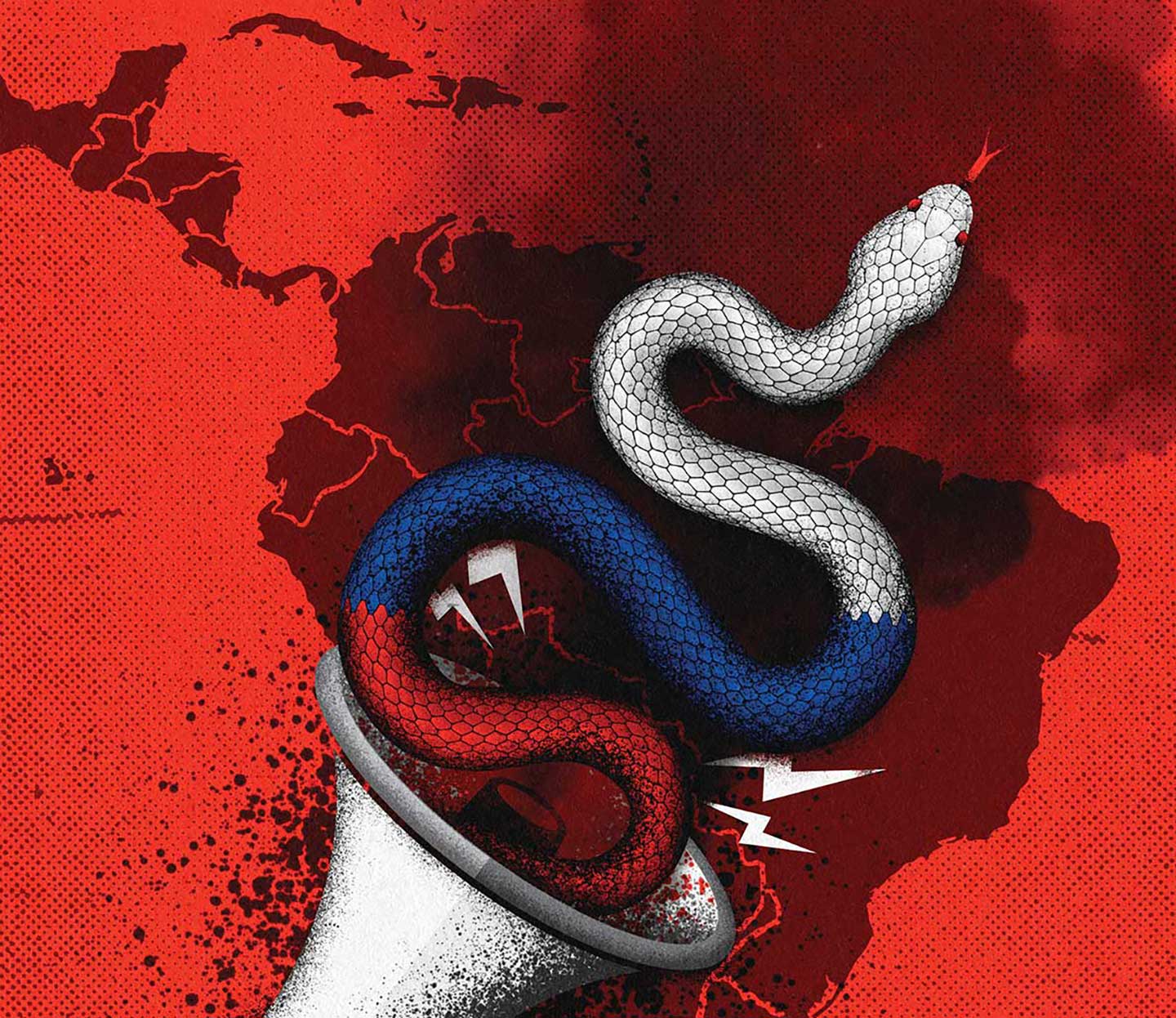
Russia has ramped up its propaganda machine to peddle lies about the United States’ connections to Latin American drug cartels. Among the claims: The U.S. Drug Enforcement Administration and FBI are enlisting imprisoned members of Mexican and Colombian drug cartels to fight for Ukraine against Russia; and Ukraine is selling donated U.S. weapons, including Javelin anti-tank missiles and grenade launchers, to a Mexican drug cartel. Fact-checkers have repeatedly debunked these lies.
Like Baghdad Bob, Saddam Hussein’s fawning mouthpiece during the Iraq War, Russia spins a web of far-fetched falsehoods to advance its political objectives. Among its top priorities these days is victory in Ukraine, which Russia invaded in February 2022 after annexing Ukraine’s Crimean Peninsula in 2014.
In November 2023, the U.S. State Department accused Russia of funding a disinformation campaign in Latin America that floods the media with propaganda and fake news to drain support for Ukraine and bolster anti-U.S. and anti-NATO sentiments. The campaign is “designed to surreptitiously exploit the openness of Latin America’s media and information environment,” a State Department statement said. “The Kremlin’s ultimate goal appears to be to launder its propaganda and disinformation through local media in a way that feels organic to Latin American audiences.”
Moscow’s message? “That Russia’s war against Ukraine is just and that they can unite with Russia to defeat neocolonialism,” the State Department said. “These themes align with Russia’s broader false narrative that it is a champion against neocolonialization, when in reality it is engaged in neocolonialism and neo-imperialism in its war against Ukraine and its resource extraction in Africa.”
“The Kremlin’s goals with Mexico and Latin America are similar to its goals with Africa, Southeast Asia and beyond: to diminish and supplant the U.S.’s, and the broader West’s, ties in these regions, while also delegitimizing democracy writ large to ensure Russia’s own system of governance remains favorably viewed at home,” Benjamin Shultz, lead researcher at the American Sunlight Project, told The Watch in an email. The American Sunlight Project is an organization that analyzes and counters online misinformation and disinformation.
In September 2024, the U.S. Justice Department announced it had seized 32 internet domains that the Russian government used in foreign malign influence campaigns, known as Doppelganger. Russian companies Social Design Agency (SDA), Structura National Technology and ANO Dialog were cited in an unsealed affidavit.
“At [Russian President Vladimir] Putin’s direction, Russian companies SDA, Structura, and ANO Dialog used cybersquatting, fabricated influencers, and fake profiles to covertly promote” false narratives generated by artificial intelligence (AI) on social media, then-Deputy Attorney General Lisa Monaco said. The disinformation campaign was directed at Mexico, the United States and other U.S. allies, the Justice Department said.
But disinformation campaigns in Latin America aren’t targeting only Latin Americans. “They are employing the cartels in their narratives as a hook to connect their story telling with specific audiences in the U.S.,” said Dr. Darren Linvill, a Clemson University researcher and expert in social media forensics and disinformation. He is co-director of the university’s Media Forensics Hub, a team of researchers working to study and combat online deception.
“Many communities in the U.S. reasonably see the cartels as a sort of boogeyman and are simply more likely to listen to a narrative that discusses them,” Linvill said. He explained that Russian propaganda similarly tries to connect Ukrainian President Volodymyr Zelensky to hot-button social issues and conspiracy theories because those narratives “play well with the audiences Russia is trying to reach.”
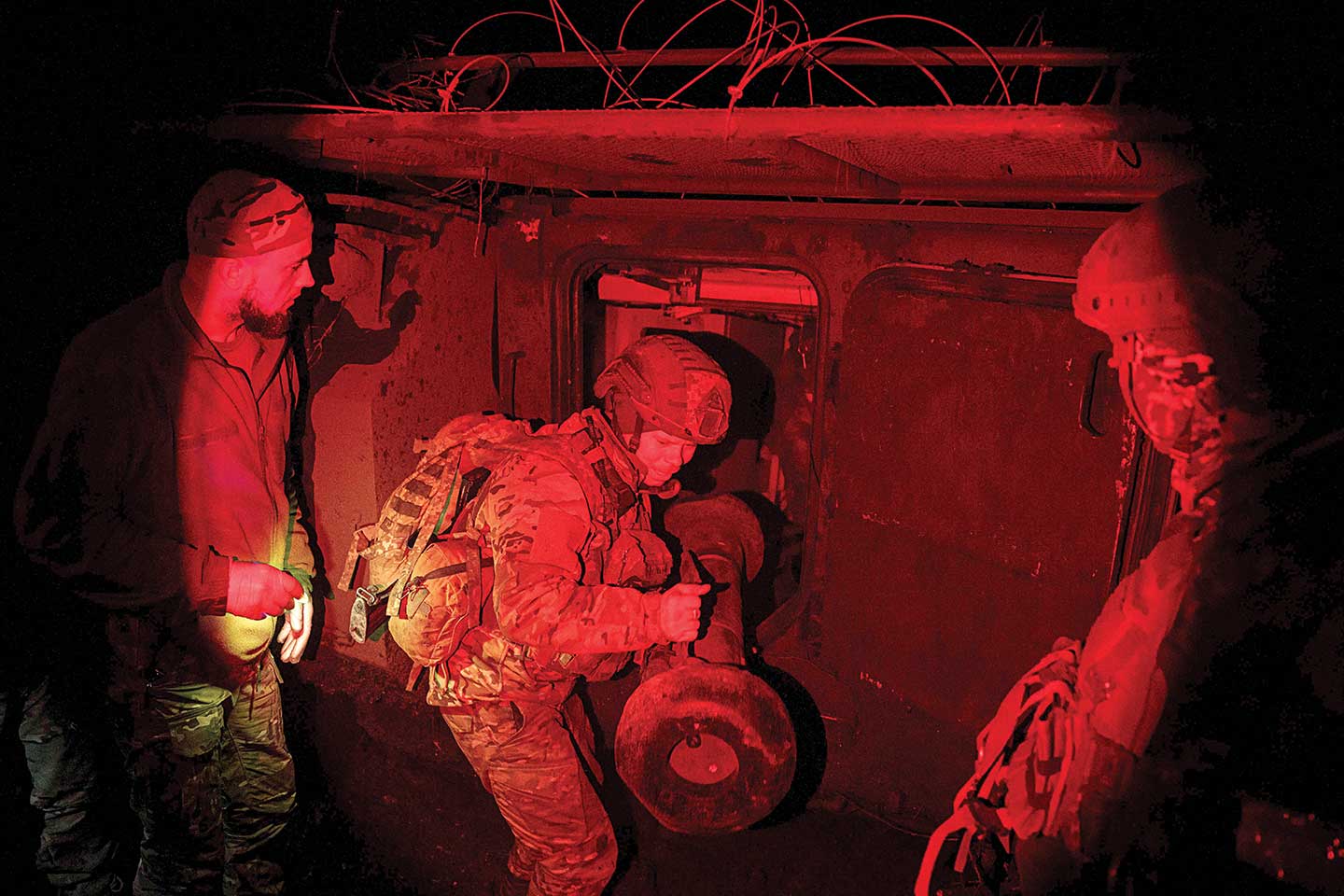
In April 2024, the Voice of America (VOA) news website reported that Russia’s Foreign Intelligence Service, or SVR, had alleged with no proof that U.S. law enforcement agencies were recruiting imprisoned members of Mexican and Colombian drug cartels to fight against Russia in its war with Ukraine. “American private military companies, under the guidance of the Drug Enforcement Administration and the FBI, have begun to recruit Mexican and Colombian drug cartels’ members, who are serving their sentence in American prisons, to take part in the Ukrainian conflict on the side of Kyiv’s degrading regime,” the SVR said in a news release. The SVR claimed the “first group of cutthroats” were to be deployed to Ukraine in summer 2024 and had been promised full amnesty.
The SVR also alleged that the United States negotiated with drug lords to lock down a deal. The British newspaper The Sun reported: “The SVR made wild rumours suggesting the chosen prisoners would be sent on a ‘business trip’ to Ukraine under the promise they would return to a pardon and be allowed to return home.”
VOA’s fact-checking project, Polygraph, “found no reports in Russian and Western news outlets or by rights and drug trafficking watch groups to back up the SVR’s statement,” VOA reported. “There are also no reports about the U.S. government agencies asking drug lords for permission to send their men to the front line in Ukraine.”
Ironically, Russia’s use of its own criminals to populate the battlefield is well known. Yevgeny Prigozhin, the now-deceased head of the Russian private military company Wagner Group, recruited tens of thousands of Russian prisoners to battle in Ukraine with the promise of amnesty after six months. The practice continued after Prigozhin’s death in a suspicious plane crash two months after he led an aborted rebellion against Russia’s Ministry of Defence.
United24 Media, a Ukrainian government news platform, reported in April 2024 on the complex Russian government machinations that fed a fake story that Ukraine was selling U.S. weapons, such as Javelin anti-tank missiles and grenade launchers, to a Mexican drug cartel. Citing the Center for Countering Disinformation, part of Ukraine’s National Security and Defense Council, and a BBC News investigation, United24 Media outlined how Russia’s government created fake advertisements purporting to sell Javelin anti-tank missiles and then set the story loose on Russian media.
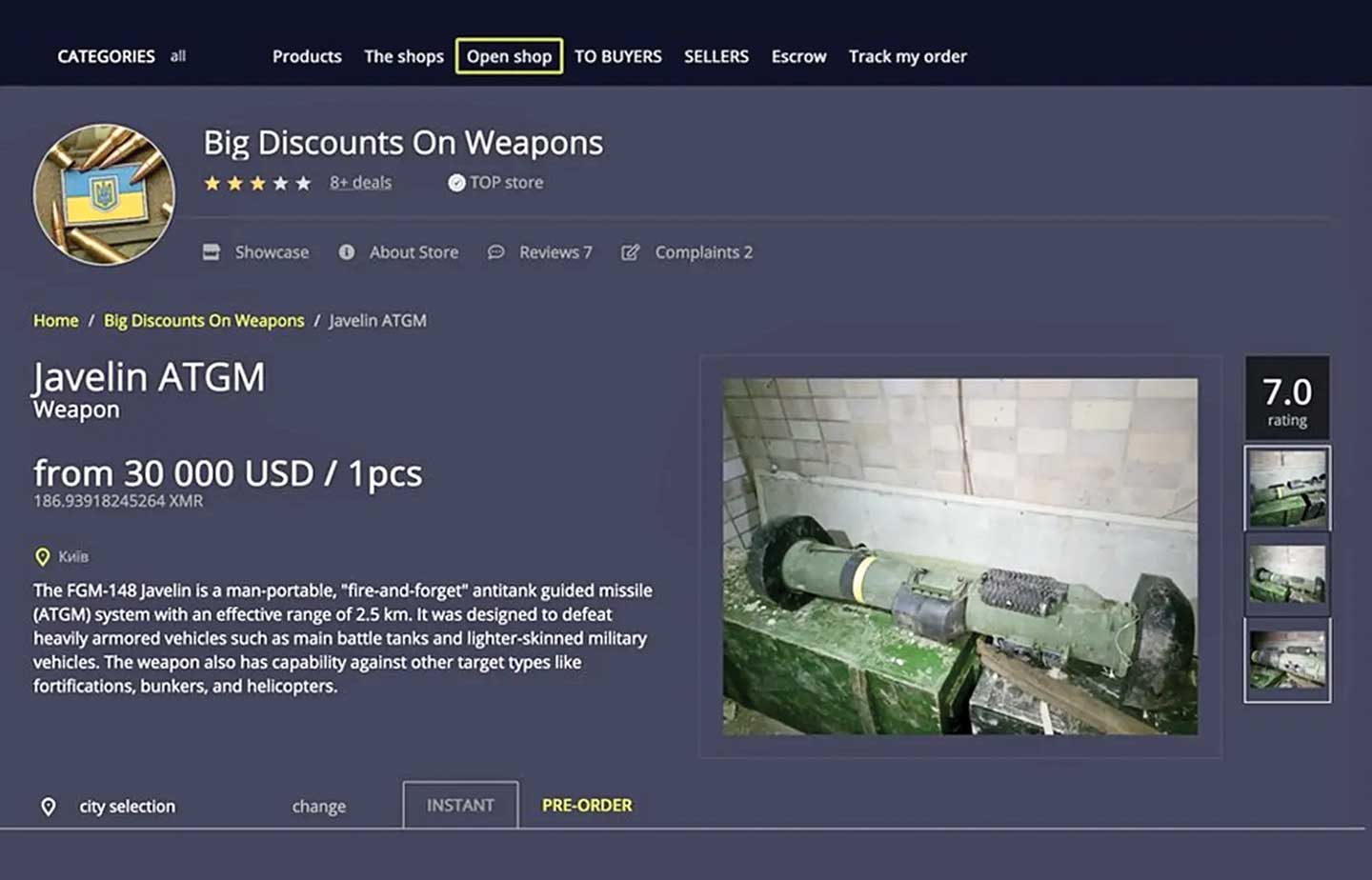
A BBC investigation team contacted people on the dark web who were claiming they had U.S. weapons, donated to Ukraine, for sale. Russian media had reported that these “sellers” were Ukrainians. When the BBC team communicated with one who had the username “javelinusa,” his communications in Ukrainian were riddled with grammatical errors. Javelinusa was asked about it, and he then claimed he was Polish.
A linguist who analyzed the communications for the BBC said that was a lie. “The person behind these messages is Russian-speaking,” Daria Lewicka, an expert in Polish and a Ukrainian-Russian-Polish interpreter, told the BBC.
“I see a lot of ‘Russianisms’ in his Ukrainian language, but I don’t see any ‘Polonisms’ at all,” Lewicka told the BBC. “For example, he uses a phrase ‘зуби не заговорюй’ [which can be translated as ‘don’t beat around the bush’]. This is a common Russian phrase and it has no equivalent in Polish.”
The seller also made some typos, so the online translator did not recognize them and left the original words untranslated. Both words were Russian, with Russian spellings. BBC contacted another seller and found a similar pattern.
Lewicka also found inconsistencies in reviews — mostly posted in Polish — vouching for the sellers. It was clear to Lewicka that they had used online translators. “Real people don’t talk like this,” she said.
Newsweek, meanwhile, reported that one ad was traced to pro-Russian Telegram channels, and the images of the Javelin anti-tank weapon were from 2014, before the war. Newsweek said Russian media misrepresented official oversight measures as proof of illicit activity. Keith Kellogg, President Donald Trump’s special envoy for Ukraine, “said that ‘inspector generals are on the ground in Ukraine’ monitoring weapons transfers and financial aid to ensure accountability,” Newsweek reported.
The fake stories were spread to other markets as well, including Mexico. But there, the story evolved into the sale of military weapons to drug cartels. “The fake news and disinformation materials they produced … shape their narrative about the ‘black market of weapons’ to suit different audiences,” United24 Media reported.
Linvill, of Clemson University, concurred. “Just as there have been narratives about the cartels using weapons the U.S. gave to Ukraine, there have also been narratives about Hamas using weapons the U.S. gave to Ukraine,” he said.
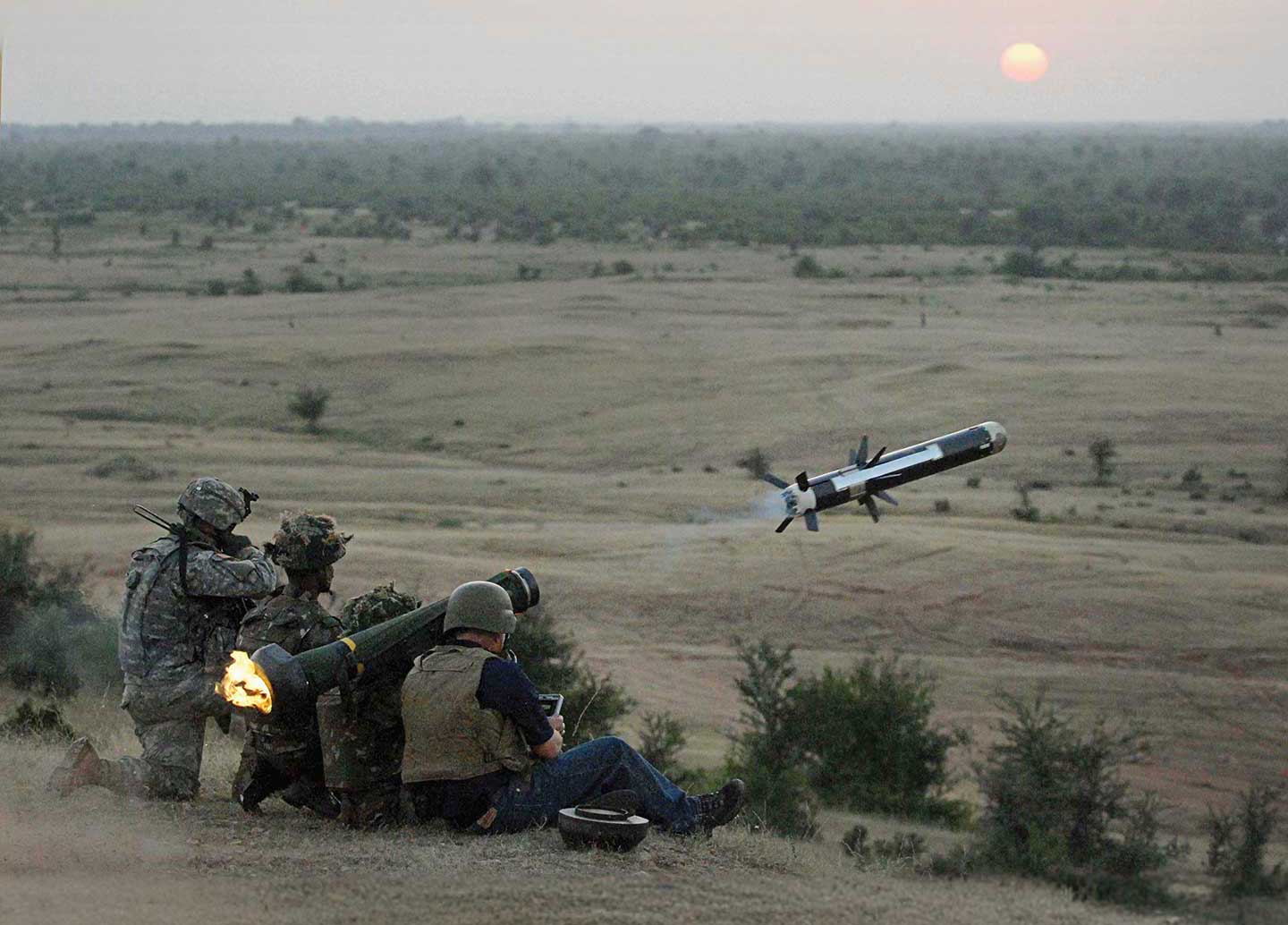
On August 1, 2022, Russian media and Telegram channels, referencing Mexican broadcaster Milenio Televisión, published a video alleging the sale of Ukrainian weapons to a Mexican drug cartel. The video mentioned dozens of U.S.-made M136 grenade launchers, AK-47 assault rifles and Javelin anti-tank guided missiles that were “supplied to Ukraine by the USA,” United24 Media said.
But the TV presenter mistakenly calls an M136 AT4 anti-tank grenade launcher — a weapon mass-produced since the 1980s — a “Javelin.” M136 AT4 grenade launchers are widely used by many militaries throughout the world.
Russian state media arm RT en Español picked up the story and amplified it. The Russian embassy in Mexico then released a statement saying, “the Kyiv regime is pumped with Western weapons and resells them to Mexican cartels.” Mainstream Mexican media repeated the embassy statement without questioning it.
Both the U.S. Department of War Office of Inspector General and the U.S. Government Accountability Office (GAO) have confirmed that they’ve found no evidence that Ukraine’s military has sold U.S.-donated weapons. “Had we found such evidence, we would have investigated these leads,” Chelsa Kenney, a director for international affairs at GAO, told The Dispatch, an online magazine.
Research by the Global Initiative Against Transnational Organized Crime, an international nongovernmental organization, found “a whole new industry in fake darknet sites purporting to sell weapons provided to Ukraine, whether as Russian information operations to discredit Kyiv, or simply as scams.” Numerous organizations have debunked the claims, including The Associated Press; the East StratCom Task Force, a European anti-disinformation group; and Euronews, a European TV news network. Newsweek also pointed out that there have been no reports of Mexican transnational criminal organizations deploying heavy U.S. artillery.
“Russian disinformation is a constant pressure campaign on us,” Linvill said. “Our work to stem it needs to be similarly constant.”
Shultz, of the American Sunlight Project, said the Russian disinformation could ramp up. “It is entirely possible that … Russia rehashes claims around drug cartels infiltrating American communities, or drug cartels working with the Ukrainian military,” Shultz said. “Russia has previously labeled Zelensky a drug addict; perhaps there will be some interplay between Latin America and narratives like these over the next year.”
On February 10, 2025, U.S.-based political commentator Tucker Carlson revived the false claims about arms sales to Mexican drug cartels. “Fact — not guess, fact — is the Ukrainian military is selling a huge percentage, up to half, of the arms we send them,” Carlson said on “The Tucker Carlson Show.” “They’re selling it, and a lot of it is winding up with the drug cartels on our border,” he said.
The Russian Embassy in Mexico, meanwhile, continues to pound the drum of disinformation. On July 17, on the social networking platform X, the embassy published a statement from Russian Foreign Ministry spokesperson Maria Zakharova that said: “The smuggling of Western weapons remains a lucrative business for Kyiv, with a volume of billions of dollars per month. … While thousands of young Ukrainians die, the Ukrainian junta continues to enrich itself.”
After the National Autonomous University of Mexico provided a prosthetic limb to a Ukrainian Soldier injured in the war with Russia, the Russian Embassy posted its objection on X in May 2025, falsely claiming, “In Ukraine, people who professed neo-Nazi ideas came to power and started a war against their own population.” The Russian Embassy lied again in June, saying the Ukrainian Embassy in Mexico had become “a recruitment center” for Mexicans willing to fight for Ukraine. When The New York Times published a story in December about Russian spies in Mexico, the Russian Embassy in Mexico issued a sarcastic response whining about “the spirit of espionage mania” and pushing more falsehoods.
So, what’s next for Russian disinformation? Whatever form it takes, AI probably will amplify it.
“AI is super-charging Russian disinformation campaigns,” Shultz told The Watch. “Russia is leveraging mass content aggregation networks to ‘groom’ LLMs [large-language models] like ChatGPT, resulting in Russian state propaganda (presented as fact) reaching untold numbers of Americans.”
“Moreover, deepfakes, such as a recent campaign targeting [French President Emmanuel] Macron, [German Chancellor Friedrich] Merz and [British Prime Minister Keir] Starmer, alleging them to be doing cocaine in Ukraine, are making false events which never took place look as real as ever. LLMs and other generative AI technologies are cheaper and more accessible than ever before, enabling the Kremlin to expand its influence operations,” Shultz said.