


Latin America’s transnational criminal organizations, or TCOs, have been diversifying, finding new ways to make money in addition to producing, selling and transporting illicit drugs. The many tentacles of their businesses extend to human trafficking and migration; illegal logging, fishing and gold mining; protection rackets; counterfeit drugs; fuel theft; and timeshare fraud.
Their work could be seen at the corner grocery store. TCOs are deeply entrenched in Mexico’s avocado production, sales and transportation. At some farms, they control all aspects of Mexico’s
No. 1 export crop. They’re also charging many avocado and lime farmers by the acre for “protection services.”
TCOs have embraced cybercrime, using the internet and other technology to move people across borders for sexual or labor exploitation and to control the migration of thousands into the United States. They use cyber tools to launder money, track drug shipments and communicate securely. The groups leverage online platforms and the dark web to facilitate the sale of illicit goods and services.
The U.S. State Department in February 2025 implemented an executive order designating eight TCOs as foreign terrorist organizations, or FTOs, and broadening U.S. legal authorities to punish the drug cartels. That designation, and subsequent designations, apply to Aragua Train (Tren de Aragua) in Venezuela, Mara Salvatrucha (MS-13) in El Salvador, and six groups based in Mexico: Gulf Cartel (Cártel del Golfo), Jalisco New Generation Cartel (Cártel de
Jalisco Nueva Generación), New Michoacan Family (La Nueva Familia Michoacana), Northeast Cartel (Cártel del Noreste), Sinaloa Cartel (Cártel de Sinaloa) and United Cartels (Cárteles Unidos). In September through December, the State Department added five more Latin America-based groups to the FTO list: Barrio 18, Clan del Golfo, Cartel de los Soles, Los Choneros and Los Lobos.
But long before the orders were issued, these criminal organizations set out to expand their empires, changing the way they did business. Follow the money and you can trace the outlines of their business plan.
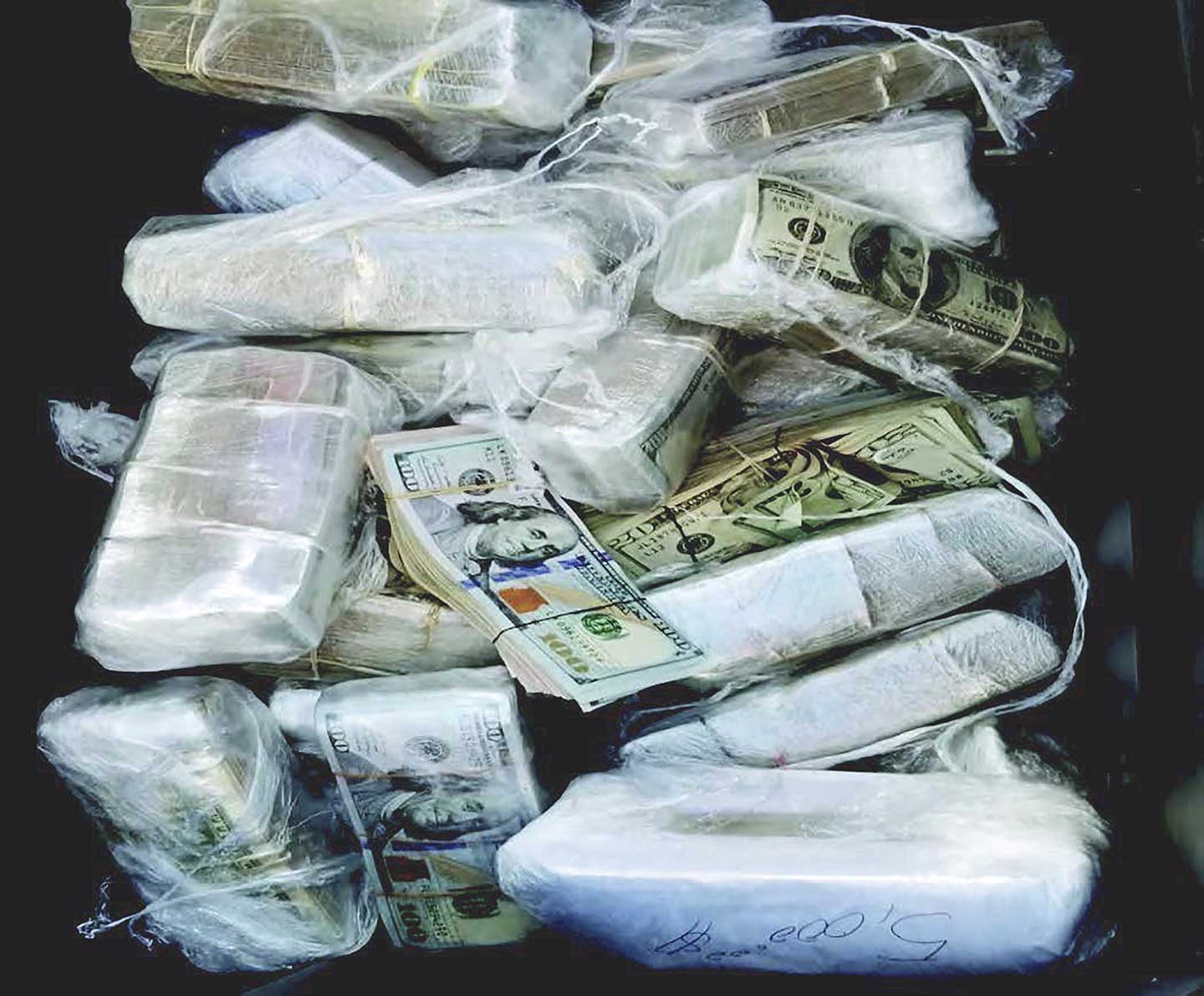
At first, the cartels grew their business empires by focusing on what they knew best: drugs. In the 1970s, cocaine use was growing, and marijuana and heroin were also huge moneymakers. In the decades since, that has spread to fentanyl, methamphetamine, MDMA (ecstasy) and other designer drugs, which are responsible for nearly all fatal drug poisonings in the U.S., the U.S. Drug Enforcement Administration says.
Looking for ways to disguise their merchandise and transport it more easily, TCOs moved into making counterfeit drugs. TCOs also pushed for new trade routes and new modes of transportation. Among the more elaborate means of moving drugs were low-profile boats or even narco-submarines. These semisubmersible or “nearly fully” submersible vessels could more easily evade detection by visual, radar, sonar or infrared systems.
A narco-sub first was reported in September 2000, when Colombian anti-narcotics police discovered a half-built vessel in a Bogotá, Colombia, warehouse, the Spanish newspaper El País reported. It was
36 meters long, 4 meters high, and would have had the capacity to transport 15 metric tons of cocaine. By the 2020s, narco-subs were far more common. In October 2024, in a complex and risky helicopter maneuver, Mexican Sailors intercepted a narco-sub that held about 2,200 kilograms of narcotics, officials said.
But drugs were always a high-risk, high-reward business, and without the legal guardrails that legitimate businesses faced, TCOs looked for new opportunities. “Drug cartels have diversified their operations since their inception,” security analyst David Saucedo told USA Today in 2024. “Many of them started as criminal organizations whose main activity wasn’t drug trafficking.”
Harvesting ‘green gold’
About as far as one could get from drug production and trafficking are Mexico’s lucrative avocado farms. Nicknamed “green gold,” the avocado has seen profits soar since 1997, when the United States authorized the purchase of Mexican avocados in accordance with the 1994 North American Free Trade Agreement, or NAFTA.
U.S. imports of Mexican avocados have grown exponentially since then. Nearly 1.1 billion kilograms of Mexican Hass avocados, worth $3.52 billion, were imported into the United States during the July 2023-June 2024 growing season, the Avocado Institute of Mexico reported.
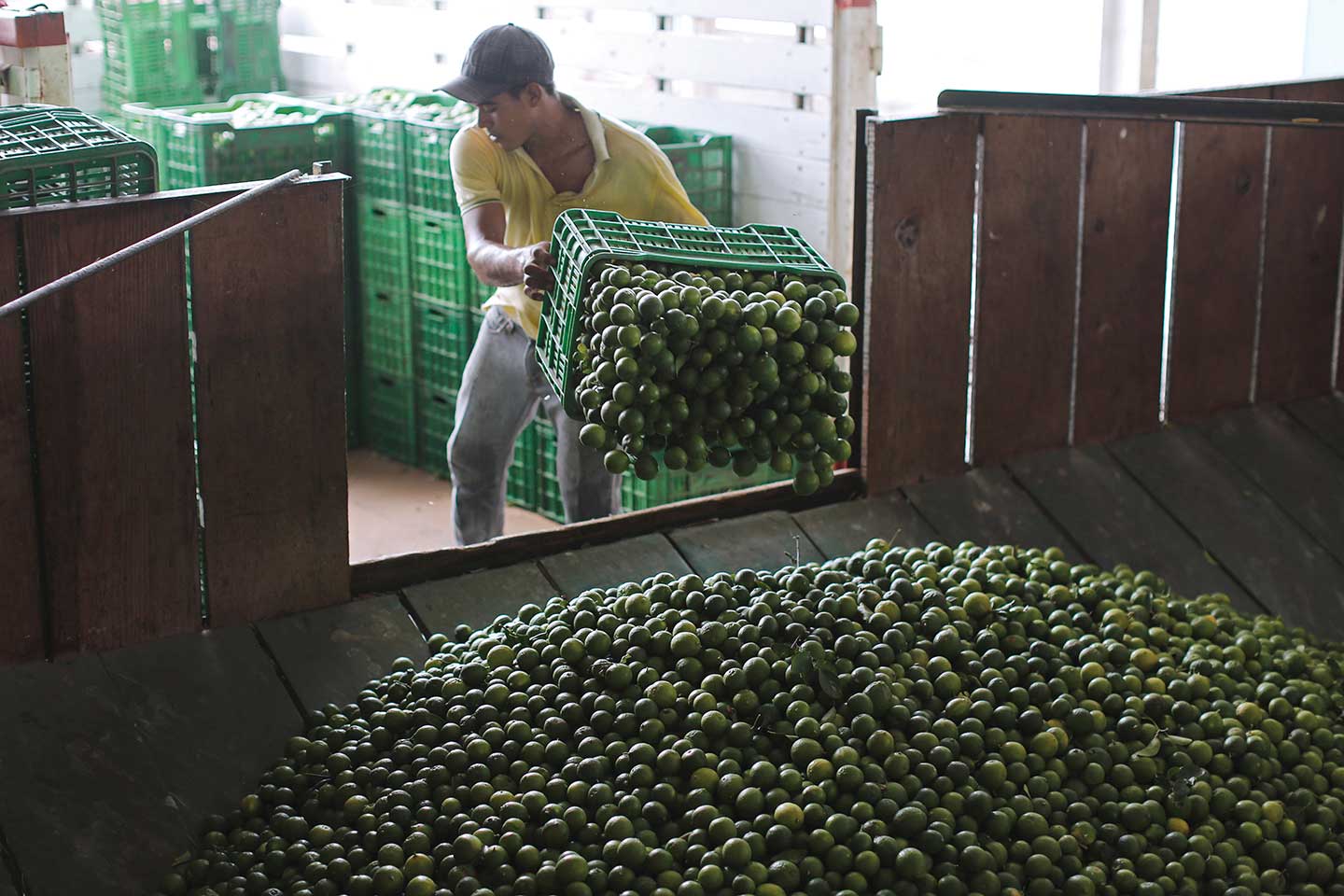
But TCOs have hijacked avocado supply chains and extorted farmers, sometimes driving them from their land with demands for unsustainable protection fees or “cuotas.” The fees can range from $135 to $500 per hectare monthly, USA Today reported in July 2024. The TCOs’ demands are often backed by threats of violence or even death.
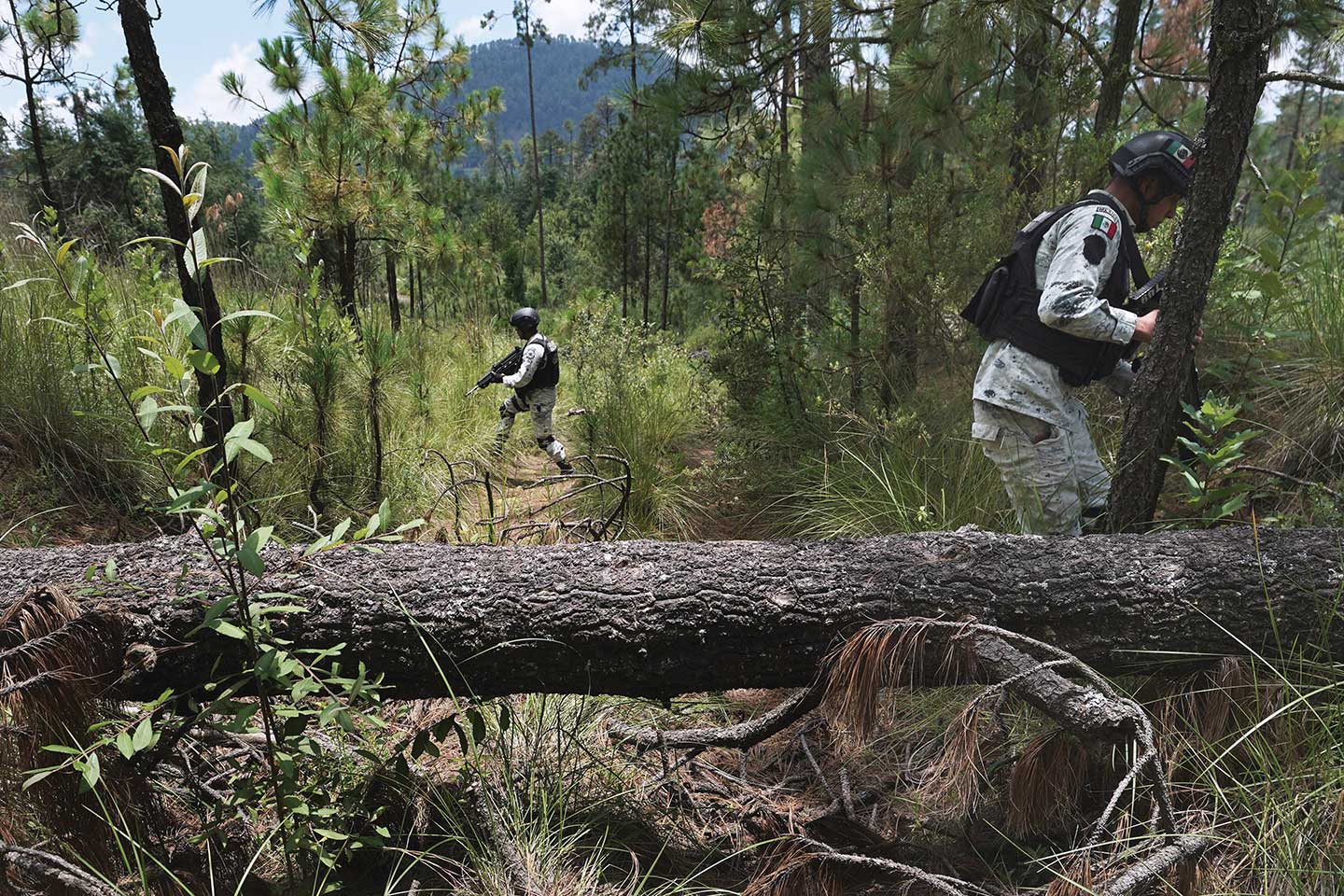
Lime farmers also are facing extortion. In October 2024, Mexico sent 660 Soldiers and National Guard officers to Michoacán to protect lime growers being extorted by cartels. In August 2024, more than half of lime packing warehouses in Michoacán closed briefly after growers and distributors said Los Viagras and other cartels demanded a cut of their income.
Migration and moneymaking
Tren de Aragua, a Venezuela-based TCO, largely has focused on human smuggling, especially of migrant women and girls, for sex trafficking, debt bondage and extortion. Other smuggled immigrants become victims of forced labor. Those who try to escape are often killed, and Tren de Aragua spotlights their deaths as a warning to others.
Tren de Aragua, the Sinaloa Cartel and other TCOs likely view migrants as just one of many commodities to be smuggled, since the practice is highly profitable, with low risk. The TCOs exploit migrants’ desperation to reach the United States and may provide not only transportation but also faked documents. This could include stolen passports with photos, falsification of travel or ID documents, or genuine passports or visas procured with faked documents.
“Because these services are illegal, the criminals have tremendous power, while the migrants are left vulnerable. Many migrants are abused or die on the way to their destination, and many are abandoned en route without resources,” according to a TCO fact sheet by the United Nations Office on Drugs and Crime.
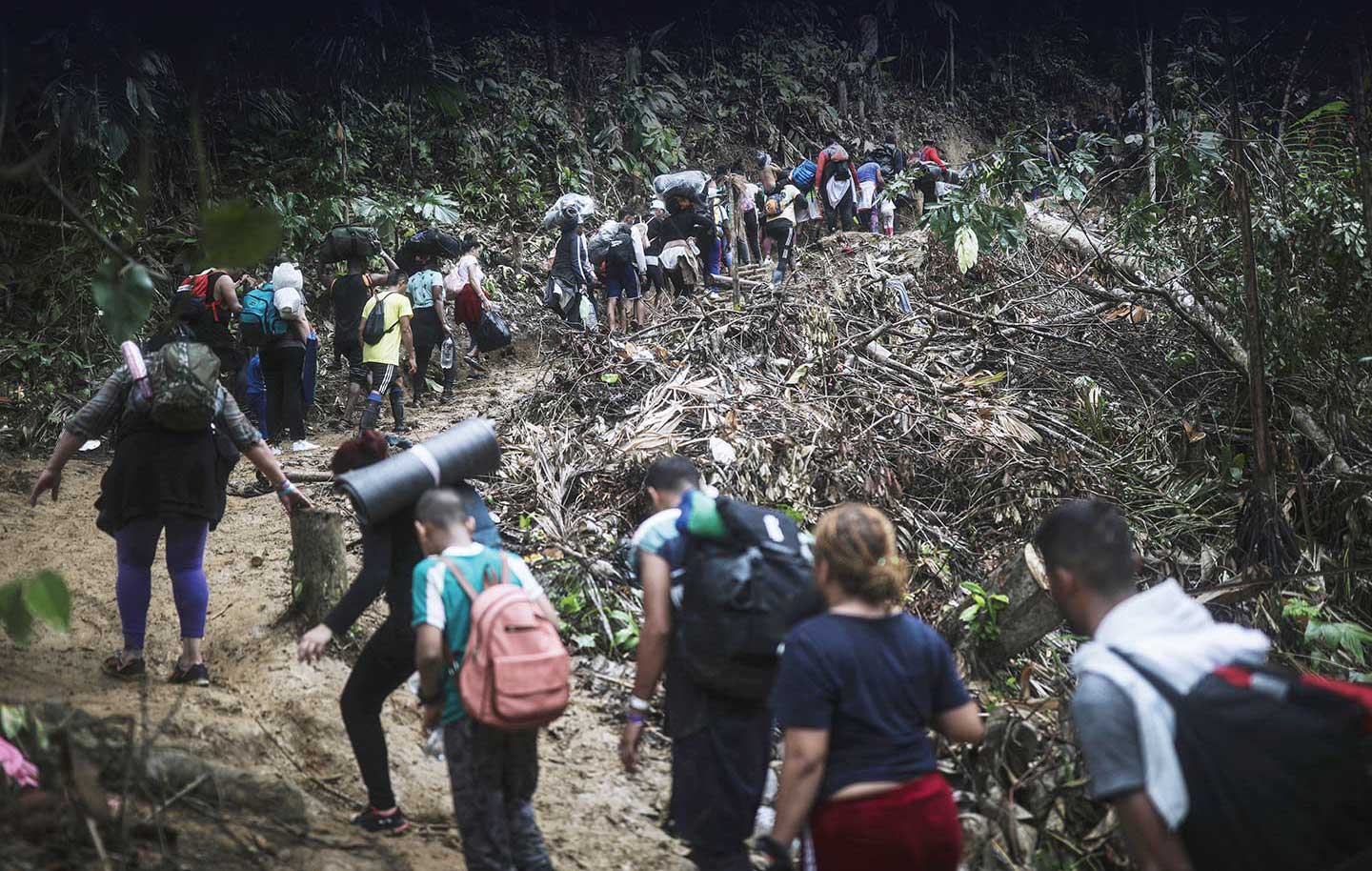
Gary J. Hale, a policy expert who worked in law enforcement and intelligence for the U.S. federal government for 37 years, estimates that various Mexican TCOs have made nearly $100 billion moving migrants through Mexico over the past 20 years, or $5 billion annually. “Migrant smuggling remains a generally easy and profitable endeavor,” Hale told The Watch in an email. Hale says the United Nations World Drug Report estimates Mexican TCOs make about $12 billion annually in drug profits.
Hale co-wrote a research paper for Rice University’s Baker Institute for Public Policy that said most migrant smuggling through Mexico is likely “sponsored by organized crime syndicates or TCOs that facilitate the organization and formation of caravans through the use of social media applications such as Twitter, Facebook, and other platforms. TCOs and other entities announce the formation of a caravan, gather all those interested, and charge them ‘smuggling fees’ for being taken to the U.S. border or to destinations in the interior.” With the U.S. crackdown on illegal immigration, “TCOs will adopt a ‘wait and see’ approach to future migrant smuggling operations,” Hale told The Watch.
Fish, forests and gold
Natural resources are big business, and that attracts TCOs. The criminal gangs have entrenched themselves in illegal fishing, logging and gold mining. It’s much easier to turn a profit when you pay no attention to legal or environmental requirements.
In a 2022 report for the Brookings Institution, a U.S.-based think tank, organized crime expert Dr. Vanda Felbab-Brown outlines how Mexico’s fishing and logging industries are increasingly controlled by TCOs that supply China. The report, titled “China-linked wildlife poaching and trafficking in Mexico,” reveals that “organized crime groups across Mexico, especially the Sinaloa Cartel, seek to monopolize both legal and illegal fisheries along the entire vertical supply chain. Beyond merely demanding a part of the profits, they dictate to legal and illegal fishers how much the fishers can fish, insisting that the fishers sell the harvest only to the criminal groups, and that restaurants, including those catering to international tourists, buy fish only from the criminal groups.” As a result, the report concludes, Mexican natural resources are increasingly under threat from organized crime and wildlife traffickers.
Among the species poached in Mexico and smuggled to China are sea cucumbers, totoaba, abalone and sharks, the report says. The criminal gangs often trade poached species in exchange for precursor chemicals for illegal drugs such as fentanyl and methamphetamine. It’s an easy way for TCOs to get around money laundering laws and regulations.
“There is also poaching still of jaguars and of various parrots, but it’s sometimes difficult to distinguish which of these are being poached for the market in Mexico and which are being sent abroad,” Felbab-Brown told The Watch. “It also appears that there is a growth in consumption … of wildlife products as prestige by the narcos themselves, whether this is keeping live pets or keeping skins, jaguar products.”
On land, TCOs have turned to the forests for profit. According to a 2025 U.N. Office on Drugs and Crime report, “Forest Crimes: Illegal deforestation and logging,” criminal organizations in Central America “have reinvested drug trafficking proceeds into legal and illegal land acquisition. These groups also are involved in forest clearance, creating pasture for cattle, and soy and palm oil plantations. They also finance accompanying infrastructure from landing strips to irregular roads, all of which affects the integrity of forests and biodiversity. This process has been dubbed ‘narco deforestation.’”
TCOs often ignore the legal requirements placed on legitimate businesses, so they are probably logging without a legitimate license, mixing illegally harvested timber and/or protected species with legally harvested wood, and logging much more than the law allows. This “not only weakens environmental protections but also undercuts legitimate forestry businesses and fuels deforestation and biodiversity loss,” the U.N. report says. Restoring such forests, if it’s even possible, would take decades, scientists say.
TCOs also have become major players in illegal gold mining. Another U.N. Office on Drugs and Crime report, “Minerals Crime: Illegal Gold Mining,” says criminal organizations “have embedded themselves in gold supply chains to such an extent that they now pose a serious global threat. These groups are constantly adapting to enable and hide their operations. They exploit advances in transportation, finance, communications, and quickly adopt digital tools including cryptocurrencies. Many of these networks are well integrated into international trade, allowing them to launder proceeds and move illegal gold with relative ease.”
These illegal gold mining operations pose a multitude of threats, the report says: profits being used to fund other illegal activities; expansion of territories controlled by criminal organizations; the spread of government corruption; violence and extortion; environmental destruction; and human rights violations. “One thing is clear: The level of violence is growing exponentially” at gold mining sites controlled by criminal organizations, Melina Risso of the Igarapé Institute, a Brazilian think tank, told Mongabay, an environmental news website.

Taco shop protection rackets
The average Mexican consumes about 75 kilograms of tortillas annually, the U.S. Department of Agriculture reported in March 2023, so it’s not surprising that TCOs would want a share of the action. Now, thousands of small tortilla shops — tortillerías — are being forced to pay protection fees. “There is no licit or illicit business activity in Mexico that is not directly or indirectly touched and financially affected by Mexican TCOs,” Hale said.
At least 15% of tortillerías — about 20,000 storefront businesses — are being extorted, according to Mexico’s National Tortilla Council, a trade group. A decade ago, the practice was far less common, the group said.
In Cuernavaca, the capital of the state of Morelos in Mexico, some gangs are demanding as much as $900 a month from tortilla makers, The Washington Post newspaper reported in May 2024. But the gangs’ control of the tortilla industry does not stop at the storefronts, the Post report says. Criminal organizations control the water system in some areas where corn is grown, and they favor their own farms; trucks transporting corn to shops are robbed along the way, and some drivers must pay extortion fees; some crime groups control the supply of corn and even gas tanks to tortilla shops; and some tortilla deliverymen have been forced to sell drugs.
Fuel theft, timeshares and Wi-Fi
For more than a decade, TCOs have been siphoning oil with illegal pipeline taps. Pemex, Mexico’s state-owned petroleum corporation, reported more than $1 billion in losses in some years.
The cartels have honed a sophisticated strategy for the thefts. “This includes tactics such as bribing Pemex employees and local officials for information, drilling precise illegal taps into pipelines, and using modified tanker trucks to transport stolen fuel for distribution in black market networks,” the USA Today newspaper reported in July 2024.
In a more recent scam, drug cartels have branched out to timeshare fraud targeting older Americans. The FBI said in a 2023 alert that scammers contacted people who were trying to sell their timeshares in Puerto Vallarta, Mexico. The scammers said they had a buyer lined up, but the seller needed to pay taxes or other fees before the sale could proceed. Once the money was paid, the scammers disappeared.
One of the more mundane moneymaking sidelines for a drug cartel was Wi-Fi service in Michoacán. Local media dubbed the set-up “narco-antennas,” which involved stolen equipment set up in various towns. Los Viagras cartel charged about 5,000 people inflated prices of 400-500 pesos (about $21.50 to $27) a month, the Michoacán state prosecutor’s office said, according to The Associated Press.
So, why pay the higher price? Prosecutors said people were told “they would be killed if they did not.” No deaths were reported, and the scheme was broken up in December 2023.
The future of narco crime
TCOs already are using cybercrime to control illegal immigration, launder money, sell and track drug shipments, and evade police and military units. The trend will continue and expand, Hale said.
“Cybercrimes such as cyber extortions are expected to grow globally,” Hale told The Watch, “with Mexican TCOs already performing cyber kidnappings and other extortion crimes by exploiting the vulnerabilities of the internet and ignorance of smartphone users that have had their cellphones breached.”
Hale expects Mexican and Chinese TCOs to expand their criminal alliances and increasingly use artificial intelligence to hack and extort Americans.
“A likely scenario would be for Mexican TCOs to agree to receive taskings or targeting from Chinese criminals, both entities of which operate in collusion or coordinate directly with their host governments,” Hale told The Watch in an email. “This would see the use of Mexican cyberextortion call centers to target U.S. military or defense personnel, particularly Hispanics with extended family in Mexico or China, or any Spanish or Chinese speakers, in an attempt to obtain U.S. technology or secrets. Mexican TCOs already possess formidable paramilitary capability that is likely to grow.”