
Cooperation between Honduras and the United States against transnational criminal organizations is increasingly focused on operational coordination, intelligence sharing and maritime security as authorities confront evolving drug trafficking networks in Central America. Recent meetings and joint initiatives reflect a broader regional effort to strengthen the fight against organized crime, particularly as trafficking routes, criminal structures and illicit economies adapt across the hemisphere.
Expanding bilateral coordination
On April 13, 2026, U.S. Chargé d’Affaires in Honduras Colleen A. Hoey and Honduran Attorney General Pablo Reyes discussed joint efforts against transnational criminal networks, including drug trafficking and related crimes, Honduran outlet Contexto reported. The discussions focused on strengthening coordination between institutions responsible for investigations and security cooperation.
The meeting followed broader bilateral discussions between Honduran and U.S. authorities centered on combating organized crime, narcotics trafficking and gang activity. These engagements reflect the growing importance of sustained coordination between partner nations facing increasingly transnational criminal threats that operate across borders, maritime routes and financial networks.
Evolving criminal dynamics
Honduras continues to face major security challenges linked to narcotics trafficking and organized crime. Honduran security analyst Leonardo Pineda said that some challenges in areas such as money laundering legislation and institutional corruption continue to create vulnerabilities that criminal organizations can exploit.
Honduran authorities say that trafficking structures are adapting under sustained security pressure. Honduran media outlets La Tribuna and Noticias 24/7 reported in May that criminal groups have been restructuring operations and adjusting territorial control mechanisms in response to military and police operations.
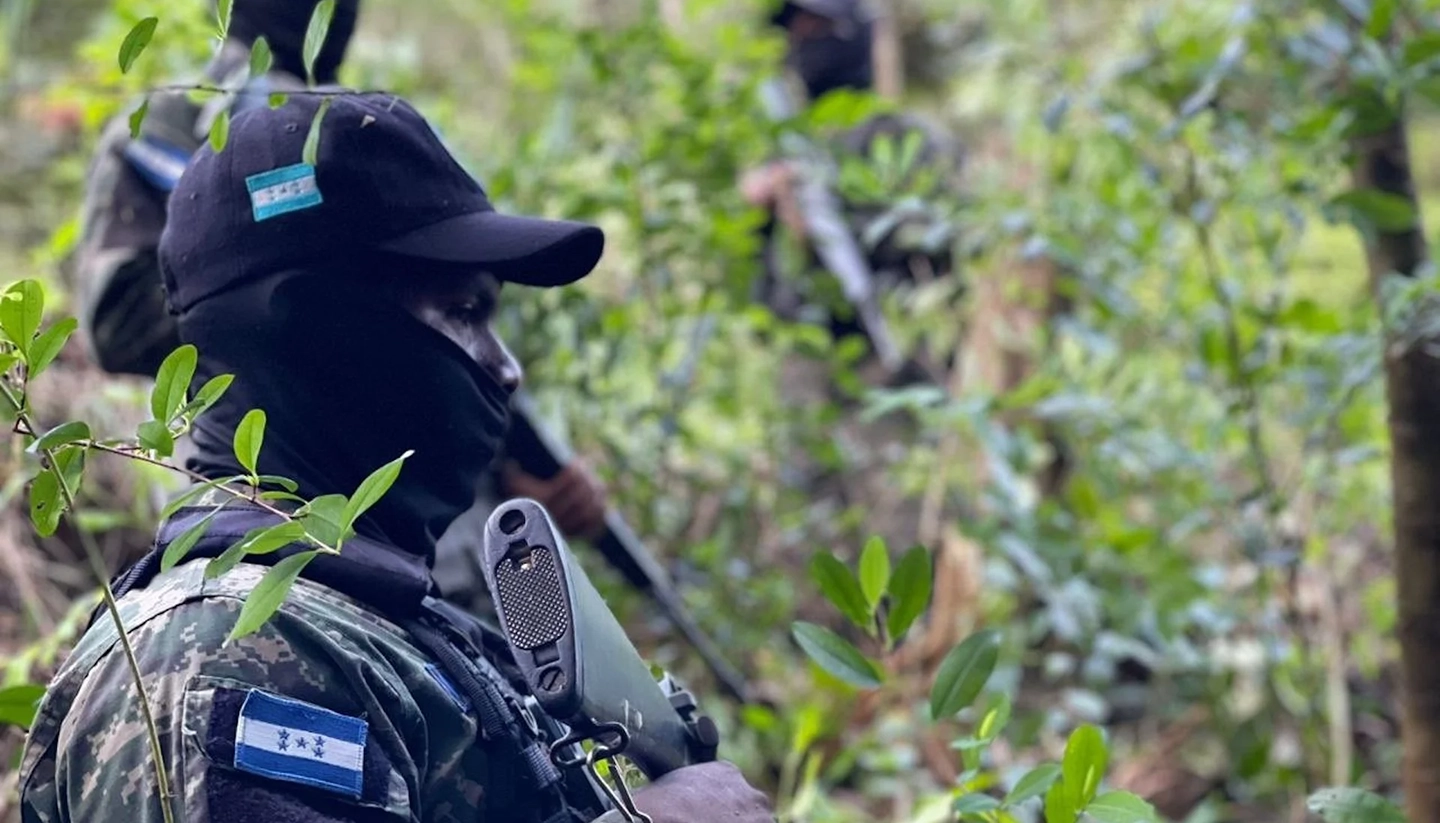
Honduran authorities also have reported increased coca eradication operations in recent months. On May 1, the Honduran Armed Forces announced the destruction of two coca plantations in the department of Atlántida, bringing the total to 25 plantations and more than 400,000 coca bushes eradicated nationwide so far in 2026.
At the same time, regional monitoring organizations have warned of increasing signs of domestic coca cultivation and processing in Honduras. A 2025 assessment by InSight Crime noted a rise in coca plantations and processing laboratories while cocaine seizures declined, highlighting concerns about the evolving footprint of criminal networks inside the country.
For security forces in the region, these developments underscore how transnational criminal organizations continue to adapt logistics, trafficking routes and local production capabilities in response to enforcement efforts.
Targeted operations and regional coordination
In response to rising criminal activity, Honduran authorities have intensified operations in municipalities with high levels of violence and organized crime. According to the Honduras’ National Television System, police have incorporated crime mapping and geographic concentration strategies to prioritize high-risk areas.
Authorities say the operations seek to improve the deployment of police and military resources while strengthening responses to extorsion, drug trafficking and gang-related violence.
Regional coordination also has become an important component of anti-drug efforts. In March, Honduras participated in the Counter Cartel Conference of the Americas at U.S. Southern Command headquarters, where representatives from multiple countries discussed intelligence sharing, operational coordination and regional approaches to combating transnational threats.
The conference focused on improving cooperation against narcotrafficking, arms trafficking and other transnational criminal activities.
Maritime security cooperation
Cooperation between Honduras and the U.S. also has expanded in the maritime domain, particularly as trafficking organizations continue relying on Caribbean and coastal routes to move illicit shipments. On April 28, the U.S. Embassy in Tegucigalpa, through the State Department’s Bureau of International Narcotics and Law Enforcement Affairs (INL), delivered specialized satellite communications equipment to the Honduran Navy to support maritime interdiction efforts.
Authorities said the equipment is intended to strengthen the Honduran Navy’s ability to detect, monitor, and respond to drug trafficking activities operating in regional waters. For countries across Central America and the Caribbean, maritime cooperation, communications interoperability and intelligence sharing remain critical components of broader efforts to counter increasingly adaptive transnational criminal organizations.
Diálogo Américas is a publication of U.S. Southern Command.