

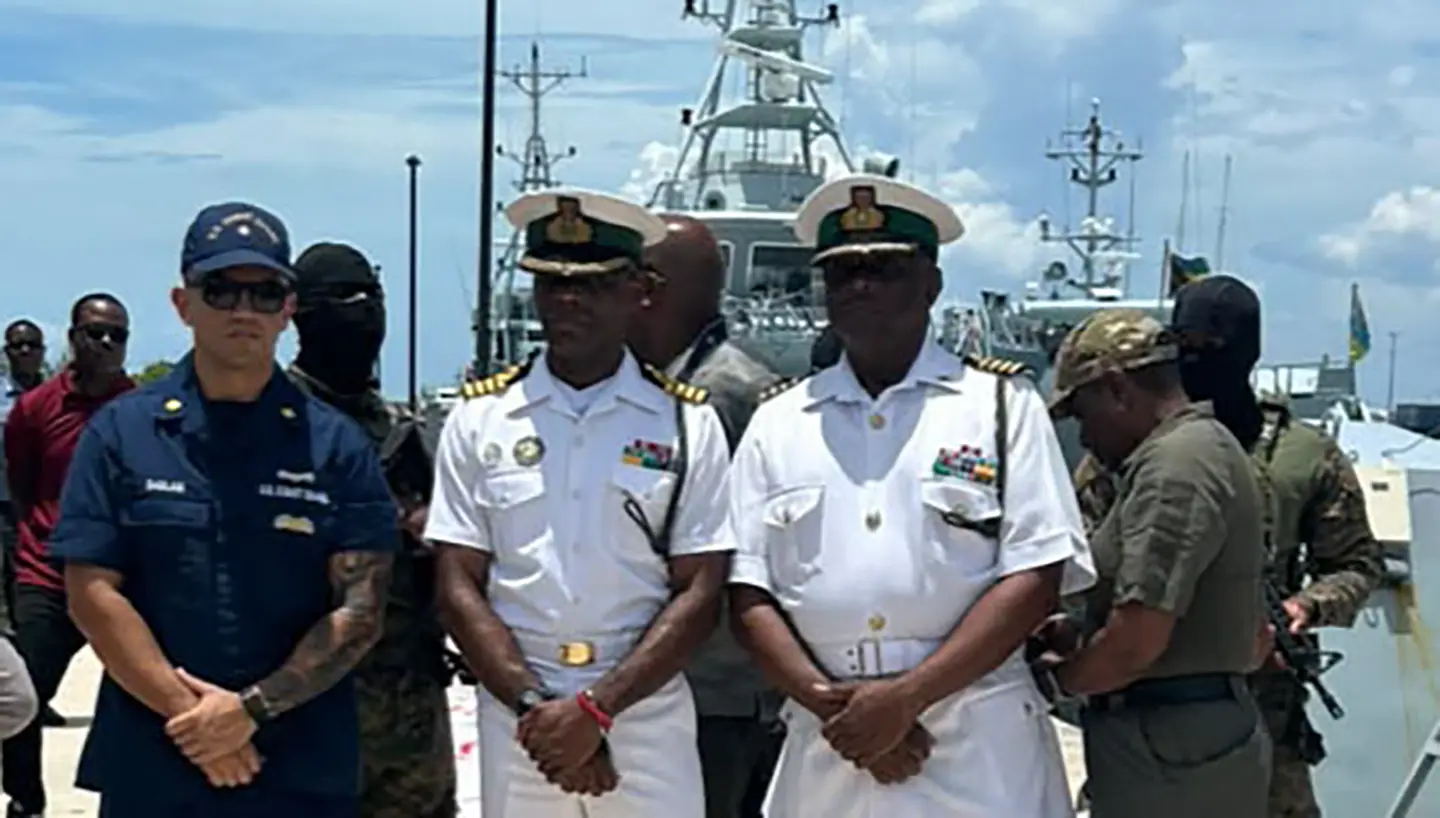
The Royal Bahamas Defence Force (RBDF) collaborated with the United States Coast Guard in July 2026 to intercept a boat laden with nearly $3 million in marijuana near Great Inagua. The interdiction reflected the close cooperation between the maritime forces. The operation also included a private-sector vessel, part of a new Coast Guard initiative designed to enhance the effectiveness of defending U.S. borders and maritime approaches.
“This interdiction highlights the strength of our partnership and our shared commitment to combating transnational organized crime in the region,” said Lt. Peter Fager, commanding officer of the Coast Guard cutter Charles Sexton. “Working together, we continue to disrupt illicit trafficking and protect the security and stability of our maritime borders,” a Coast Guard news release stated.
After the Charles Sexton intercepted the boat, RBDF Marines boarded the vessel and seized 97 bales of marijuana weighing 1,080 kilograms. The vessel was stopped 129 kilometers southwest of Great Inagua in The Bahamas. Three people aboard the boat were apprehended and transported to The Bahamas for prosecution, the release stated.
The Homeland Security Cutter-Ocean initiative, launched in June, contracts commercial vessels manned by civilian crews to provide logistical support to Coast Guard cutters while they are deployed on maritime missions. By delivering supplies and personnel directly to cutters at sea, the vessel, which is owned by Bordelon Marine of Houma, Louisiana, will allow Coast Guard cutters to remain at sea for longer periods to complete missions. The Coast Guard embedded a crew on board the 78-meter ultra-light cutter for mission support and logistics coordination.
“As demands on the Coast Guard continue to grow, we must find innovative ways to sustain our fleet and keep our crews focused on the mission,” said Vice Adm. Nate Moore, deputy commandant for operations, said in a June news release. “Homeland Security Cutter-Ocean will help us deliver critical supplies and personnel more efficiently while increasing the endurance and effectiveness of our operational forces.”
The RBDF and the Coast Guard have worked closely together for more than 40 years through Operation Bahamas, Turks and Caicos (OPBAT). OPBAT shares intelligence about drug smuggling activities, often spotted by U.S. helicopters or planes, which then pass along routes and locations of suspected drug smugglers to RBDF or Turks and Caicos maritime forces. Other U.S. agencies involved include the Department of State, the Drug Enforcement Administration and Customs and Border Protection.