
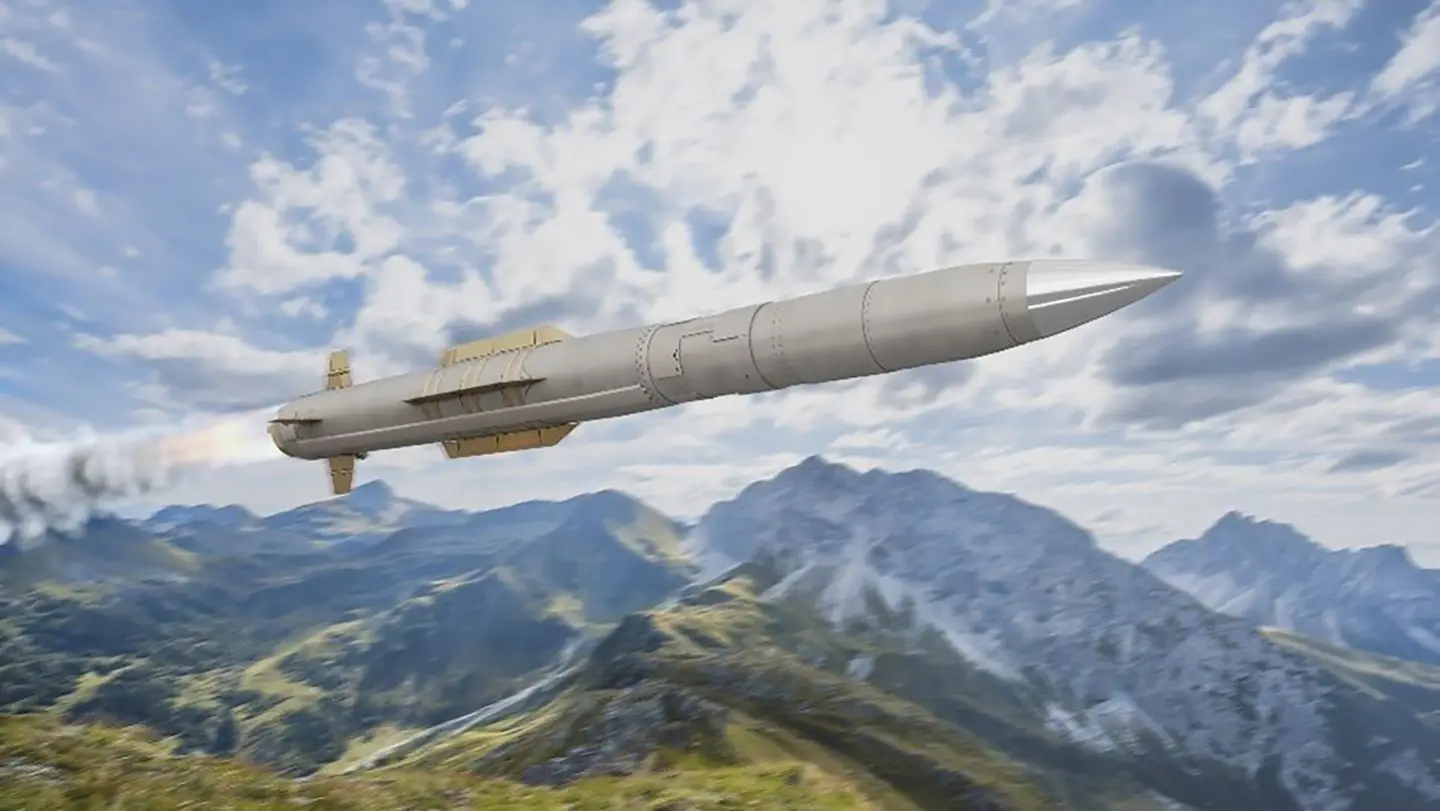
The United States is introducing a more budget‑friendly Patriot interceptor as it seeks to lower the costs of shooting down lower‑tech ballistic missiles. The PAC‑3 Adapted Capability Effector (ACE) will cost less than half of the current $4.2‑million PAC‑3 Missile Segment Enhancement (MSE) interceptor, manufacturer Lockheed Martin announced in July 2026.
The Patriot interceptor is strategically important because it provides the U.S. and its allies with a proven capability against missile threats as part of a layered defense. The PAC‑3 MSE is the newest generation of the interceptor, whose PAC‑2 variants first were used for missile defense during the Gulf War. While PAC‑2 versions rely on blast‑fragmentation warheads, the PAC‑3 uses a more sophisticated hit‑to‑kill interceptor designed to destroy incoming missiles through direct impact rather than explosive detonation.
“What ACE is designed to do is go after air‑breathing targets, so aircraft and cruise missiles, short‑range ballistic missiles, kind of intermediate ballistic missiles. This missile isn’t designed to go after drones,” Tim Cahill, president of Lockheed Martin Missiles and Fire Control, said at the unveiling of the missile at Farnborough International Airshow in England, according to Reuters.
The ACE will use the MSE’s launcher and command and control software but incorporate a less expensive rocket motor, radar and “seeker” — the sensors that detect and track incoming targets, Cahill said.
Operation Epic Fury drew from stockpiles of seven U.S. “key munitions,” according to an April 2026 analysis by the Center for Strategic and International Studies (CSIS). The substantial use of those weapons, which included Patriots, illustrated the “cost‑exchange deficit” in which interceptors costing millions were used to down, for example, Shahed‑136 drones costing about $35,000 and cheaper Iranian ballistic missiles, according to a report in the Stars and Stripes newspaper.
The Patriot has become “one of the world’s most sought‑after air‑defense” systems since the 2022 Russian invasion of Ukraine, Reuters said. When Kyiv exhausted its supply of PAC‑3 interceptors in July 2026, Moscow responded with increased ballistic missile attacks, prompting Ukrainian President Volodymyr Zelenskyy to ask for an emergency “winter package” of Patriots from the U.S.
“We need the means to shoot down ballistic missiles. We have enough systems; what we need is a steady supply of missiles,” Ukrainian Air Force spokesman Yurii Ihnat told the Wall Street Journal newspaper.
The ACE announcement came amid other significant Patriot system news in July 2026:
- The U.S. announced during the NATO summit in Ankara, Türkiye, that it will establish a European maintenance facility for the advanced PAC‑3 interceptor. Poland offered to host the facility, Reuters said.
- The U.S. Army awarded Lockheed Martin a contract modification worth $53.86 billion for PAC‑3 MSE interceptors, bringing the value of the now seven‑year deal to $58.62 billion, according to news website Breaking Defense. The Department of War also announced a similar agreement with L3Harris that, in part, seeks to triple rocket‑motor production for Patriot interceptors.
- RTX, formally Raytheon, announced that it received more than $5 billion for the older PAC‑2 GEM‑T Patriot interceptors, according to news website The War Zone. The company said the order was “driven by international customers, and our first domestic GEM‑T production order in over 30 years.”
The ACE, meanwhile, could begin production in 2028, and there are plans to develop and manufacture the weapon with European industry partners, according to Reuters.
“The United States and its allies, the entire PAC‑3 community, needs as many PAC‑3s as industry collectively can produce. But we’re also going to need alternatives, and not everything needs the most exquisite capability,” Tom Karako, director of the Missile Defense Project at CSIS, told news website Defense One.
ACE will provide the PAC‑3 community, which includes the U.S. and almost 20 allies and partners, with that alternative. While it lacks some of the features required to counter the most advanced weapons, the PAC-3 ACE “could defend against less demanding threats, like short‑range ballistic missiles, [and] would be very valuable,” said Marc Cancian, a retired U.S. Marine Corps colonel who is a senior advisor with CSIS. “The standard Patriot could then be reserved for more demanding threats.”
Sentry is a publication of U.S. Strategic Command.