

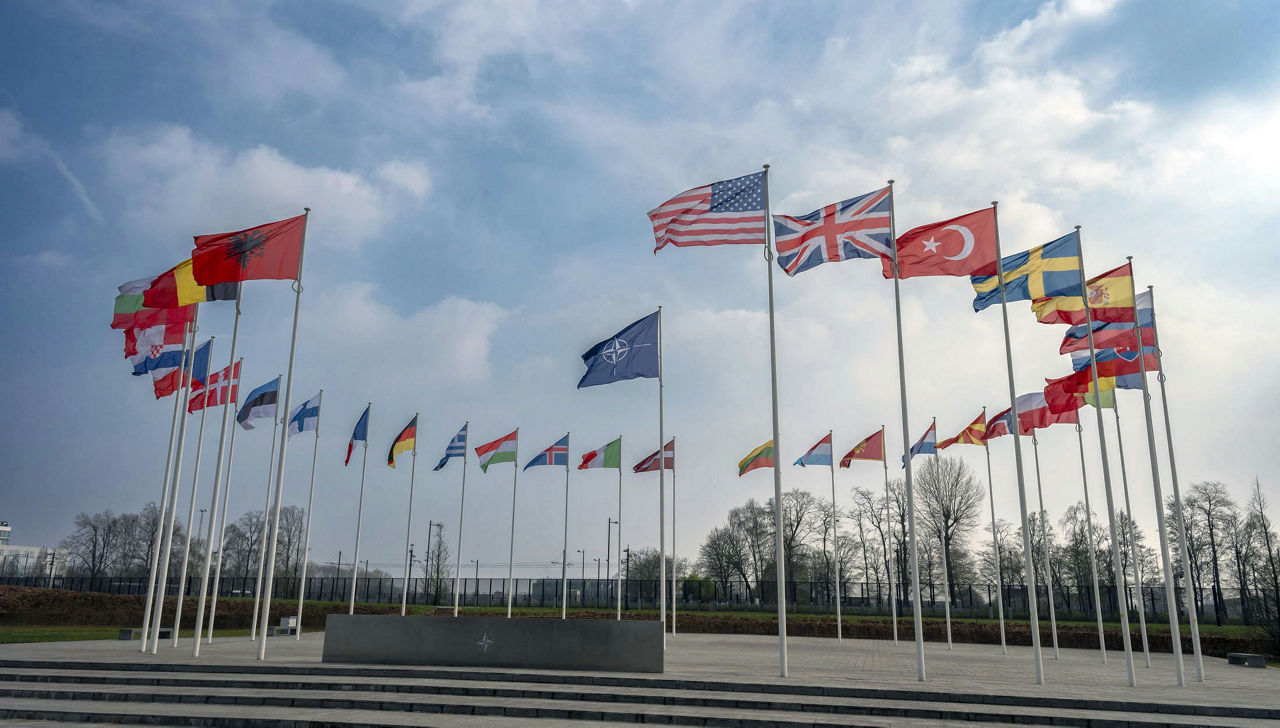
Recent interoperability exercises and increased defense spending underscore a strategic shift within NATO toward enhanced burden sharing and multinational capability development to solidify Europe’s security architecture.
In addition to meeting benchmark defense spending of 2% of gross domestic product, NATO members’ leaders emphasize that increased spending is only part of the deterrence equation. The alliance focuses highly on interoperability across its five operational domains: land, air, maritime, space and cyberspace, and depends on forces from multiple nations working together on short notice.
NATO’s Allied Command Transformation noted in a 2025 article that unity without interoperability is hollow. Ensuring that disparate national systems — such as a Norwegian radar, a German air defense unit and a Dutch command post — that can function together seamlessly produces faster decisions and mitigates risks during joint operations.
To achieve this integration, interoperability must align in three core areas. Technical interoperability ensures networks can exchange data in real time. Procedural interoperability aligns tactics and techniques across diverse militaries. Human interoperability guarantees that personnel share a common operational language and trust one another.
Retrofitting these capabilities is costly and often ineffective, prompting NATO to mandate interoperability by design. Initiatives such as the Defence Innovation Accelerator for the North Atlantic (DIANA) and innovation sandboxes allow experimental defense systems to be tested for real-world compatibility before field deployment.
The dialogue surrounding defense contributions is simultaneously evolving from strict burden sharing to broader responsibility sharing. Financial metrics alone do not capture the full scope of allied contributions. A 2023 report from the Center for Strategic and International Studies identified that peacetime preparedness, disaster response and logistical support also are crucial. Defense analysts at the Atlantic Council also emphasize that European allies must demonstrate tangible ways they contribute to collective defense. This involves taking a proactive role in filling gaps in strategic enablers, such as airlift capabilities, air-to-air refueling, and intelligence, surveillance and reconnaissance platforms, which historically have been supplied primarily by the United States.
Coordinated decision-making and joint procurement are central to this capability development. Using frameworks like the Defense Production Action Plan, European allies aim to aggregate demand, accelerate joint procurement and boost overall production capacity. Data from the Stockholm International Peace Research Institute illustrates this positive trajectory, tracking an increase in defense spending across European NATO members, amounting to billions in new investments. While the U.S. remains the largest single contributor, increased European spending allows for a more balanced security architecture.
Defense leaders regularly emphasize that as the alliance navigates a contested global security environment, practical multinational cooperation remains the foundation of NATO’s deterrence posture. Whether delivering air policing or reinforcing deterrence along the eastern flank, the seamless integration of allied capabilities is necessary for mission success. By aligning doctrine, training and equipment from the outset, NATO seeks to ensure its growing defense investments yield a unified force that can rapidly respond to emerging crises.
Sentry is a publication of U.S. Strategic Command.