
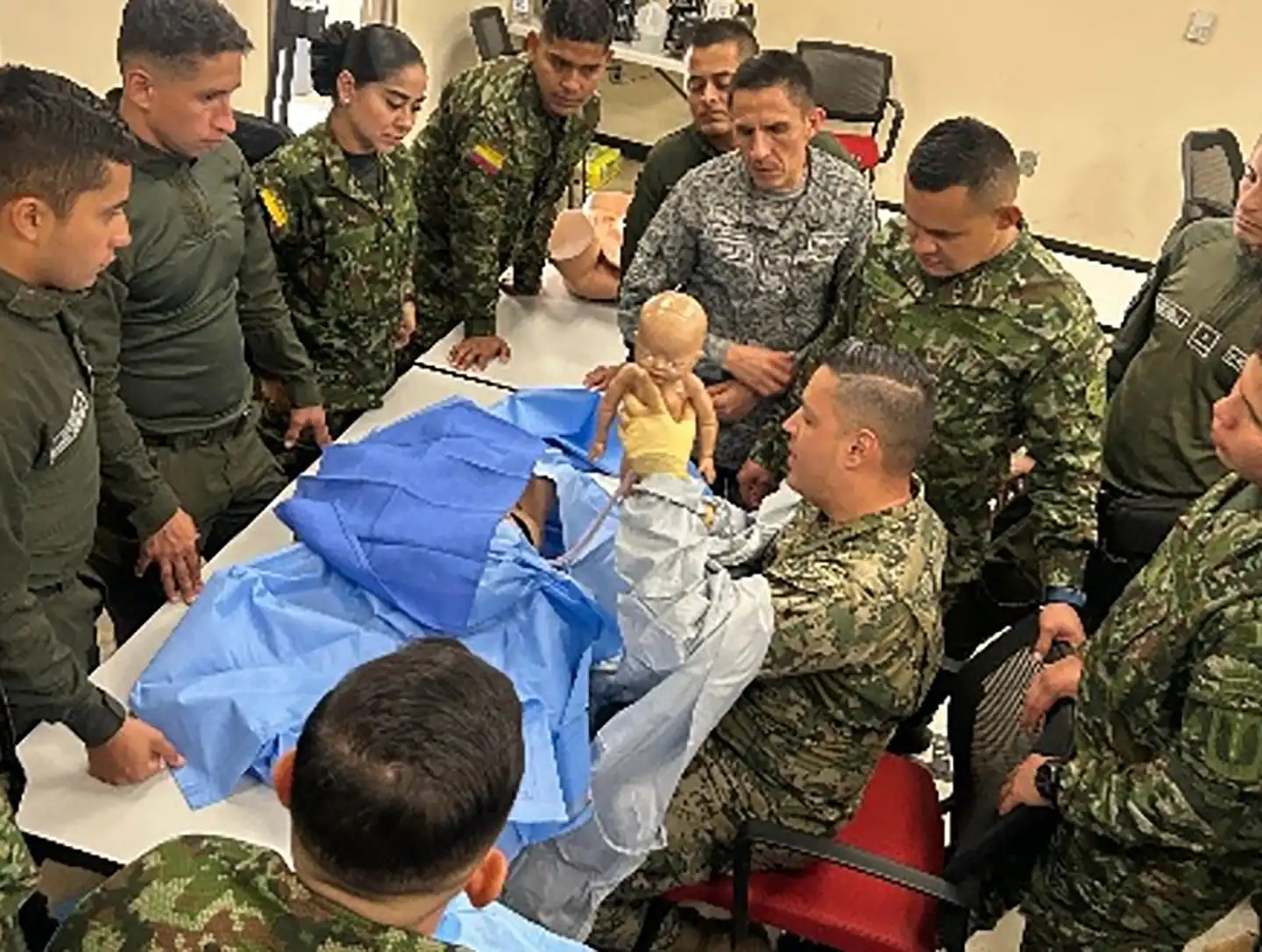
Mexico, due to its close proximity and shared interests with the United States, collaborates with U.S. Northern Command (USNORTHCOM) in various activities such as multinational exercises and education. The Western Hemisphere Institute for Security Cooperation (WHINSEC) is an integral part of this effort. WHINSEC is an educational platform guided by solid doctrine in human rights and democracy and is a vital tool for multinational collaboration.
The institute is a U.S. security assistance command and serves as an education and training center that promotes inter-institutional collaboration and interoperability in the Western Hemisphere. It falls under the U.S. Army Western Hemisphere Command, whose core missions include homeland security, defense support for civil authorities, humanitarian aid and disaster assistance, theater security cooperation and immediate response force for the Americas.
One course taught at WHINSEC is the Medical Assistance Course (MEDAC), instructed by faculty in the Tactics Division of the Deleon-Gonzalez School of Leadership and Tactics. This course responds to the needs of pre-hospital medical care from the point of injury or illness to the site of definitive treatment where evacuation and care of victims can be prolonged. Recognition, prevention and timely treatment increase survival rates. The combat medic must be able to perform in various environments such as mountains, dense jungle, and desert or urban areas.
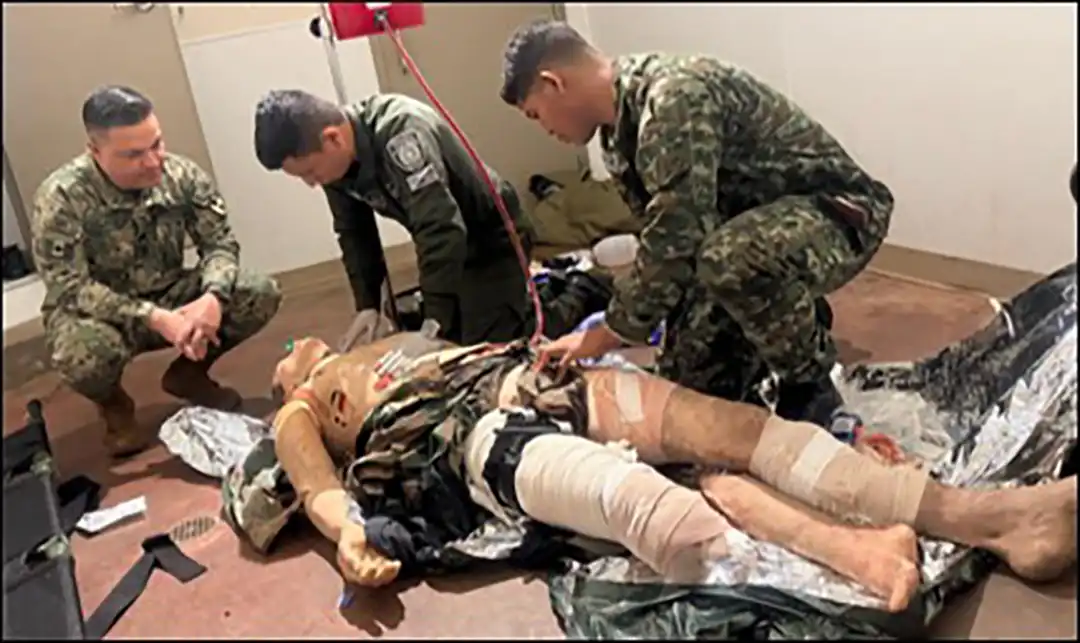
Mexico has participated in MEDAC by sending not only student officers and noncommissioned officers, but also foreign guest instructors (FGIs), such as captains and noncommissioned officers of the Mexican Army and lieutenants of the Secretariat of the Navy. These are certified professionals with different levels of expertise such as doctors, nurses and medics. Many have teaching, operational and/or clinical experience, enabling them to address different aspects of pre-hospital knowledge and enrich the content of the course. When joining the WHINSEC faculty, they gain certification through WHINSEC’s Center of Faculty and Staff Development, where they study and apply to the Experiential Learning Model. This improves teaching capabilities and standardizes the technical criteria of the U.S. Army University. Instructors can advance in certification by earning the Basic, Senior and Master Army Instructor Badges. This continuous learning model and advanced instruction promote training satisfaction, understanding of complex medical subjects and improvement of the technical skills necessary in prolonged and complex pre-hospital care scenarios.
During 360 hours of instruction divided over nine weeks, instructors train and evaluate students on the principles of human rights and democracy in the armed forces, common illnesses in operations, obstetric evaluation, childbirth and healthy newborn care, and tactical combat casualty care.
According to WHINSEC’s International Military Student Office, since the establishment of the course in 2005 — originally designated as TAC-7 and subsequently renamed to MEDAC — 862 students from several countries completed the program, including students from Argentina, Bolivia, Brazil, Chile, Colombia, Costa Rica, the Dominican Republic, Ecuador, Guatemala, Haiti, Honduras, Mexico, Panama, Paraguay, Peru and Uruguay. These students have worked in various areas of specialization, such as paramedics, combat medics, and nurses and doctors who work in predominantly hospital or clinical areas.
Finally, the clinical, teaching and operational backgrounds of Mexican instructors’ contributions at WHINSEC foster the professional development of health care in Latin American and Caribbean countries through instruction in tactical pre-hospital medical and trauma care. Combined, this renders an efficient educational process that builds the self-confidence of student first responders who develop the technical, tactical and ethical skills necessary to provide the best care in critical moments not only to colleagues but also to the general population. Instruction must be updated in line with the evolution of medicine to respond effectively to current challenges, so it is important to integrate collective experience and knowledge, promoting a multidimensional approach to potential threats to the hemisphere. In this way, Mexico’s participation in WHINSEC and MEDAC contributes to ensuring that its graduates project a high level of training in pre-hospital care for the civilian and military populations.
EDITOR’S NOTE: The views expressed in this article are those of the author and do not necessarily reflect the official policy or position of WHINSEC, United States Northern Command, the Department of the Army, the Department of War or the U.S. and Mexican governments.
Lt. Hector R. Cardoso Enciso of the Mexican Navy is a foreign guest instructor for the Medical Assistance Course at the Western Hemisphere Institute for Security Cooperation in Fort Benning, Georgia.