

A major earthquake could cripple roads, destroy critical infrastructure and leave northern Canadian communities without electricity, water or communications — conditions that could become more dangerous during winter’s harsh months.
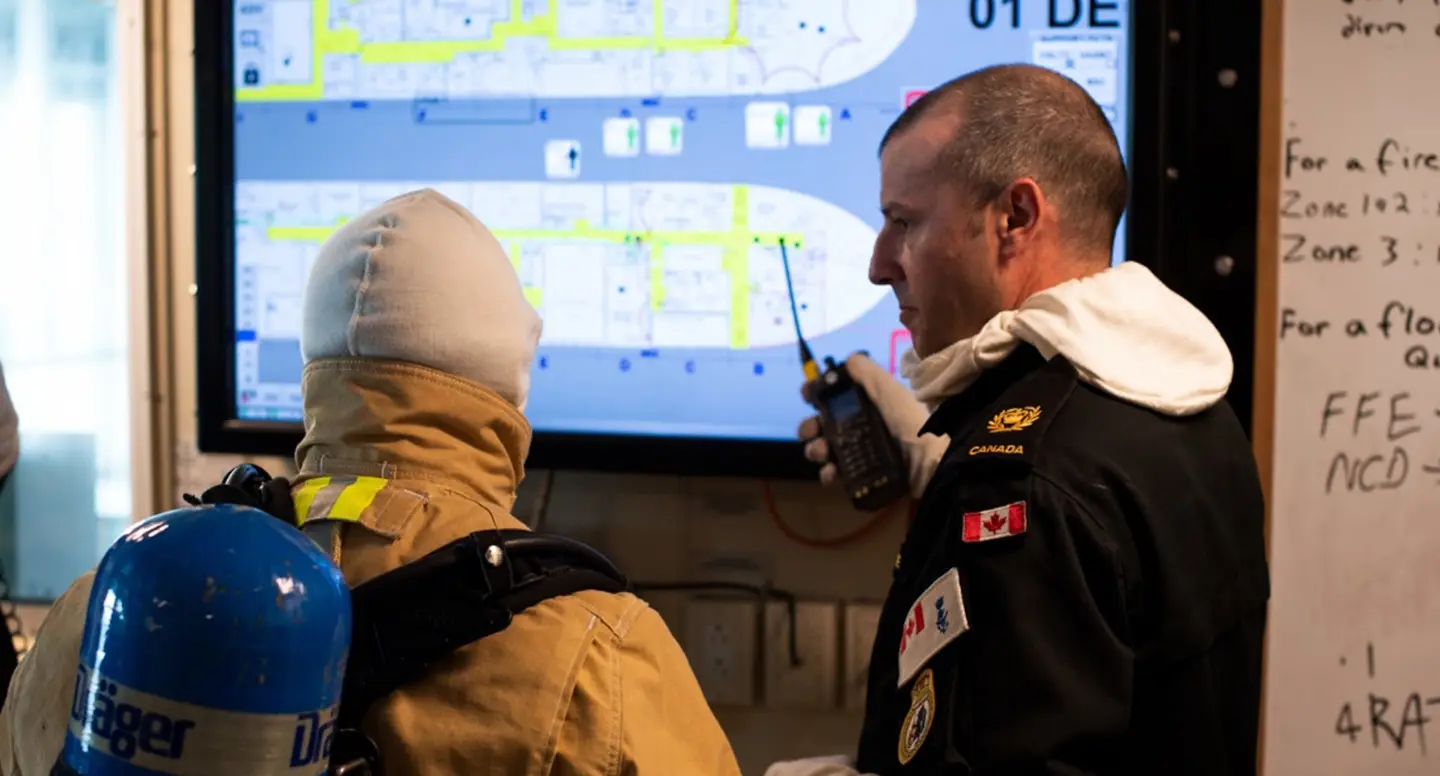
The Canadian Armed Forces (CAF) held a recent exercise in Whitehorse, Yukon, to test how military, government and Indigenous organizations would coordinate a response to such a disaster. Exercise Operation Nanook-Tatigiit, held October 19-23, brought together about 100 officials from federal, territorial, municipal and First Nations governments, along with emergency response organizations.
The exercise simulated a magnitude 7 or greater earthquake along the Tintina Fault, which stretches 1,000 kilometers across Yukon. Research published by the University of Victoria in 2025 suggests the fault may be more active than previously understood, raising concerns about the potential impact of a major earthquake.
The exercise simulated widespread damage such as collapsing roads and bridges, cracking the Mayo Dam in central Yukon — about 400 kilometers north of Whitehorse — disrupting electricity and communications, and rupturing water and sewer lines.
The scenario was designed to test an emergency affecting multiple communities simultaneously, potentially overwhelming local response capabilities.
“Because we’re only just starting to understand the risk that a possible Tintina Fault earthquake could have,” Shane Skarnulis, manager of response operations at the Yukon government’s Emergency Measures Organization, explained in a CBC News report about the reasoning behind the scenario.
The five-day exercise focused on interagency communications, coordinating emergency responses and ensuring that participating organizations understood their responsibilities. Participants worked through the initial emergency response, executive-level decision-making and longer-term recovery planning.
The CAF said the exercise strengthened coordination, clarified roles and responsibilities, and improved preparedness for emergencies in the North.
Maj. Dan Gillis, acting director of Strategic Engagement and Yukon Detachment Commander at Joint Task Force North, told CBC News he was pleased with the results. “I feel very comfortable if the situation were to happen tomorrow,” he said.
The exercise also demonstrated the importance of cooperation among Indigenous communities, particularly when a disaster overwhelms local resources or disrupts transportation.
Representatives from the Tr’ondëk Hwëch’in, Vuntut Gwitchin and Little Salmon/Carmacks First Nations participated. In one scenario, Little Salmon/Carmacks First Nation offered to accommodate residents of Tr’ondëk Hwëch’in, whose community was assumed to have suffered more extensive damage.
Estelle Honeywell, emergency planning officer for Tr’ondëk Hwëch’in, said in a CBC News article that relying on established family and community relationships could provide an important alternative when emergency services are stretched thin. “Staying with kin and family networks is a great option,” she said.
The exercise reflected a broader Canadian effort to strengthen emergency preparedness and security in the Arctic, where vast distances, harsh weather and limited infrastructure can complicate disaster response.
Operation Nanook, launched in 2007, is the CAF’s signature northern operation, consisting of activities conducted throughout the year across Yukon, the Northwest Territories, Nunavut and Labrador. In 2018, Nanook was separated into four distinct activities held in different northern communities throughout the year.
At its core, NANOOK strengthens the Canadian Armed Forces’ knowledge of these vital territories, boosts cooperation with other Arctic nations and key allies, and fortifies partnerships with federal, territorial and local communities.
Each iteration addresses different training requirements identified by territorial emergency management organizations and participating partners.
In October 2025, the exercise in Yellowknife, Northwest Territories, simulated a large-scale diesel fuel spill, testing emergency management procedures and business continuity plans. The October 2024 exercise in Chesterfield Inlet, Nunavut, focused on a power infrastructure failure during extreme cold weather, including emergency resource coordination and interagency cooperation.
Nanook-Tatigiit was designed to focus specifically on whole-of-government disaster response in Yukon and reinforce partnerships among military, government and Indigenous organizations.
The importance of those preparations extends beyond natural disasters. Canada’s military says increasing international interest and activity in the Arctic, driven partly by the region’s expanding accessibility and natural resources, is creating additional safety and security challenges. Greater activity also increases the potential need for search-and-rescue operations and responses to emergencies in remote communities.
Lt. Gen. Steve Boivin, commander of Canadian Joint Operations Command, said in an October 27 CAF news release that the exercise strengthens Canada’s ability to address evolving challenges in the region.
Lt. Col. Orin Wing, chief of staff of Joint Task Force North, emphasized the importance of relationships with the people who live and work in the Arctic, whose local knowledge and capabilities are essential to effective crisis response.
For Yukon officials, the exercise underscored that disaster preparedness cannot be left to any single agency or level of government. Emergency plans must work together, that responsibilities must be understood in advance and that communities must be prepared to help one another when outside assistance cannot arrive immediately.
As Skarnulis told CBC News, the most important lesson was straightforward: “Make sure that we all have a shared understanding of who’s doing what. That’s the biggest takeaway.”