

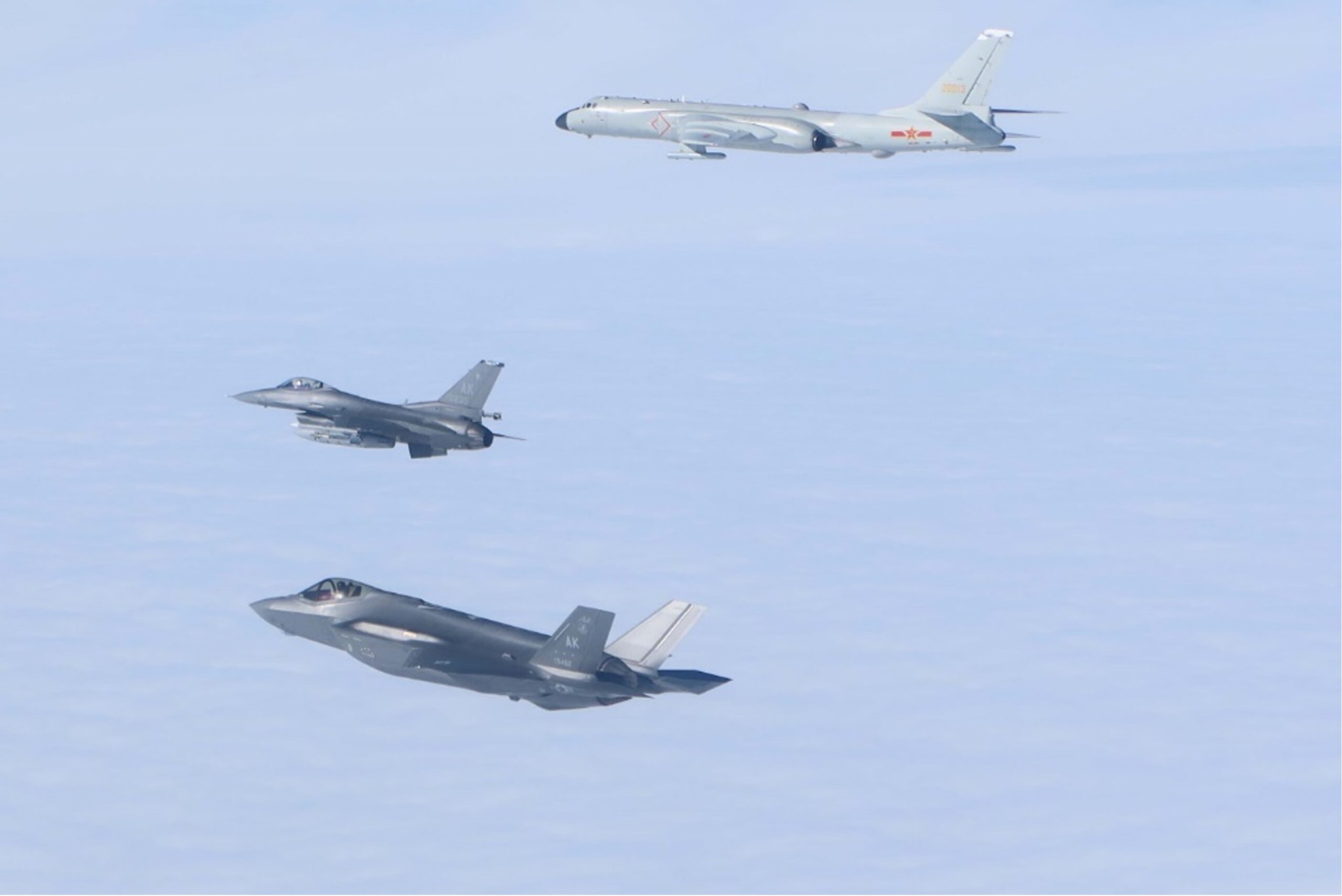
The commander of the Canadian North American Aerospace Defense Command Region in December 2025 outlined upgrades to continental defense and domain awareness that will benefit the world’s only binational military command. Royal Canadian Air Force (RCAF) Maj. Gen. Chris MacKenna pointed to large investments in F-35A warplanes, Over-the-Horizon (OTH) radar and other improvements as evidence of a strong, collaborative relationship with the United States and a boon for the national security of both countries.
MacKenna told the military news website The War Zone that, although the recent military cooperation between the Chinese Communist Party (CCP) and Russia is concerning, he doubts the durability of the partnership. “The Russia-China piece is a bit of a marriage of convenience. And we’ll see where this goes. It could deepen, but I certainly don’t see it as close a binational command as we have with the U.S. and Canada, where we have NORAD aircraft flying in tight formation with each other, relieving each other on station, protecting our two countries seamlessly across the border. I flow my fighters into the U.S. and U.S. fighters flow into Canada as required. I don’t believe the Russia-China relationship is that way,” MacKenna said.
In recent years, the CCP and Russia have undertaken joint bomber and naval patrols that have approached North America but stopped short of broaching either U.S. or Canadian territory. MacKenna noted the robust response from NORAD to the July 2024 joint bomber patrol. “We met those bombers, both Canada and the U.S., together. U.S. F-35s and F-16s, my F-18s were postured and met them when they entered the ADIZ [air defense identification zone] and escorted them out,” he said.
Still, a potential emerging threat from Russia, a longtime adversary in the Arctic, and the CCP, which has declared its ambitions in the region, will be effectively deterred by Canada’s acquisition of 88 F-35A fifth-generation fighter jets, the first batch of which are scheduled to be delivered in 2026, he said. MacKenna recommended the F-35 purchase, over other options like the Swedish Gripen warplane, because of its interoperability with U.S. forces and its overwhelming force capabilities. Meanwhile, Canada’s existing fleet of F-18 Hornets, slated to be retired in 2032, have been upgraded with advanced radar. “It was a project that Canada and the U.S. Marine Corps worked on together. So we share software, and we shared the developmental costs to get this done,” he said.
Ottawa also has made a $4 billion investment in OTH radar, which will allow detection of incoming threats from farther north than is currently possible. “It’s the ability to have a much cleaner and more complete picture of any target that is moving in the air or on the water, and our challenge is maritime domain awareness. Maritime warning is part of the NORAD mission set, so being able to sense on the surface of the ocean at great distances is really important,” MacKenna said.
Canada’s increased spending on NORAD activities is part of a larger defense push. Prime Minister Mark Carney has announced $59 billion more for the country’s defense, bringing it to the NATO standard of spending 5% of the country’s gross domestic product on defense by 2035.