
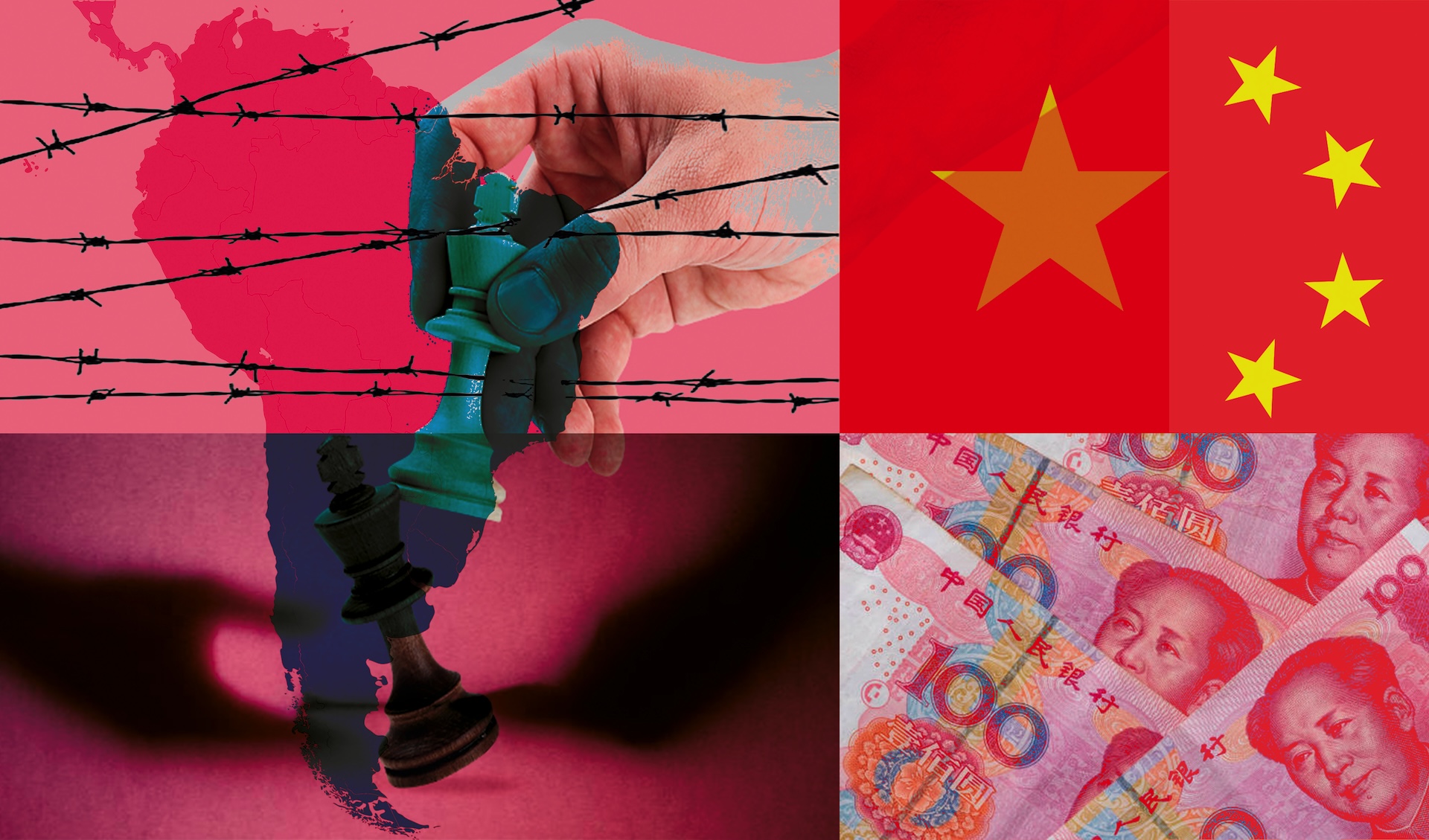
The Chinese Communist Party (CCP) has strengthened its influence in Latin America by employing political pressure mechanisms that complement its expanding economic footprint. A recent development in Panama provides a clear illustration of how Beijing intervenes in domestic decision-making to safeguard its geopolitical interests. According to Central American investigative news site Expediente Público, Panamanian legislators were subjected to pressure intended to force the cancellation of a visit to Taiwan.
Diplomacy in Panama
In November 2025, the CCP’s embassy in Panama urged several members of the Legislative Assembly to suspend their scheduled trip to Taiwan, asserting that it stood in violation of the “One China” principle, Panamanian daily La Prensa reported. Lawmakers corroborated these reports, confirming they had received messages from Ambassador Xu Xueyuan. These communications sparked criticism within Parliament, where it was characterized as an unacceptable form of diplomatic coercion aimed at influencing internal decisions.
In response, the Panamanian Foreign Ministry issued a statement rejecting any form of external interference. The ministry clarified that foreign policy remains the exclusive prerogative of the executive branch; however, while it noted that the trip lacked official state backing, it underscored the importance of preserving institutional autonomy in the face of external diplomatic demands.
The incident ignited internal debate on the appropriate boundaries of diplomatic engagement. Rather than using formal state-to-state channels, the Chinese embassy engaged in direct, informal communication with individual legislators. Analysts consulted by Expediente Público magazine warned that this methodology functions as a precise technique of political pressure designed to bypass traditional protocols. This allows a foreign power to exert influence deep within the functional structures of a host government, effectively molding political outcomes through high-pressure, personal outreach. Ultimately, despite the pressure from Beijing, the lawmakers elected to proceed with their visit to Taipei.
Luis Fleischman, a professor of sociology and political science at Palm Beach State College in Florida and co-chair of the Palm Beach Center for Democracy, told Diálogo Américas that “China’s ability to exert pressure in Latin America is based on its economic weight and the region’s high political permeability.” He warned that this institutional vulnerability is not merely a matter of overt corruption but also is exacerbated by fragile domestic environments that facilitate external interference.
Broader pattern of pressure
The situation in Panama is not an isolated phenomenon but rather part of a documented trend. Throughout the region, the CCP consistently has used diplomatic warnings and high-level political contacts to stifle initiatives related to Taiwan. This practice reflects a calculated pattern of influence that targets specific key players within the decision-making hierarchy, Expediente Público reported.
In 2024, legislators from Bolivia, Bosnia and Herzegovina, Colombia, North Macedonia, and Slovakia denounced efforts by Beijing to prevent their attendance at a global conference in Taiwan. The parliamentarians reported that the Chinese efforts sought to suppress any visible sign of political solidarity with Taipei, providing further evidence that Chinese diplomacy now extends far beyond formal channels.
Guatemala and Paraguay have encountered similar political pressure linked to Beijing’s overarching goal of diplomatically isolating Taiwan in Latin America. In both instances, Beijing used a combination of economic incentives and diplomatic outreach to political figures, although these efforts have yet to result in a formal shift in diplomatic recognition, information from research lab AidData indicated.
In Brazil in 2020, the Chinese Embassy issued a formal request to federal lawmakers, asking them to refrain from making public statements in support of Taiwan, which Beijing categorizes as a strictly internal matter. Brazilian lawmakers characterized the communication as an affront to the independence of their institution, leading to widespread public criticism regarding the CCP’s interference in domestic political discourse, Brazilian media outlet UOL reported.
Fleischman warned that this specific brand of political pressure is intrinsically linked to the CCP’s desire to influence decisions within strategic sectors. “Resources such as lithium, essential for the production of microchips and digital technologies, are central to this logic, given their value for technological competitiveness and long-term economic projection,” he said.
Elite capture strategy
According to the think tank Expediente Abierto, the CCP has pioneered an “elite capture strategy” that combines diplomatic pressure, opaque agreements and selective rewards for local actors aligned with its interests. This practice moves beyond the traditional scope of embassies or Confucius Institutes, involving direct, personal interactions with high-ranking political and economic figures to influence internal decisions.
The same source cautions that this strategy is particularly effective in countries with weak institutional safeguards or illiberal leadership, which can result in a gradual erosion of political sovereignty. In this framework, the CCP prioritizes the cultivation of political elites over the winning over of citizens or the mere completion of large-scale infrastructure projects, an approach viewed as a more efficient and profitable geopolitical investment.
Loans, donations and localized development projects strategically have been used to integrate influential actors into networks linked to the CCP, particularly across the Indo-Pacific, Africa and Latin America. This dynamic allows Beijing to subtly mold internal decisions and consolidate its regional influence without resorting to traditional coercive mechanisms.
Regional response and institutional resilience
From an international policy perspective, Fleischman argues that “the main defense against selective political pressure is the effective strengthening of the rule of law.” He emphasized that “the challenge lies not in the absence of legal frameworks, but in their consistent application, particularly in judicial independence and the accountability of public officials.”
He warned that corruption remains the single greatest factor contributing to institutional vulnerability in Latin America. “Fragile judicial systems, opaque political practices, and the presence of organized crime create conditions conducive to these pressures,” he said.
Diálogo Américas is a publication of the U.S. Southern Command