

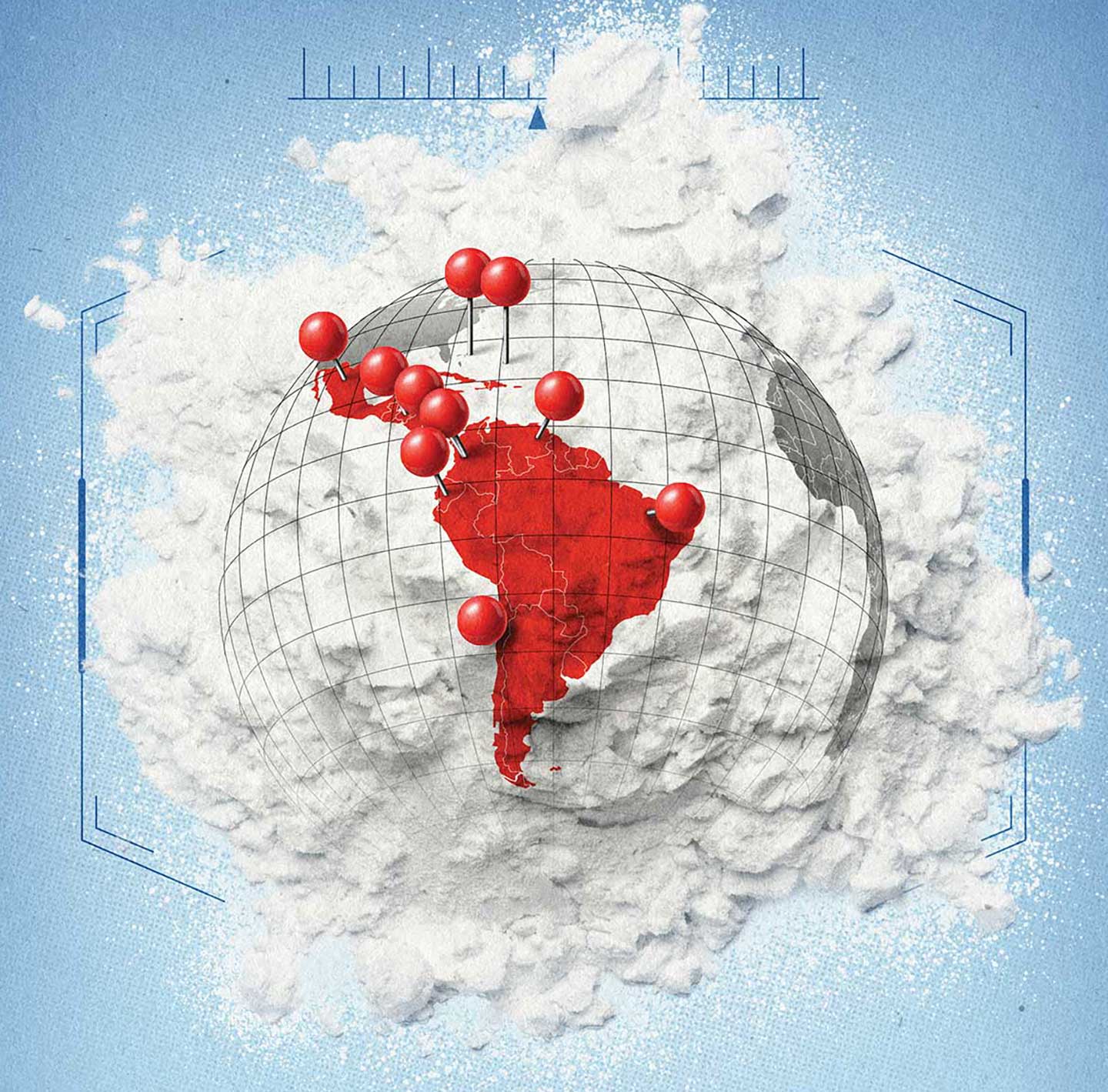
The United States has been helping to counter transnational criminal organizations, or TCOs, in Latin America for nearly a half-century. In Colombia, the rise of TCOs in the 1980s threatened that country’s internal and regional stability. The export of cocaine to the U.S. damaged citizens and communities. But in 2000, a joint Colombian-U.S. agreement to conduct counter-TCO operations began, formalizing a relationship with origins in the U.S. economic, diplomatic, intelligence and military spheres that helped Colombia dismantle the brutal narcotics regimes.
Mexico is now the center of cartel activity threatening U.S. and Mexican national security. TCOs like the Sinaloa Cartel and the Cártel de Jalisco Nueva Generación funnel up to $30 billion worth of drugs, illegal migrants and other contraband across the 3,145-kilometer border each year. In January 2025, the U.S. government declared a national emergency and since has poured military resources, including radar, air and naval assets, bolstered by 10,000 Army Soldiers and National Guardsmen, along the frontier and its maritime approaches. Mexico also has sent 10,000 troops and increased intelligence gathering and precision raids. Illegal migration has nearly ceased, and the increased U.S. presence has greatly complicated cartel efforts to ferry drugs and human beings. But challenges and questions remain: Do the efforts of Colombia and other Latin American and Caribbean countries offer lessons to be learned?
Crackdown in Colombia
Often, the popular image of Colombian drug trafficking involves TV and movie images of hippopotamuses owned by drug barons menacing rural farmers, and lavish estates full of assassins. While based in a brutal reality of cocaine-fueled violence, political corruption and social dislocation, the media images of previous decades frequently obscure the effectiveness of U.S. military, economic and political partnership with Colombia and Colombian resolve to tackle complex issues. U.S. law enforcement agencies like the Drug Enforcement Administration (DEA), working with their Colombian partners, proved crucial to the downfall of kingpins like Pablo Escobar and the leaders of the Cali Cartel.
Beginning in the 1980s, and formalized in 2000’s Plan Colombia, the U.S. and Colombian governments employed a wide array of strategies to counter TCOs in the region, including destroying coca crops, training Colombian Soldiers to counter TCO activity, and providing aerial intelligence and surveillance. Meanwhile, the U.S. State Department and other agencies have helped the Colombian government reform its judicial system and professionalize its military and political institutions. All told, a 2025 State Department report tallied nearly $500 million in counter-TCO aid to Bogotá since 2017, which was deemed an important non-NATO ally in 2022.
The counter-TCO strategy in Colombia has achieved notable successes — currently no TCO looms as large as Escobar of the Medellín Cartel, and the Cali Cartel once did. A 2022 report by the Rand Corp. think tank found that U.S. involvement in counter-TCO activities had yielded sustained benefits and aided in the defeat of a guerrilla movement reliant on the narcotics trade. “The broad partnership between the governments of Colombia and the United States beginning in 2000 was instrumental in preventing Colombia from becoming a likely failed state and in ending the insurgency,” the report concluded.
From 2000 to 2020 — the first two decades of Plan Colombia — U.S. aid helped build the capacity of the Colombian military and police to investigate, arrest and dismantle cartel operations.
Campaign Martillo
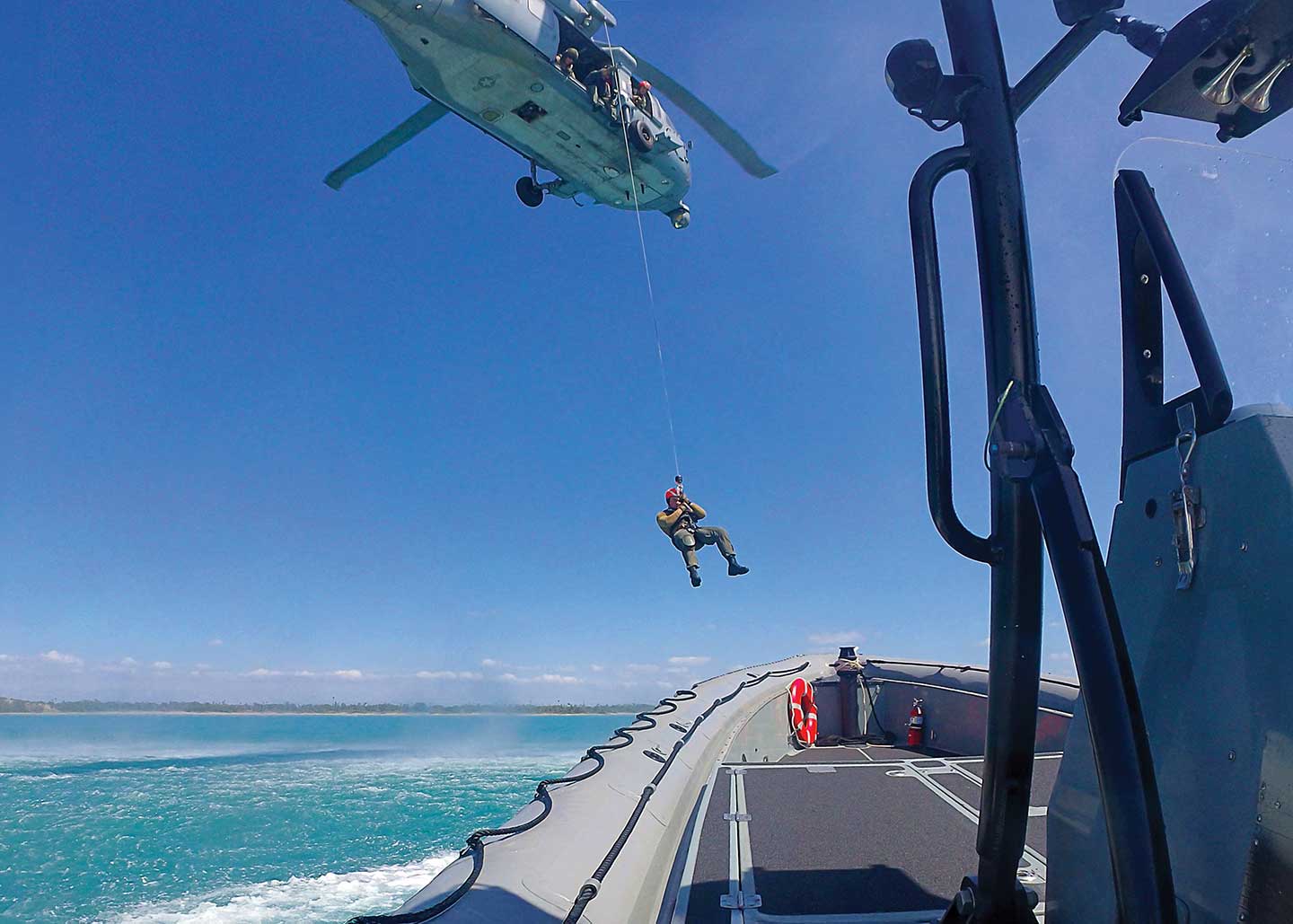
In 2012, the U.S. launched Operation Martillo, a multinational effort to deter drug trafficking in the Caribbean and Central America. Since renamed Campaign Martillo (Hammer), the ongoing operation, overseen by U.S. Southern Command (USSOUTHCOM), has played a key role in stemming the tide of TCO-supplied narcotics to the U.S. More than a dozen European and Latin American allies and partners have sent naval ships to patrol the Caribbean and eastern Pacific regions, and land-based forces in Central and South America have collaborated to interrupt drug trafficking routes from Brazil, Colombia, Ecuador and other production regions. While not focused on dismantling cartel production facilities, crops or leadership, Campaign Martillo seeks to make transporting narcotics unprofitable by seizing drugs, arresting distributors and deterring traffickers. U.S. Navy and Coast Guard vessels as well as aircraft from several U.S. agencies have participated alongside forces from Belize, Canada, Colombia, Costa Rica, El Salvador, France, Guatemala, Honduras, the Netherlands, Nicaragua, Panama, Spain, the United Kingdom and the United States. Chile also has contributed, according to USSOUTHCOM.
Joint Interagency Task Force South (JIATF-S) coordinates Campaign Martillo activities. The U.S. military takes the lead in detecting and monitoring drug shipments bound for the U.S. by air or sea. Based on intelligence gathered under the direction of JIATF-S, U.S. law enforcement agencies and partner nations then take action to interdict drug runners. U.S. military assets support those efforts. In a Campaign Martillo maritime interdiction, for example, Navy ships and helicopters patrol and intercept traffickers, but the actual boarding, seizing of drugs and arrests are carried out by the U.S. Coast Guard’s Law Enforcement Detachments, or LEDETs. The detachments are embedded on Navy ships as well as ships from partner nations. Other U.S. law enforcement agencies, like the DEA, also place detachments on Coast Guard ships.
From January through July 2025, Campaign Martillo netted more than $1 billion in illegal narcotics, according to JIATF-S. The nearly weekly interdictions have included high-powered speedboats and semisubmersible submarines.
The coordination of so many participating military forces over more than a dozen years demonstrates the success of military assets strategically deployed in an integrated, coordinated way to stymie TCO activity.
Operation Bahamas Turks and Caicos
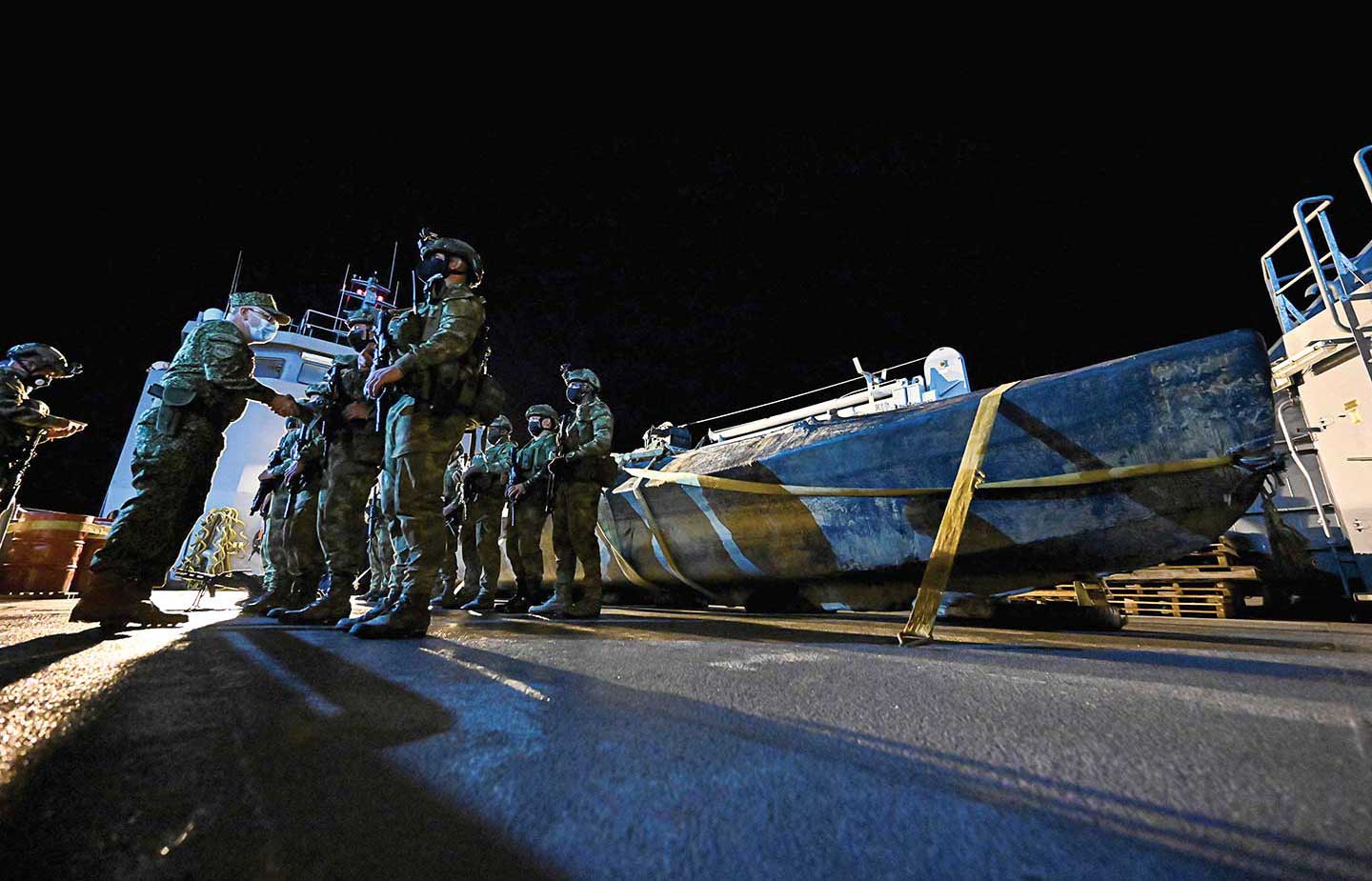
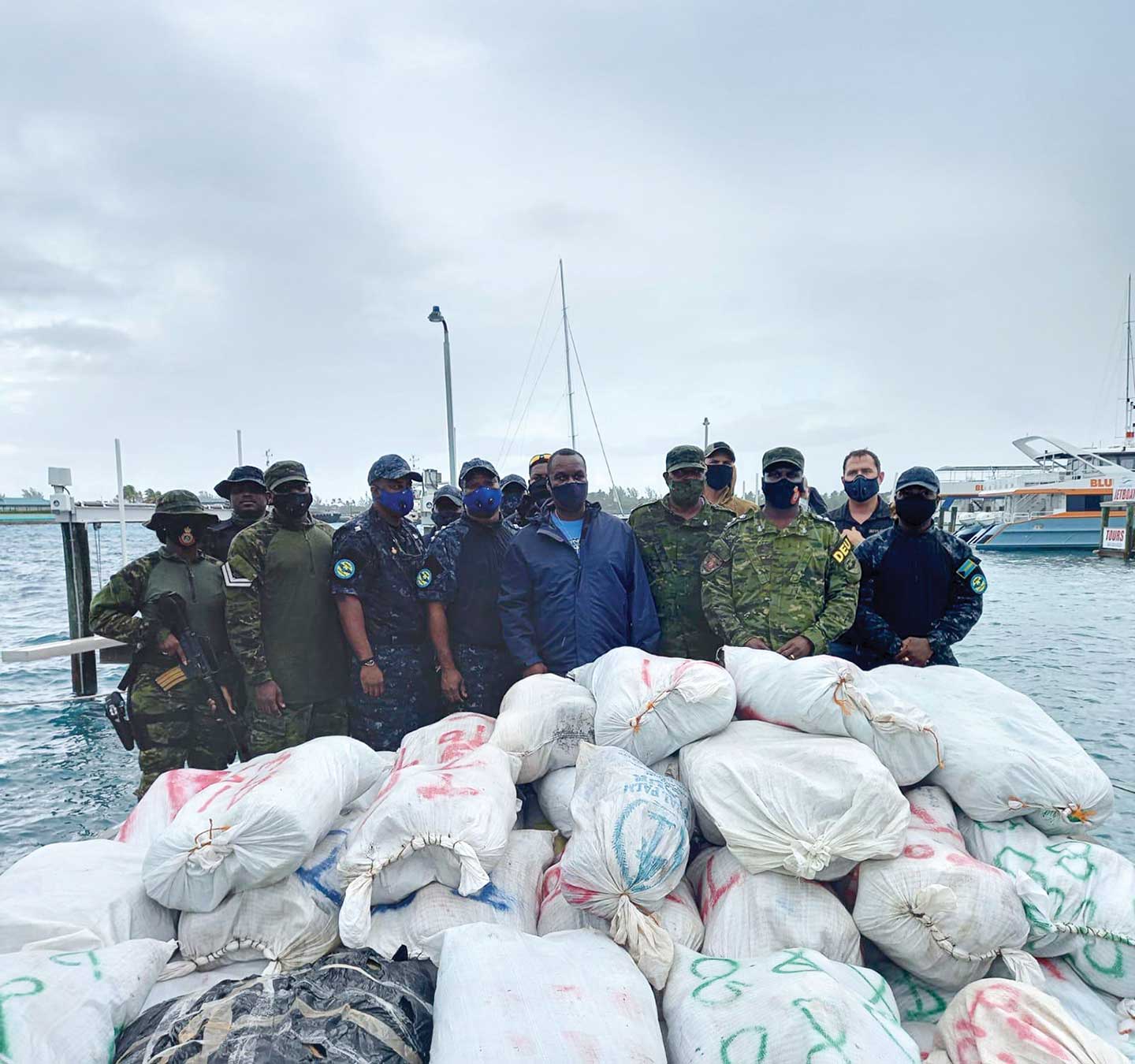
In 1982, the U.S. faced a fire hose of narcotics traveling through the Caribbean region to the country’s shores four years after the Medellín Cartel first started buying property in Norman Cay, The Bahamas. The TCO had built an airstrip that served as a transshipment point for cocaine and marijuana from Colombia bound for the U.S. After The Bahamas shut down the Medellín operation, Operation Bahamas Turks and Caicos (OPBAT) was formed by The Bahamas, the U.K. and the U.S. The Turks and Caicos Islands (TCI), a British Overseas Territory, also had become a major transshipment point for narcotics on the way to the U.S.
Initially, the DEA took the lead as the primary agency with two helicopters to assist Royal Bahamas Defence Force (RBDF) troops to interdict drug operations. The agreement also gave U.S. interdiction forces the right to fly in the islands’ airspace and patrol their contiguous waters. The Coast Guard took over command of OPBAT in 1987, according to a Coast Guard history. For more than 40 years, OPBAT has successfully impeded drug smuggling through the eastern Caribbean. “OPBAT is an example of cooperation and coordination between entities. It has responded to the changing patterns and techniques of the drug traffickers employing innovative and advanced technologies. It has been a successful operation and with continued flexibility will remain so,” the history states.
OPBAT helicopters are guided by a Tactical Analysis Team and manned by Department of War intelligence specialists, who locate suspicious vessels in an enormous area — Bahamian waters roughly equal the area of California — and relay the information to RBDF or TCI Police units that execute the interdictions. U.S. Coast Guard ships also assist.
OPBAT has strengthened the security and defensive capabilities of regional partners like The Bahamas and the Turks and Caicos, whose geographic strategic importance to drug smuggling routes has been countered with sustained collaborative pressure. But like Campaign Martillo, OPBAT doesn’t dismantle production facilities or disarm TCOs by confronting them in their home territories. The risk of violence also has been lower traditionally in maritime interdictions than land-based operations.
LESSONS
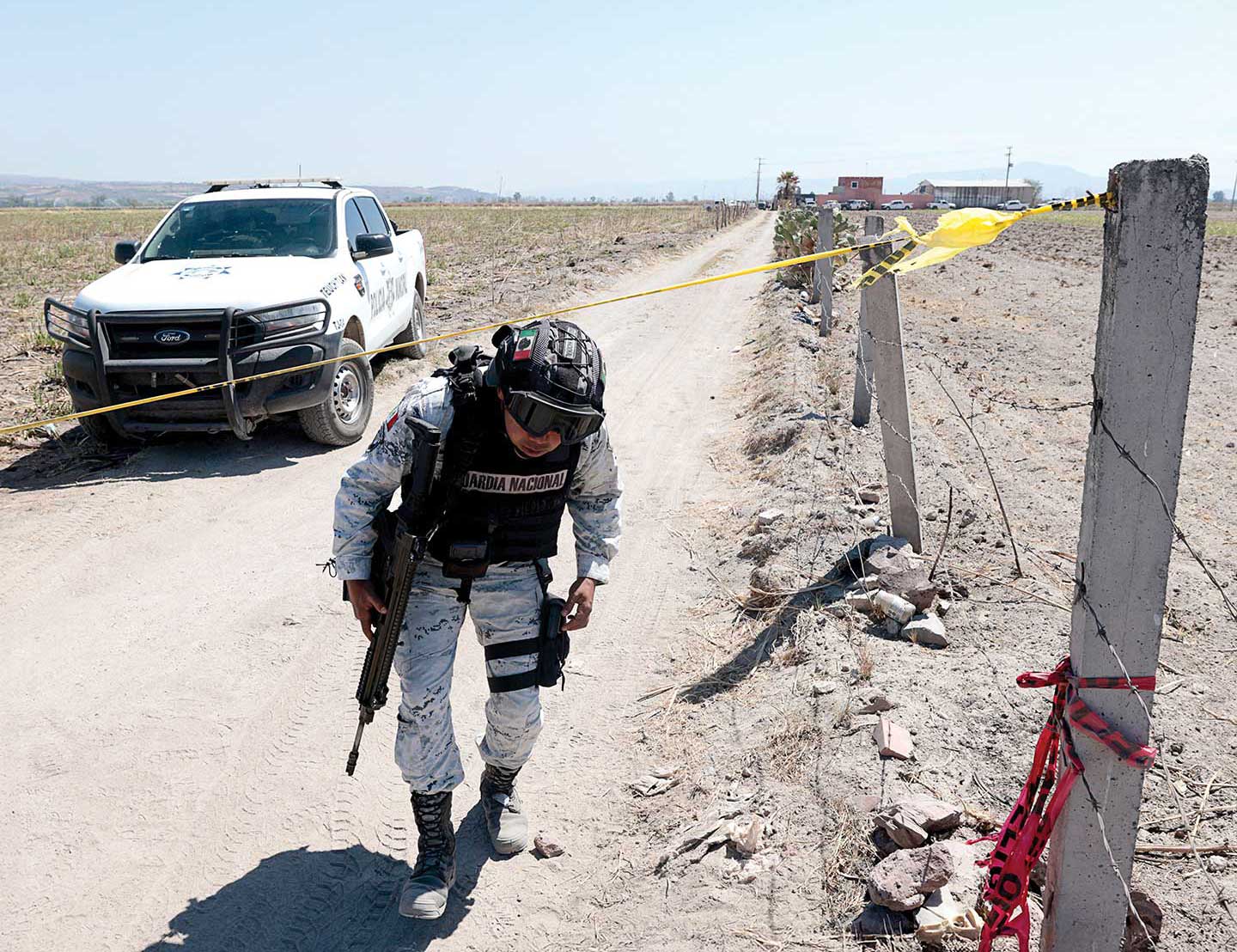
Mexico presents a much different scenario, experts say. A large nation sharing an extensive border with the U.S., Mexico presents unique challenges for combating cartels. A U.S. decision to designate six Mexican TCOs as foreign terrorist organizations in February 2025 potentially raises the stakes.
Dr. Vanda Felbab-Brown, a senior foreign policy fellow at the Brookings Institution think tank based in Washington, D.C., testified before the Senate Judiciary Committee in July 2025 about effectively confronting Mexican TCOs. “A comprehensive and sustained effort by the Mexican government to dismantle and effectively prosecute the middle operational layer of criminal groups, as well as the buildup of effective prosecutions, is essential to achieve a lasting weakening of the Mexican criminal groups,” Felbab-Brown said at the July 25 hearing.
Tricia Bacon, a professor at American University in Washington, D.C., who worked in counterterrorism at the State Department before her current post directing the university’s Policy Anti-Terrorism Hub, said cartels are profit-driven, not ideologically motivated.
In her State Department career, Bacon served in Afghanistan and witnessed how hard it was to move Afghan politics and society away from opium cultivation. U.S. officials never found a successful replacement crop for farmers to grow instead of opium poppies. The judicial system remained a bastion of corruption. For Mexico to see a different outcome will require a sustained U.S. effort, she said.
That effort is already underway between the Mexican and U.S. militaries. In June 2025, Mexican Secretary of National Defense Gen. Ricardo Trevilla Trejo, the country’s top Army official, and Navy Secretary Raymundo Pedro Morales Ángeles visited U.S. Northern Command (USNORTHCOM) in Colorado Springs, Colorado, for a three-day visit hosted by USNORTHCOM and North American Aerospace Defense Command Commander Gregory M. Guillot.
The visit, which involved the exchange of priorities and perspectives between top military leaders of both countries, contributed robustly to the mutual understanding and intellectual compatibility of the respective forces’ commands. “This visit reflects the enduring trust and open communication between our nations’ militaries,” Guillot said. “Mexico is an essential partner in the defense of North America, and engagements like this ensure our efforts are aligned and effective,” Guillot said, according to a USNORTHCOM news release.