

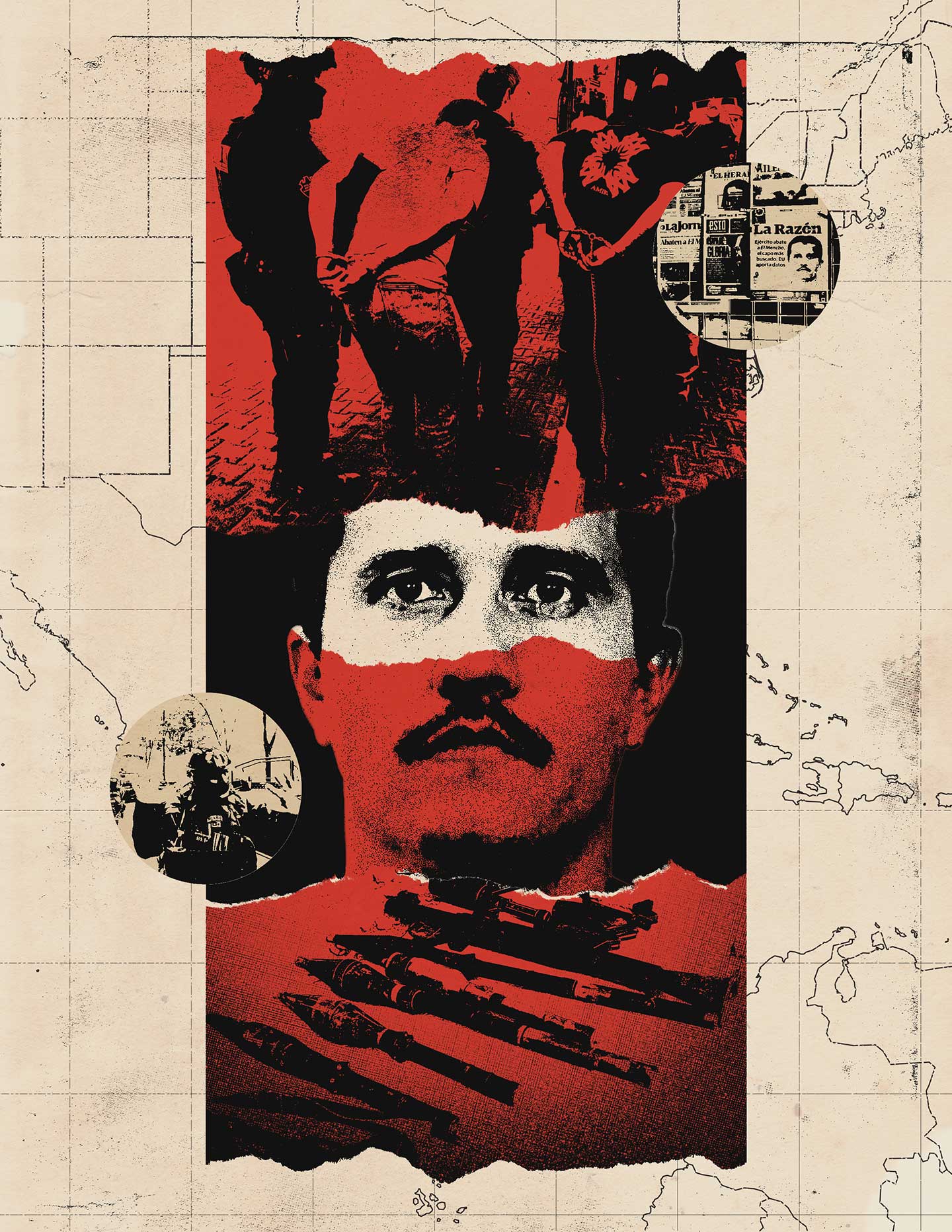
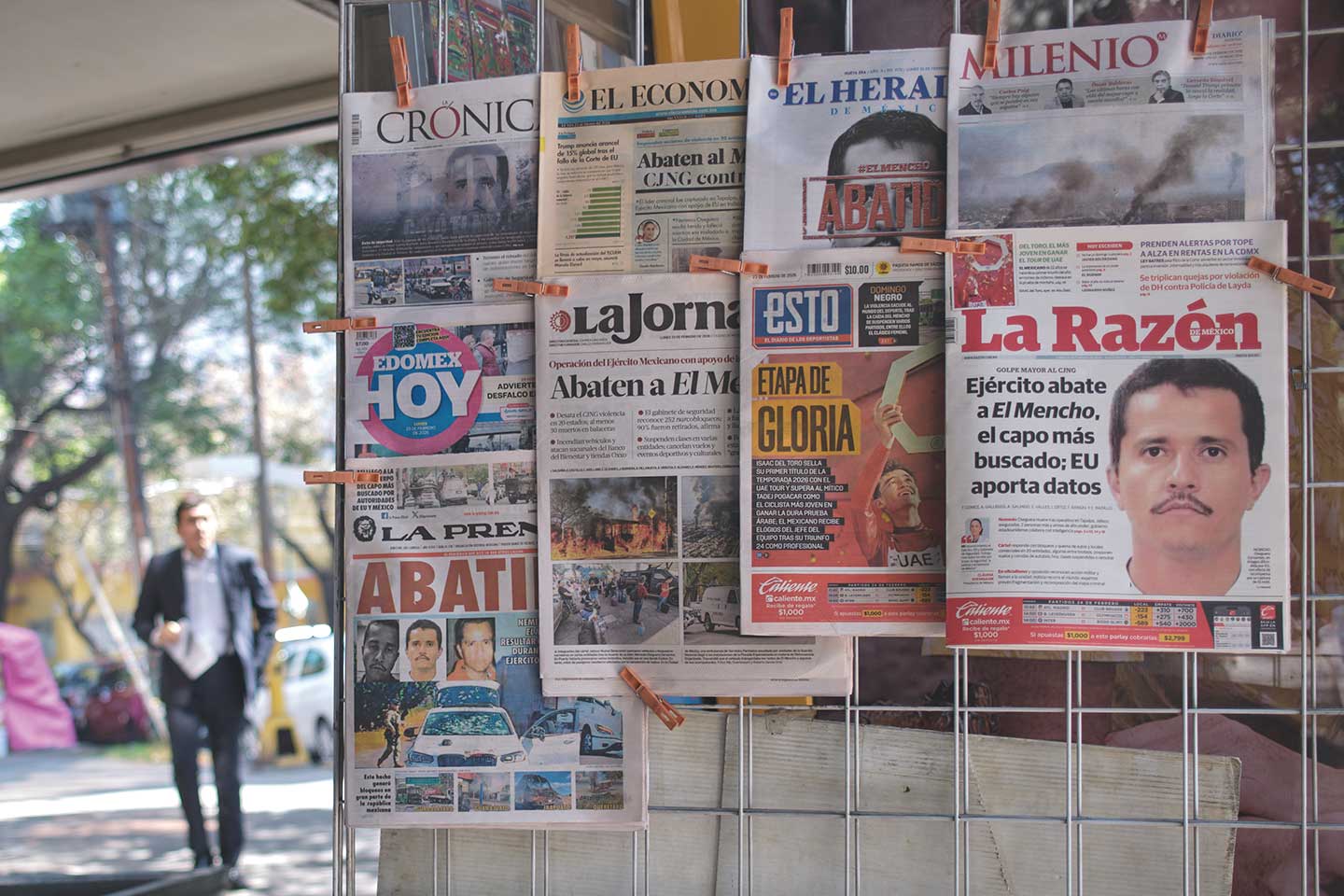
The Mexican military executed a watershed operation in February 2026 when its Special Forces killed the leader of the Jalisco New Generation Cartel, Rubén Oseguera Cervantes, nicknamed “El Mencho.” The killing of El Mencho dealt a major blow to the cartel, also known by its Spanish acronym, CJNG, and demonstrated a higher level of proficiency in Mexico’s fight against organized crime.
The cartels have wreaked violence against Mexican citizens while funneling billions of dollars’ worth of dangerous narcotics around the world, including the United States. Mexican Secretary of National Defense Gen. Ricardo Trevilla Trejo said the operation was meticulously planned by the Special Forces and the Mexican National Guard’s Special Immediate Reaction Force. “It is definitive that they fulfilled their mission … And what was demonstrated? The strength of the Mexican state. There is no doubt about that,” Trevilla said at a news conference.
The operation, which involved six helicopters and a Mexican Air Force T-6+ Texan II warplane, tracked the drug lord to the resort community of Tapalpa in the western coastal state of Jalisco, where El Mencho had traveled to spend time with his family and a mistress. With intelligence provided by the U.S. military, El Mencho’s girlfriend was tracked on February 20 to a compound in the Cabañas La Loma neighborhood, which had been called out by the U.S. Treasury Department in 2015 for its ties to the cartel. Once authorities confirmed that El Mencho was at the residence, Mexican authorities began planning the operation, according to The New York Times newspaper.
On February 22, Mexican military forces established a perimeter and responded with overwhelming force once one of El Mencho’s bodyguards opened fire. Eight cartel members died in the initial firefight while El Mencho and several associates fled to nearby woods, where they continued to battle security forces, including firing a rocket launcher that damaged one of the helicopters. The helicopter landed at a nearby airport, and no one was injured. Meanwhile, Mexican Special Forces continued the attack, killing El Mencho and seriously wounding two of his associates, both of whom died while being airlifted to a hospital. Two other members of what Trevilla called El Mencho’s close circle were arrested. Authorities recovered three rocket launchers, grenades, 10 long guns, two handguns and ammunition, Trevilla told reporters.
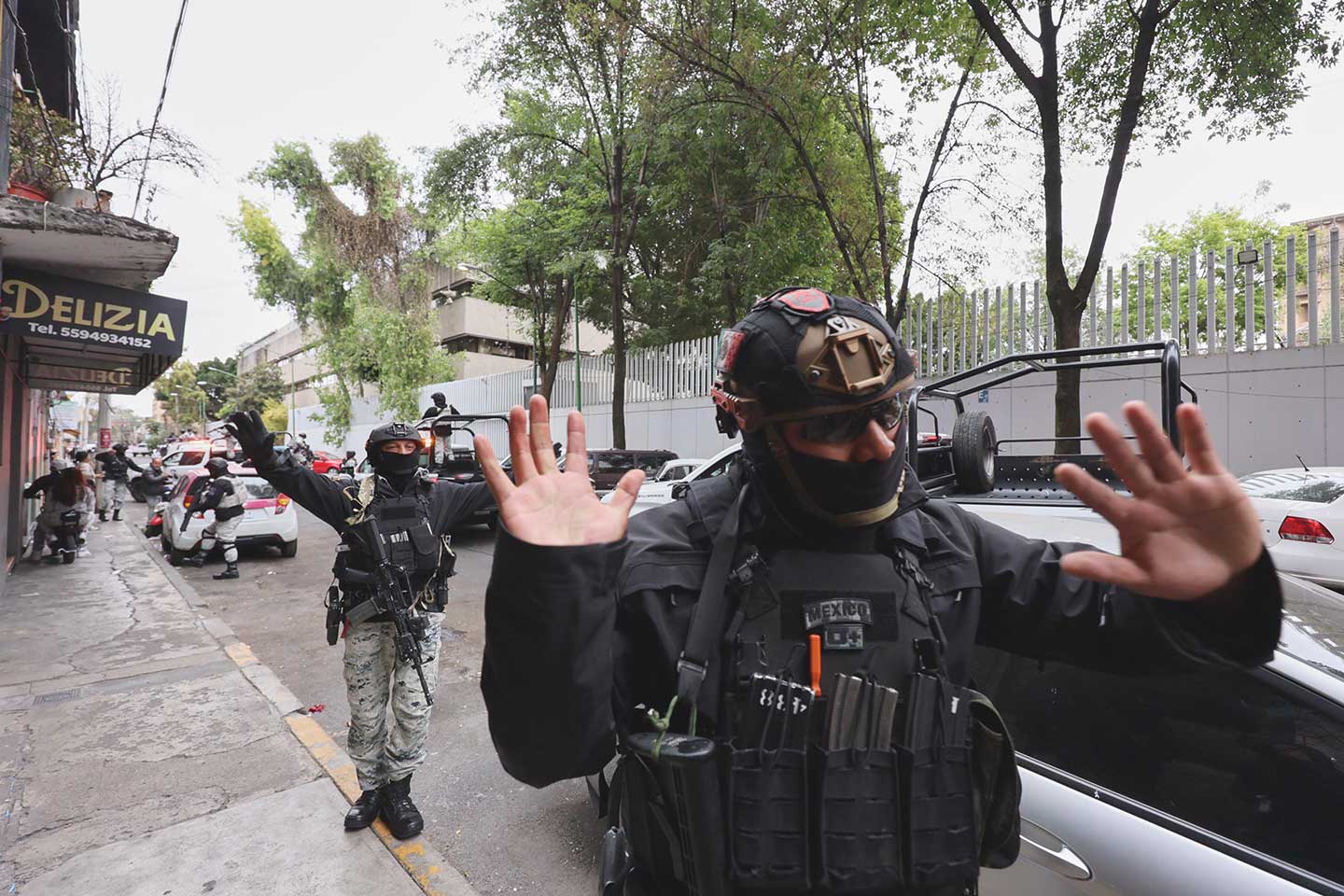
The operation demonstrated a new willingness by the Mexican government to go after a cartel leader previously viewed as untouchable because of his propensity for violence, said Stefano Ritondale, chief intelligence officer for Artorias, a New York-based provider of AI-driven threat and geopolitical risk intelligence. “What I think is the watershed moment is that they did go after El Mencho. He is the top guy, and if Mexico is willing to go after him, there is really no one else they are not willing to go after,” Ritondale told The Watch.
Oseguera had a long history of violence. Born in 1966 to a poor family of avocado farmers in Aguililla, a town of 15,000 in western Michoacán state, Oseguera illegally crossed the border into the U.S. as a young man and soon began selling drugs, including methamphetamine, a narcotic just being introduced to the U.S. in the 1980s. Arrested in 1992 in Sacramento, California, Oseguera was deported three years later after serving his prison sentence, according to the Times. Back in Mexico, Oseguera joined the police force in Jalisco state and quickly began collaborating with the Milenio Cartel. Before long, he quit his police job to become a hit man for the cartel. Oseguera’s rapid rise through the cartel’s ranks accelerated after his marriage to the cartel boss’s sister.
The Jalisco New Generation Cartel’s formation began in 2011 through a pattern of extreme violence marked by 35 burned and bound bodies left in two semitrailer trucks in Veracruz. The violence and reach of CJNG continued to widen as it defeated the Milenio Cartel in a bloody war. From 2013 to 2017, the cartel expanded its operations from four Mexican states to 20. The cartel also diversified its operations to include extortion, illegal migrant smuggling, and investing in hotels, casinos and racetracks, the Times reported. “They were like ISIS,” Eduardo Zerón, a former Mexican security official, told the newspaper. “They would arrive at a municipality and say, ‘The Jalisco cartel is here, and whoever isn’t with us, we’ll destroy them.’”
El Mencho didn’t hesitate to attack government forces with heavy weaponry, including rocket-propelled grenades, armored trucks mounted with .50-caliber machine guns, land mines and, in recent years, drones equipped with explosives or toxic chemicals. In 2015, CJNG sicarios shot down a Mexican Army helicopter with a rocket-propelled grenade, killing three Soldiers. El Mencho escaped and went into hiding, but his violent streak continued. In 2020, El Mencho’s gunmen sprayed an armored SUV carrying then-Mexico City Police Chief Omar García Harfuch with more than 400 bullets, killing two of Harfuch’s bodyguards and a bystander. Twelve cartel members were arrested and received life sentences, Reuters reported.
The brazen attack wasn’t forgotten by Harfuch, now Mexico’s secretary of security and citizen protection, who played a major role in tracking down El Mencho. In November 2025, CJNG kidnapped two of the secretary’s investigators in Zapopan, a cartel stronghold. The ensuing manhunt led to the agents’ release after a week. More importantly, it produced valuable intelligence into the cartel’s operation, aiding the government’s efforts to plan and execute the February operation, Reuters reported.
Harfuch has worked closely with the U.S. in countertransnational criminal organization strategy, and the U.S. played a significant role in the decisive raid that killed the cartel boss. The U.S. government offered a $15 million reward leading to El Mencho’s capture, and the recently formed Joint Interagency Task Force-Counter Cartel, which involves multiple U.S. government agencies, proved crucial to the operation. The task force, launched in January, provided the Mexican government with “a detailed target package” for the El Mencho raid, according to a former U.S. official quoted by Reuters. A U.S. Predator surveillance drone provided intelligence to the Mexican efforts during the raid, the El Paso Times newspaper reported. The newspaper also reported that U.S. Special Forces and Mexican Special Forces had trained together over the previous six months drilling on scenarios for the El Mencho raid.
While the success of the operation gained international headlines, Ritondale noted, it’s part of a long-standing partnership that has only grown closer during the administration of Mexican President Claudia Sheinbaum, who took office in October 2024. “What the operation of El Mencho brought to light is what a lot of people were already tracking: There is a deep level of cooperation between Mexico and the U.S. I don’t think this is the first time that this has happened. For all intents and purposes, it was a very well-executed operation. The U.S. and Mexico are very well tuned to execute this kind of operation,” he told The Watch. “This isn’t their first rodeo.”
El Mencho operation part of broader cartel fight
Mexican President Claudia Sheinbaum’s administration has intensified the fight against transnational criminal organizations since she took office in October 2024, and the killing of Rubén Oseguera Cervantes (“El Mencho”), leader of the Jalisco New Generation Cartel (CJNG), is considered a milestone. Here are some other highlights in the fight.
Tens of thousands of arrests: Security forces have detained over 20,000 people for major crimes since Sheinbaum was sworn in, including El Mencho’s brother Antonio Oseguera Cervantes, nicknamed Tony Montana after the movie “Scarface,” and Canadian former Olympic snowboarder Ryan Wedding, accused of running a billion-dollar drug trafficking ring and ordering multiple killings.
Mass extraditions: Mexico has quietly shipped about 100 suspected cartel drug traffickers to the United States since January 2025 to stand trial, bypassing lengthy court delays. Among the first extraditions, in February 2025, were Antonio Oseguera Cervantes and Rafael Caro Quintero, who is accused of the 1985 murder of Drug Enforcement Administration agent Enrique “Kiki” Camarena. More recent extraditions included Wedding in January 2026; Abigael González Valencia, a key leader of the financial arm of the CJNG; Pablo Edwin Huerta Nuño, a Tijuana Plaza boss; Juan Carlos Felix Gastelum, a Sinaloa Cartel cell leader and son-in-law of former Sinaloa Cartel leader Ismael “El Mayo” Zambada; Ricardo González Sauceda, second-in-command of the Northeast Cartel; and Abdul Karim Conteh, leader of a group that smuggled thousands of migrants into the U.S.
Record drug and arms seizures: Authorities have confiscated more than 320 metric tons of illegal drugs, including the largest fentanyl bust in Mexican history (over 1,000 kilograms) in Sinaloa. The Mexican government also has seized 18,000 firearms under Sheinbaum, Mexican Secretary of National Defense Gen. Ricardo Trevilla Trejo said.
Busting corruption: In February 2026, the mayor of Tequila, Jalisco state, and three other local officials were arrested for allegedly collaborating with the CJNG. The arrests were part of Operativo Enjambre, or Operation Swarm, an operation targeting the infiltration of organized crime into local government. Around 60 public servants have been detained since November 2024, including other mayors, police commissioners and high-ranking security officials.