

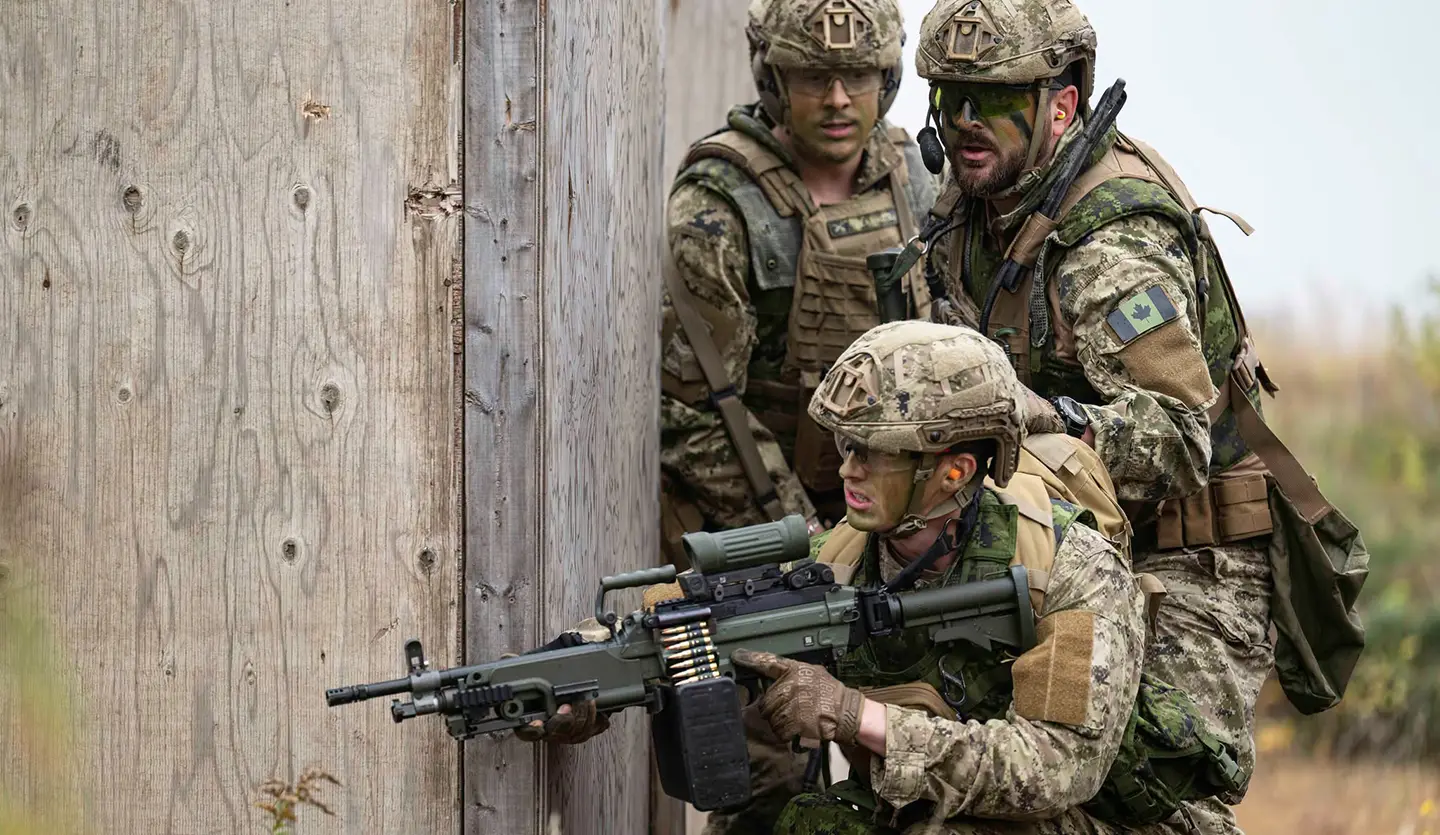
Canada’s Army is undergoing one of its most significant reorganizations in decades, shifting from divisions organized by geographic region to formations built around specific missions as the country seeks to strengthen its defenses, improve readiness and prepare for large-scale combat. Formally established in September 2026, the restructuring is designed to improve the Army’s ability to deploy forces overseas while strengthening its response to domestic emergencies and threats to Canadian sovereignty, particularly in the Arctic.
The new structure includes four primary formations: 1st Canadian Division in Edmonton; 2nd Canadian Division in Montreal; the Canadian Army Support Division; and the Canadian Army Doctrine and Training Centre, both headquartered in Kingston, Ontario.
Army Commander Lt. Gen. Michael Wright outlined the modernization effort in a 2025 document called “Inflection Point 2025.” The plan reflects growing international instability, lessons from Russia’s war in Ukraine and the need for forces capable of operating alongside allies in high-intensity conflicts.
For decades, Canada organized its Army primarily around contributing troops to multinational coalitions rather than assembling the capabilities required to lead major combat operations. Wright told Canadian Army Today in December 2025 that the change represents a fundamental shift in how Canada prepares its land forces. “By contribution warfare, [I mean that] Canada has been a contributor to coalitions, but we’ve never been able to build the full package,” Wright said. “So, it is a big shift. It also requires a shift in mindset across the Army.”
The centerpiece is the 1st Canadian Division, which will bring together the Army’s regular-force combat brigades and supporting capabilities under a single headquarters in Edmonton. The division will prepare and lead forces for major combat operations and rapid overseas deployments, integrating armored forces, artillery, engineers, combat support and sustainment. It also will coordinate capabilities such as drones, cyber operations and space-based effects to deliver combat power across the battlefield.
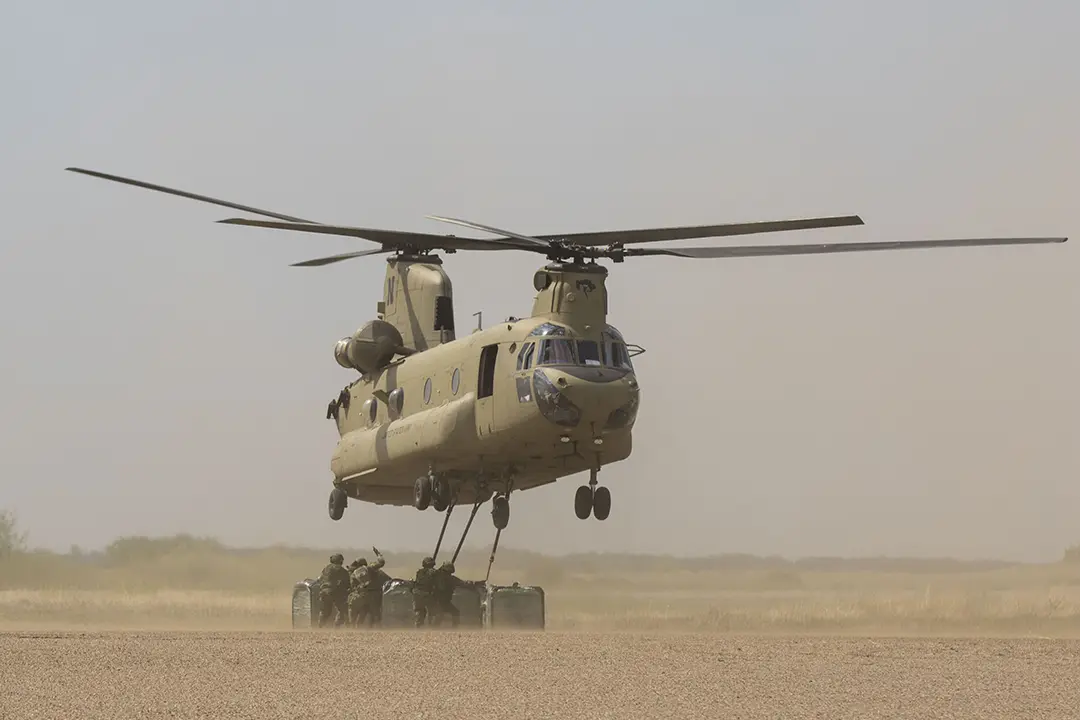
Maj. Gen. Wade Rutland, commander of the division, explained to the Canadian Broadcasting Corp. in September 2026 that the restructuring was intended to produce a more capable fighting force. “This is not an exercise in restructuring the deck chairs. We’re doing this in order to be more agile, more lethal, more relevant to defend Canada,” he said.
The changes restore a prominent role for the 1st Canadian Division, whose history dates to World War I. Meanwhile, the 3rd Canadian Division, which represented Western Canada for nearly four decades, is moving to the supplementary Order of Battle. Its history and traditions will be preserved, allowing it to be reactivated if needed.
The reorganization’s domestic counterpart, the 2nd Canadian Division, will focus on defending Canada, responding to emergencies and protecting sovereignty. It will draw on regular and reserve forces and the Canadian Rangers, who maintain a presence in remote northern communities. Reserve units will remain in more than 120 communities nationwide, providing a foundation for expanding the Army if circumstances require it, Wright told Canadian Defence Review in October 2026.
The restructuring also reflects the growing importance of the Arctic, where changing environmental conditions and heightened international attention are increasing demands on Canada’s military. The Army plans to replace its aging BV 206 tracked vehicles to improve mobility and survivability in the North. It also is considering the role of ground-based air defenses and long-range precision weapons in protecting Canadian territory.
The Canadian Army Support Division will consolidate responsibility for infrastructure, maintenance, institutional support and supply chains. The Canadian Army Doctrine and Training Centre will continue developing doctrine, training Soldiers and preparing leaders to operate at the divisional level.
But the reorganization faces a major obstacle: equipment. The Army has about 50 major capital projects underway, the Ottawa Citizen reported in September 2026. They include new tanks, self-propelled howitzers, drones, ground-based air defenses and vehicles for Arctic operations, with costs totaling tens of billions of dollars.
Canada’s planned $2.6 billion purchase of the U.S.-made High Mobility Artillery Rocket System, or HIMARS, is expected to begin arriving in 2029. New tanks and self-propelled artillery also remain years away from full operational service.
Some projects will not become operational until the 2030s. Success will depend on sustained government funding and progress in procurement, the Ottawa Citizen reported.
The Army also is adapting to lessons from Ukraine, where drones and electronic warfare have transformed battlefield operations without eliminating the need for traditional combat power.
In his October 2026 interview with Canadian Defence Review, Wright stressed that technology alone cannot win a land war: “I think you have to remember that drones cannot hold, seize or retake terrain. Land forces can, armies can.”
The restructuring provides the organizational foundation needed to integrate these capabilities, sustain operations, and respond to crises at home or abroad. Moving in tandem with modernized command structures, parallel initiatives in equipment procurement, recruitment, and advanced training serve to complement and strengthen the new formations.
Wright highlighted the depth of this broader modernization effort in Canadian Army Today in December 2025, noting that structural change is closely paired with the ongoing dedication and practical work required across the force.
Now the really difficult job begins,” he said.