

The Utah National Guard collaborated with local partners in April 2026 to respond to a simulated attack on the United States. National Guard units responded to attacks on a water plant, a train and other events associated with an assault on critical infrastructure and heavily trafficked commercial sites. The first-ever exercise was dubbed Operation Wolverine in homage to the 1980’s film “Red Dawn,” which depicted a Cold War-era Russian-Cuban invasion of the U.S. “Exercise Wolverine builds on that concept, simulating what happens when an adversary targets the U.S. homeland. The exercise focused on responding to potential threats at home, testing coordination, communication, and the ability to operate in a stressed domestic environment,” stated a Utah National Guard news release.
The April 27-30 exercise included combined operations in Utah, including Camp W.G. Williams, South Towne Mall in Sandy, Dugway Proving Grounds, Utah Test and Training Range, and the Don A. Christiansen Water Treatment Plant in Orem. The training brought together 20 Utah National Guard units from both Army and Air components, including elements of the 204th Maneuver Enhancement Brigade (MEB), 65th Field Artillery Brigade (FAB), 97th Aviation Troop Command (AVTC), 8th Homeland Response Force (HRF) and Detachment 3, Cyber Protection Team (CPT) 174, along with Air National Guard units from the 151st Wing, the 75th Medical Group from Hill Air Force Base and additional supporting units. The Utah State Emergency Operations Center, Utah Department of Health, Utah Valley University and the Statewide Information and Analysis center participated, as did private-sector partners supporting cyber and communications capabilities, the news release stated. “This is the first exercise we’ve conducted where the entire concept is based on a contested homeland,” said Maj. Gen. Daniel D. Boyack, adjutant general of the Utah National Guard. “For years, we believed the homeland was a sanctuary. That assumption is changing, and Exercise Wolverine allows us to explore what defending the homeland truly looks like.”
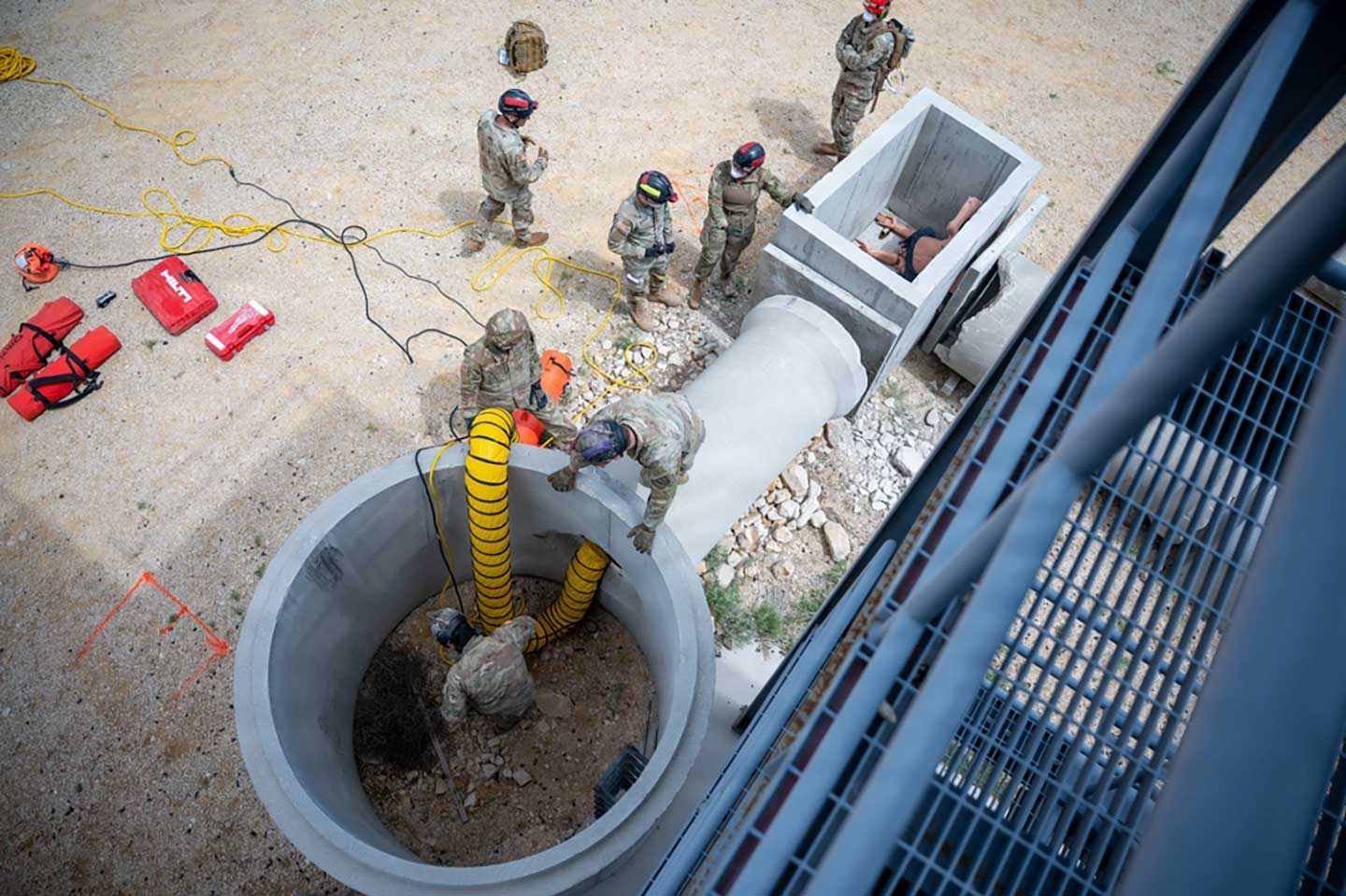
Part of the training involved search and rescue operations after a simulated terrorist detonation of an explosive device in a refinery that caused a mass casualty scenario. “There’s a search and rescue operation going on involving teams that are breaking concrete, breaking into confined spaces and rescuing patients. There’s also a hazmat scenario where we have a specialized hazmat support team going in and determining contaminated areas and taking out patients, and then we’re moving patients down to our medical element on Camp Williams where they are triaging and treating the patients,” Utah National Guard Lt. Col. Rob Dent told ABC4, a Utah news station.
Responding to mass casualties in their home state brought home the importance of effective training, Guardsmen told the news station. “Let’s figure those things out now while we’re not under duress,” Boyack said in the release.