
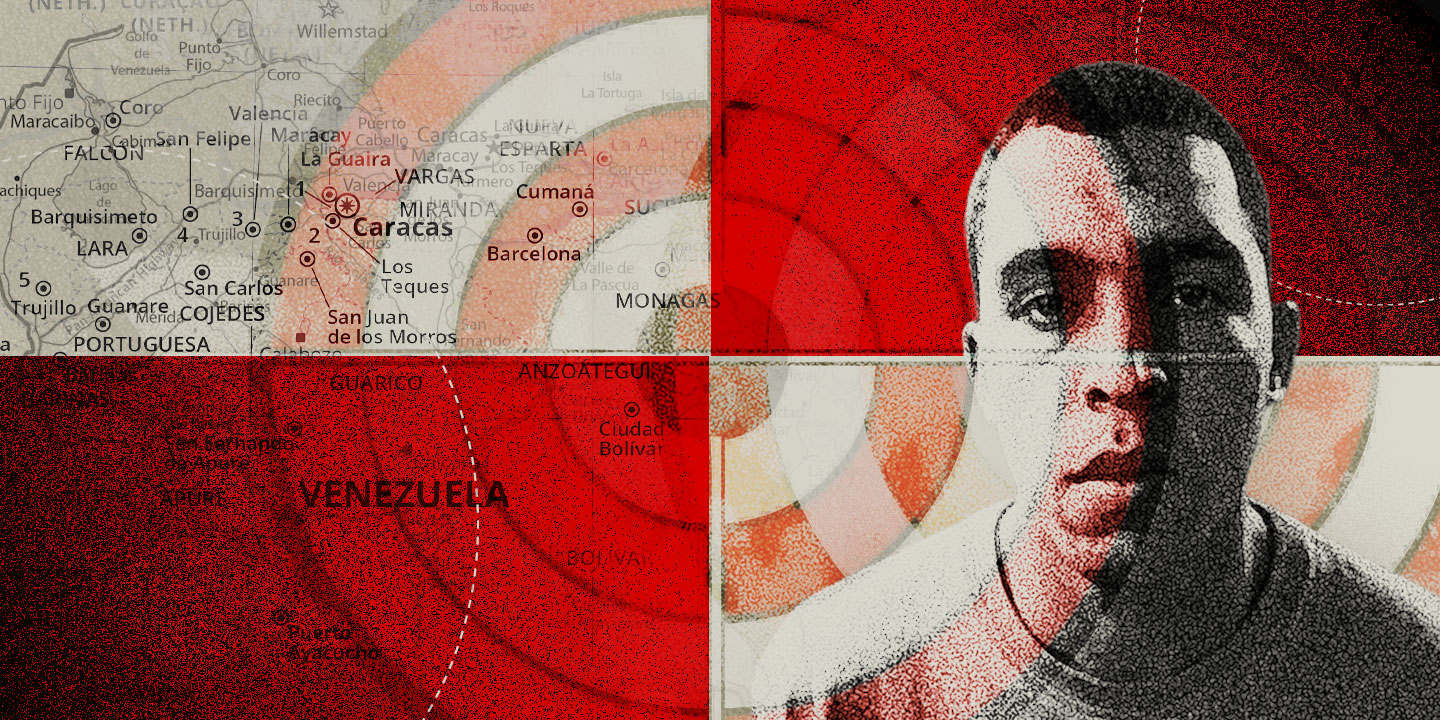
United States President Donald Trump said June 12 that a “swift and lethal kinetic” U.S. strike has killed Héctor Rusthenford Guerrero Flores, whom he called the “infamous leader” of the Tren de Aragua gang, which has been labeled by the U.S. as a terrorist organization. Guerrero Flores was charged in a New York federal court with racketeering conspiracy and other crimes, including supporting terrorists in crimes that stretched more than a decade, authorities announced in December.
War Secretary Pete Hegseth posted on X that the strike occurred earlier in the week on a Tren de Aragua compound in Venezuela. U.S. Attorney Jay Clayton said the gang is responsible for countless acts of violence, extortion and drug trafficking in North America, South America and Europe. Trump nominated Clayton on June 11 to be director of national intelligence.
The U.S. State Department had offered rewards of up to $5 million for information leading to Guerrero Flores’ arrest. In a post on his social media site, Trump wrote, “Tren de Aragua terrorists no longer have safe haven in Venezuela or anywhere else and, under my leadership, we will find these vicious murderers and drug lords anytime, anyplace, and send them to the depths of hell where they belong.” Trump’s post referred to Guerrero Flores by his alias, “Niño Guerrero.”
The post also included unclassified video, shot from above, of a small building with a green roof exploding. Hegseth said, “The operation underscores the shared U.S. and Venezuelan commitment to take the fight to narco-terrorists and deny them any safe haven in our hemisphere.”
Venezuela’s government released a statement confirming its participation in the operation and revealed it took place in the southeastern state of Bolivar. “During the operation, clashes occurred with members of criminal groups, resulting in the death of Héctor Rusthenford Guerrero Flores, alias ‘Niño Guerrero,’ the leader of one of these criminal organizations,” according to the statement.
The U.S. has taken a series of extraordinary actions against the gang, and administration officials have consistently blamed Tren de Aragua for being at the root of the violence and illicit drug dealing that plague some U.S. cities.
Tren de Aragua originated more than a decade ago at an infamously lawless prison with hardened criminals in Venezuela’s central state of Aragua. The gang has expanded in recent years as millions of Venezuelans migrated to other Latin American countries or the U.S. in search of better living conditions.
Guerrero Flores returned to the prison in Aragua for murder and other convictions in 2013, when Venezuela’s crisis began as corruption, mismanagement and a drop in crude prices wrecked the oil-dependent economy. Guerrero Flores and a few other inmates saw a profitable opportunity as the government neglected prisons.
They assumed control and administration of the prison, establishing a system that controlled the entire inmate population through force and extortion. Over time, they transformed the facility into a sort of city that included a zoo, baseball field, casino and restaurants. Guerrero Flores had his own lavish suite.