

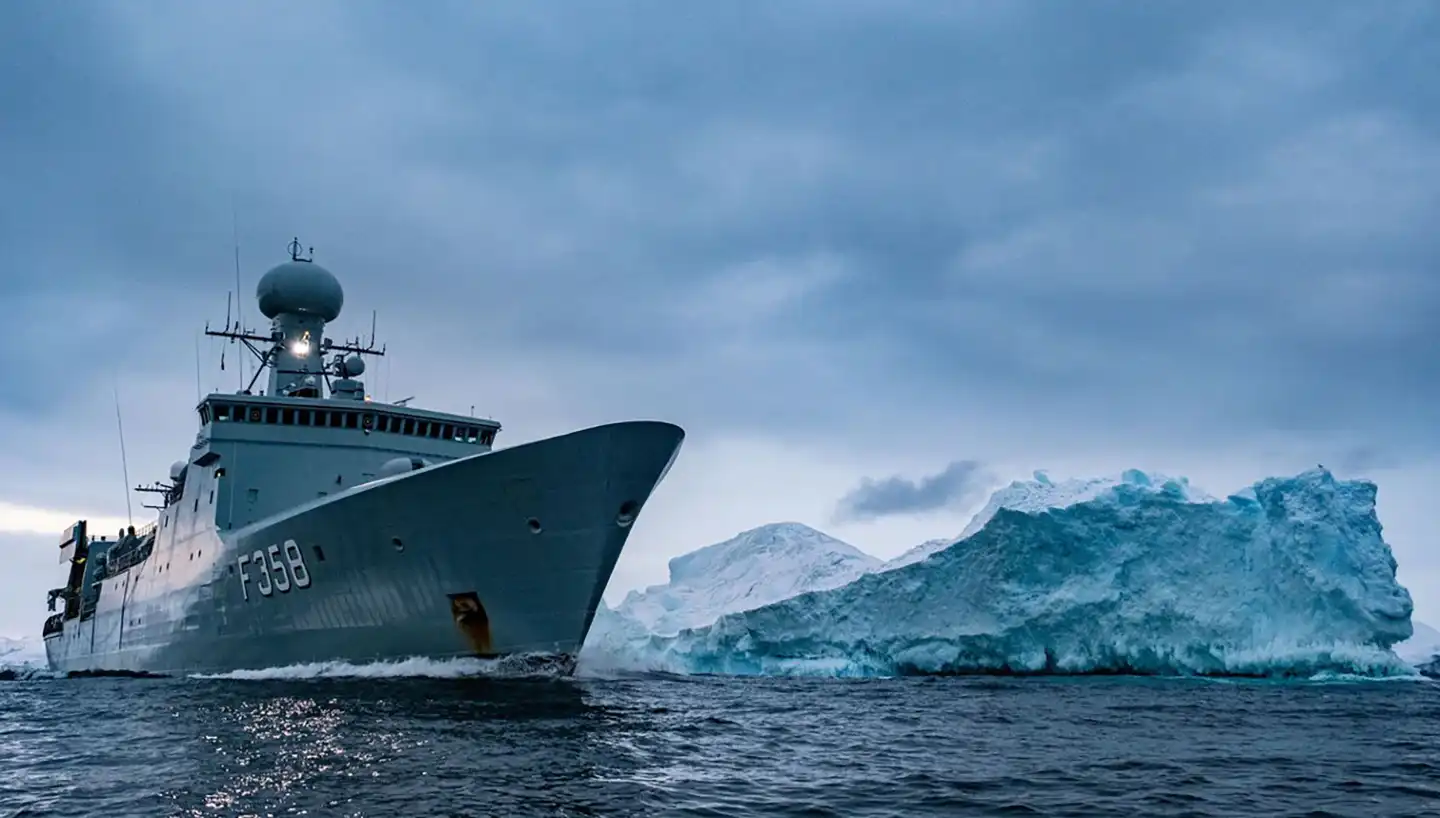
Twelve NATO members have agreed to expand their security presence in the High North to counter adversarial actions by the Chinese Communist Party (CCP) and Russia in the increasingly contested region. The pact emerged from the July 2026 NATO summit in Ankara, Türkiye. Canada, Denmark, Finland, France, Germany, Iceland, the Netherlands, Norway, Portugal, Spain, Sweden and the United Kingdom pledged to take greater maritime responsibility for deterrence in the North Atlantic, the Baltic Sea and the Arctic Ocean. The agreement also strengthens military ties and coordination between the European NATO members and Canada. “With this initiative, Europe and Canada are making a significant contribution to enhancing security in the North Atlantic and High North,” said Norwegian Prime Minister Jonas Gahr Støre in a July 8 government news release.
Norway proposed the initiative, which will include participation from Canada, Denmark, Finland, France, Germany, Iceland, the Netherlands, Norway, Portugal, Spain, Sweden and the U.K. The group said it would coordinate maritime activities with the United States. “We will be cooperating even more closely on Allied intelligence, defence, maritime command and control of the northern sea areas, freedom of navigation, and secure lines of communication. This also will enhance U.S. security. The northern sea areas are not only important for Europe, they also are vital to the defence of North America,” Støre said.
At a meeting of NATO defense ministers in June, Germany, Norway and the U.K. announced closer cooperation on anti-submarine warfare, and Canada reached an agreement in July to acquire 12 submarines from a German manufacturer, tripling its submarine fleet. “These two initiatives show that Europe and Canada are taking greater responsibility for maritime security and are helping to promote more equitable burden-sharing in NATO. The result will be a stronger Europe and a stronger NATO,” Norwegian Minister of Defence Tore O. Sandvik said in the release.
The NATO leaders said the initiative was necessary considering the “increasingly challenging security environment.” Russia’s threat to the maritime domain in the High North is a “long-term threat,” according to the release. The 12 nations promised to continue improving interoperability and collaboration in training, exercises and operations. They also voiced unanimous support for strengthening maritime command and control processes and prioritizing defense spending to enhance situational awareness.
In the last decade, Russia has reopened military bases and ports in the Arctic, and the CCP has launched an aggressive effort to penetrate the region with dual-use expeditions that contain clear military objectives. The European and Canadian leaders said these potential threats will not go unchallenged. “European Allies and Canada are both willing and capable to ensure a fair share of the burden, while further strengthening the unity and cohesion of NATO. This commitment demonstrates a stronger Europe in a stronger NATO with Europe and Canada taking greater responsibility for our shared Euro-Atlantic security, coordinating closely with the United States,” the statement read.
Seven NATO members have Arctic territory — Canada, Denmark, Finland, Iceland, Norway, Sweden and the U.S. The strategic importance of the region is reflected in other recent actions undertaken by the alliance. In February, NATO launched Arctic Sentry, an ongoing military activity that has increased the alliance’s military footprint. In June, the newest Forward Land Forces base opened in Finland’s Arctic territory, further bolstering NATO’s northern and eastern flanks.